
Aam Kasundi — Bengal’s Mango-Mustard Conversation
Pickles and Condiments · Culinary Chronicles
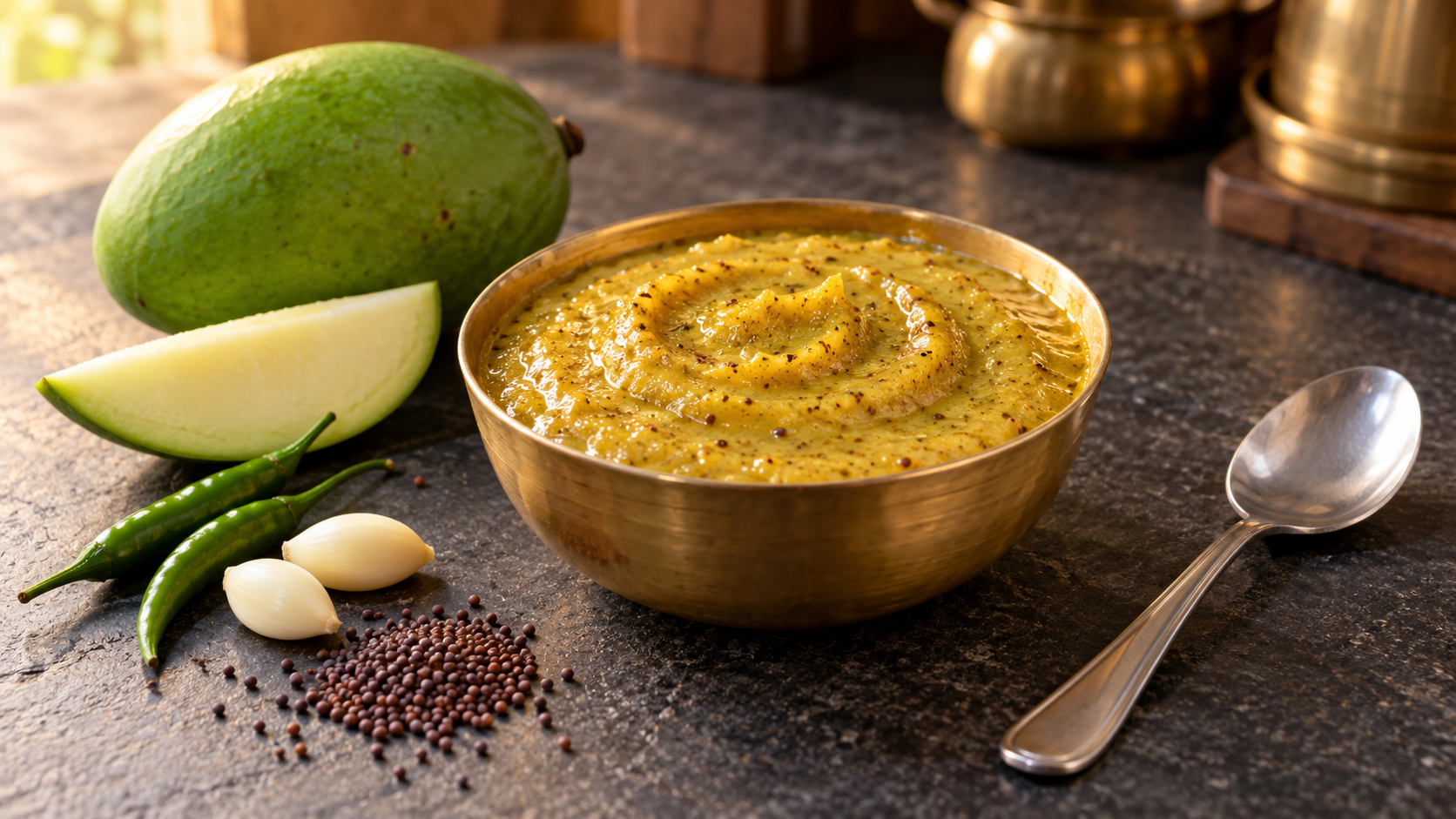
1. What it is
Aam kasundi is a pungent, tangy Bengali mango-and-mustard condiment. Raw mango brings sourness; mustard brings the sharpness that makes a small spoonful announce itself. It can accompany a snack or become part of a cooked dish, adding character without needing much room on the plate.
Its texture varies from a smoother sauce to a coarser relish. Either way, this is a lively conversation between fruit and seed. Neither participant is particularly shy.
2. Origin
The Bengali association is well documented, but the recipes considered here do not establish a first maker or invention date. Debjani Chatterjee Alam recalls her grandmother's garlic-free preparation and describes adding garlic in her own version. That is attributed family memory, showing continuity alongside change. [R2]
Kasundi also includes traditions with more elaborate preparation and maturation. A modern mango-mustard sauce should not quietly borrow their entire history merely because it shares a familiar name. [R1]
3. Where the principal ingredients grow
Mango, Mangifera indica, is cultivated across India. The National Horticulture Board lists West Bengal alongside Uttar Pradesh, Andhra Pradesh, Karnataka and other growing states. These are cultivation examples, not a current production ranking or proof that a particular fruit came from a Bengali orchard. [A1]
Mustard has another agricultural geography. ICAR's mustard-variety recommendations include growing zones in Rajasthan, Uttar Pradesh, Haryana and Punjab. Regional cooking and crop-growing boundaries need not coincide; ingredients can belong deeply to a cuisine without every field lying next door. [A2]
4. Names in Indian languages
The preparation name identifies a condiment; the ingredient names do not prescribe how it should be made. Roman spellings vary. [R1, R2, L1]
| Language/context | Name | Refers to |
|---|---|---|
| Bengali culinary usage | Aam kasundi / aam kashundi | Mango-mustard condiment |
| Bengali | Aam | Mango ingredient |
| Hindi | Kachcha aam | Unripe mango ingredient |
A jar labelled with the preparation name still deserves a question about its particular method.
5. How it is used
Our documented example follows Sandeepa Mukherjee Datta's explicitly simplified preparation. Mustard seeds are soaked and drained, then blended with peeled raw mango, garlic, green chilli, vinegar and mustard oil. Turmeric, salt and sugar finish the mixture. There is no roasting or cooking stage in this blending method. [R1]
She distinguishes it from traditional kasundi. Debjani's separate preparation uses a different approach to mustard, texture and maturation; it is not a set of extra steps to attach to this one. [R1, R2]
6. What it does
Mango supplies tartness and fruit texture, while mustard supplies pungency. Grinding changes how the mixture coats food; oil helps give the sauce its spoonable consistency. Sugar adjusts the balance rather than turning the preparation into a sweet mango dessert. [R1, R2]
The proportions and ingredients shape the result. Aam kasundi earns its place through contrast: something sharp and sour against the food beside it. A little restraint lets both remain interesting.
7. Regional use and popular dishes
Sandeepa describes using her version as a dip and in mustard-based fish and chicken preparations. Debjani documents aam kasundi murgi, chicken cooked with mango-mustard sauce and served with steamed rice. These are attributable household uses, not compulsory destinations for every batch. [R1, R3]
A condiment can wait beside a meal or enter the pan and change it. Here, mango and mustard manage both jobs without losing the habit of speaking up.
Sources and Further Reading
- R1 — Sandeepa Mukherjee Datta, Aam Kashundi — the Bengali Mustard Sauce,14March2013.
- R2 — Debjani Chatterjee Alam, Aam Kasundi,29May2018; modified17April2026.
- R3 — Debjani Chatterjee Alam, Aam Kasundi Murgi,9July2018; modified28April2026.
- A1 — National Horticulture Board, Mango: Area Under Cultivation,undated.
- A2 — ICAR-Directorate of Rapeseed-Mustard Research, Rapeseed-Mustard Varieties,undated.
- L1 — Dassana Amit, Kadumanga Achar,revisiondateconflicting.