
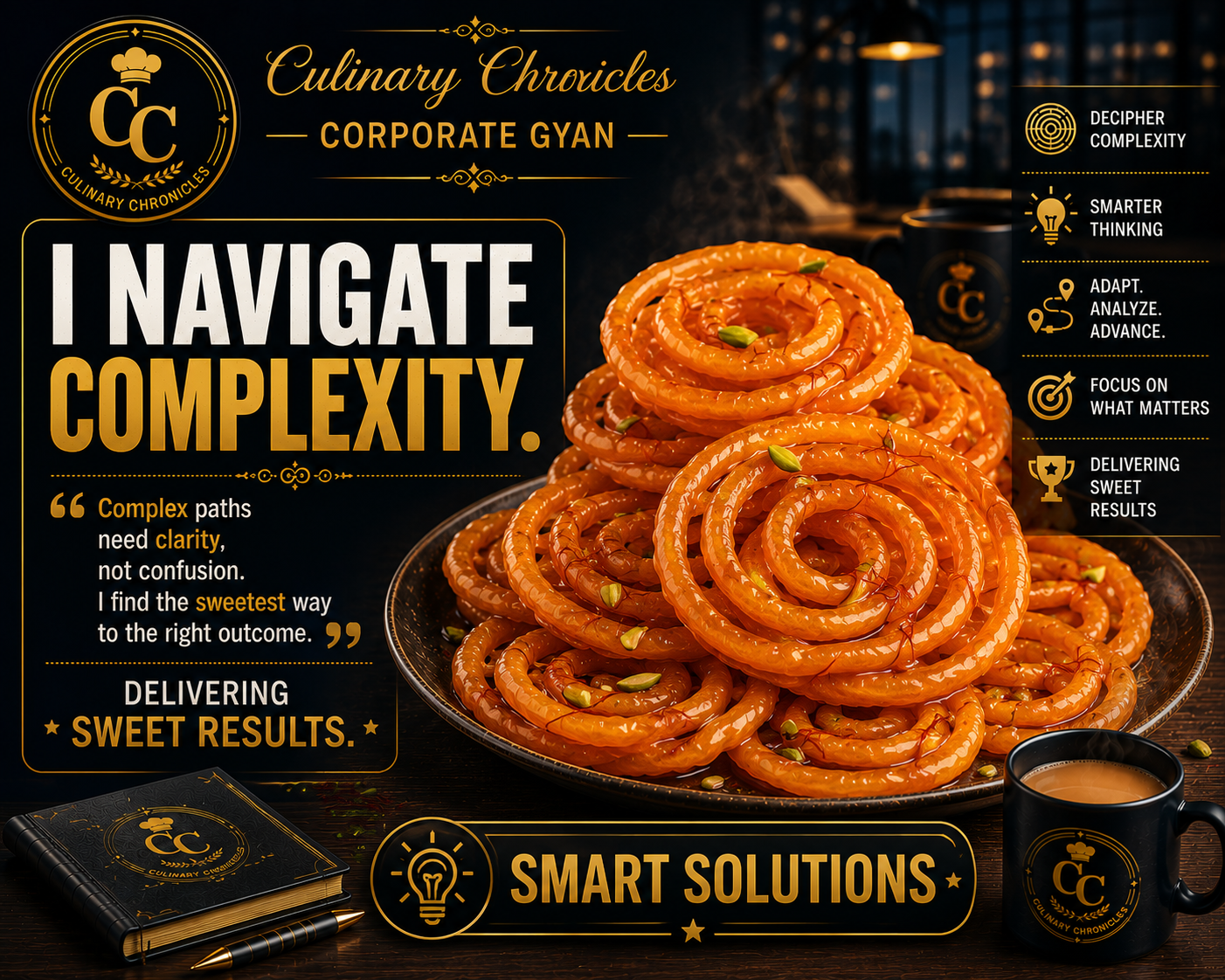
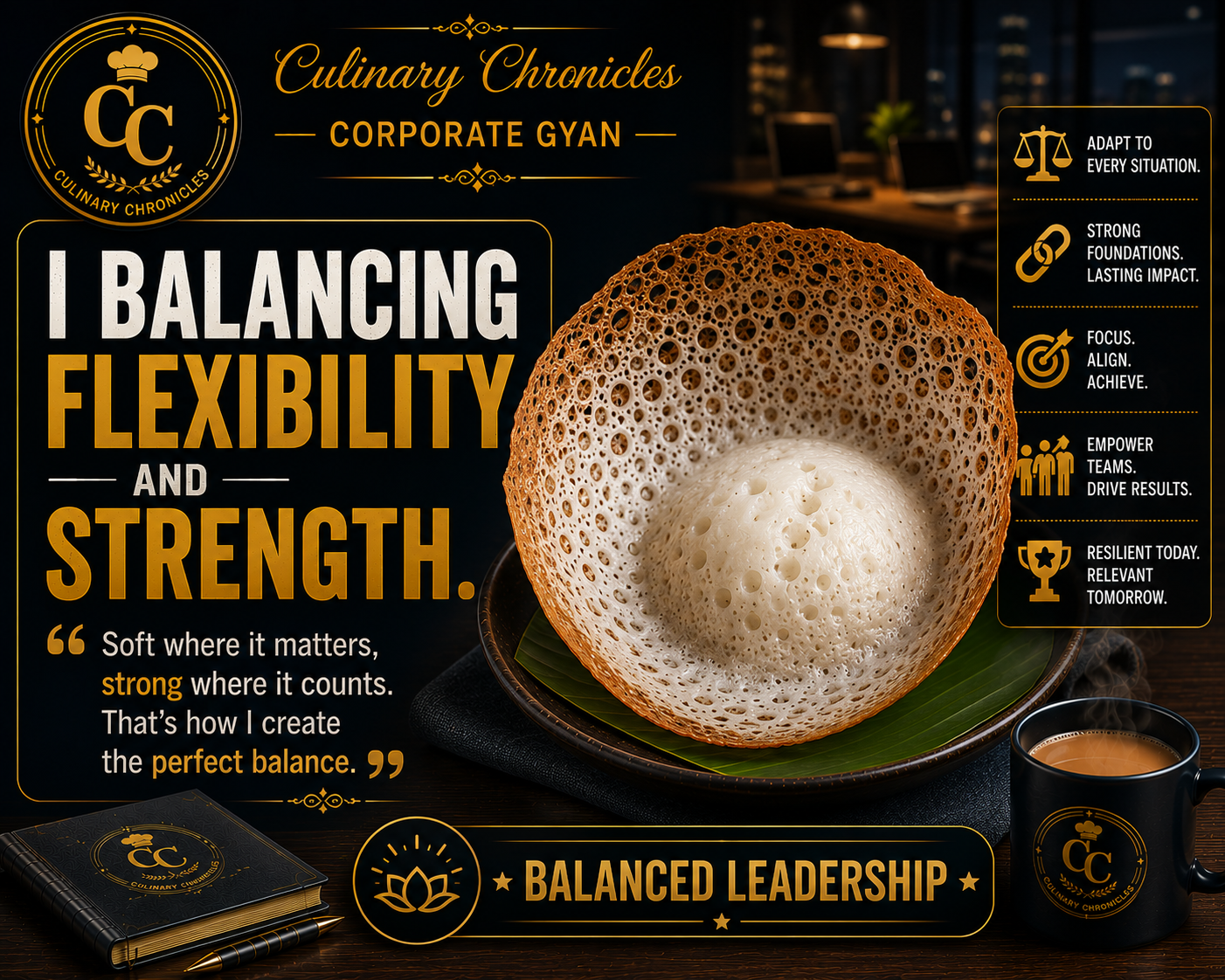
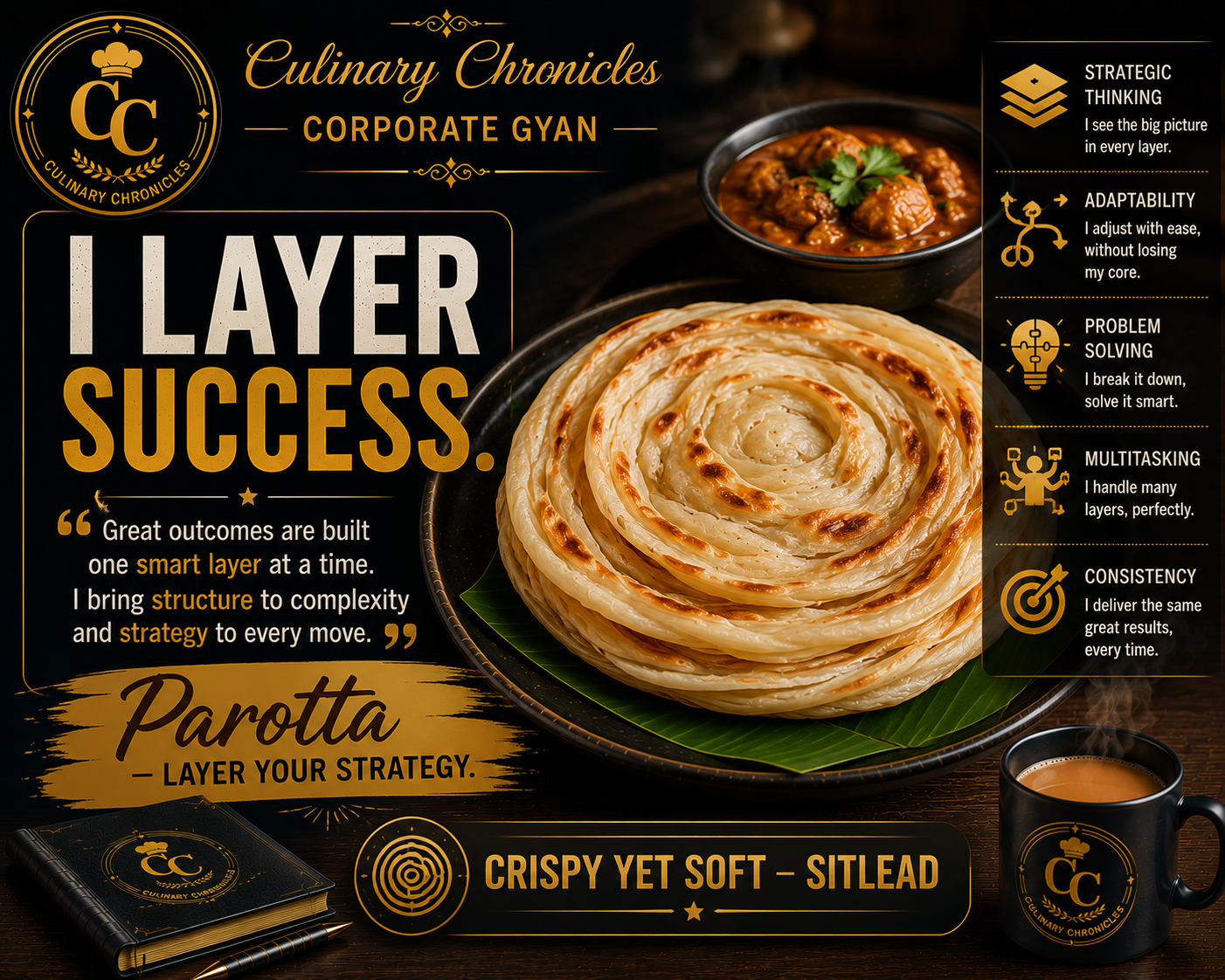
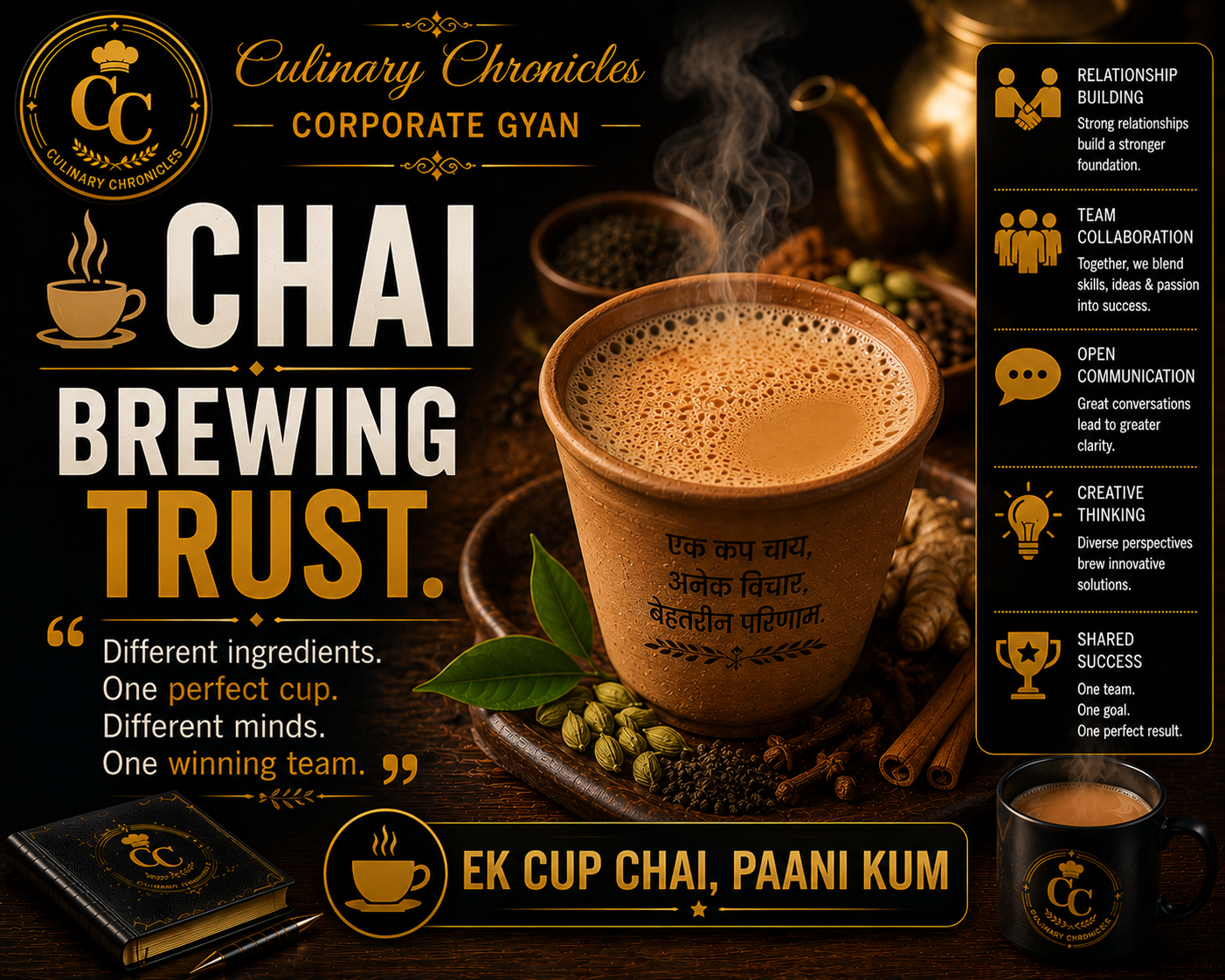
Management wisdom. Served hot. The corporate world has frameworks, models, matrices and PowerPoints. Indian food has been teaching many of the same lessons for centuries—only with considerably better flavour. Food teaches. Corporate life complicates. Corporate Gyan translates. A good biryani is a masterclass in teamwork. Rice remains rice. Meat retains its character. The fried onions don't suddenly aspire to become cardamom, and the saffron isn't holding a meeting to explain why it deserves greater visibility. Everyone has a role. Yet when they come together—with the right layering, timing and a little dum—the result is considerably greater than the sum of its parts. Corporate teams aren't very different. Diversity doesn't mean making everyone think, speak and behave alike. The leader's job isn't to turn twenty different ingredients into one uniform paste. It is to understand what each person brings, layer the strengths intelligently, and give the team enough time and trust to come together. Because the best teams, like the best biryanis, retain their individual identities while creating something extraordinary together. Don't blend your team. Layer it. A dosa is remarkably accommodating. It can arrive plain, folded around masala, stretched dramatically across a table, made thick, thin, soft or spectacularly crisp. Restaurants have persuaded it to carry everything from paneer to cheese—and occasionally ingredients that would make a traditionalist request an immediate meeting with management. Yet beneath all that experimentation, the fundamentals remain surprisingly disciplined. The batter must be right. Fermentation needs time. The griddle needs the correct heat. And once the batter hits the surface, hesitation is rarely helpful. Corporate strategy could learn something here. Adaptability doesn't mean changing direction every time somebody discovers a new PowerPoint template. Strong organisations know what must remain constant and what can flex. They protect the fundamentals while adapting the form to the situation. Because flexibility without discipline creates confusion. Discipline without flexibility creates rigidity. A good dosa manages both—and still arrives crisp. Stay flexible in approach. Stay crisp in execution. Nobody looks at an idli and thinks, Now there's an aggressive breakfast. It is soft, quiet and remarkably unthreatening. It doesn't crunch, crackle or arrive demanding attention. Yet producing a genuinely good idli requires considerable discipline—proportion, soaking, grinding, fermentation, timing and steaming all have to work together. Softness, it turns out, takes work. Leadership isn't very different. We call empathy, listening, communication, patience and emotional intelligence "soft skills," as though they were pleasant extras to be added after the serious business of targets, strategy and execution. But try leading people without them. Technical competence may earn authority. It doesn't automatically earn trust. A leader can know every number on the dashboard and still have absolutely no idea what is happening in the room. The strongest leaders don't confuse kindness with weakness or listening with indecision. They understand that managing work is often technical. Managing people rarely is. And like the idli, what appears soft on the outside may be the result of considerable strength underneath. Never underestimate soft skills. They are often the hardest ones to master. A medu vada has one feature that is difficult to ignore. The hole. Remove it and you still have something fried, delicious and perfectly respectable—but somehow, it isn't quite a vada anymore. Corporate life has plenty of almost-vadas. Meetings happen. Decisions are discussed. Responsibilities are assigned. Emails are sent. Follow-ups are promised. Everyone leaves feeling wonderfully productive. And then…the hole remains. The customer never hears back. The action item quietly disappears. The promised update never arrives. The problem travels through three departments before returning to the person who raised it in the first place. Starting something creates activity. Closing it creates confidence. Good professionals develop the habit of completing the circle. They follow through, confirm what happened, communicate the outcome and make sure somebody actually owns the last mile. Because reliability isn't built through grand gestures. It is built when people learn that if you say you will do something, the loop will eventually close. Preferably before the next meeting about why it didn't. Don't just take action. Close the loop. A jalebi is proof that not everything valuable needs to travel in a straight line. The batter twists, loops, doubles back and occasionally appears to have forgotten where it was going altogether. Yet somehow, it completes the journey, takes in the syrup and emerges exactly as intended. Corporate careers can look remarkably similar. We like drawing neat career paths—role, promotion, bigger role, bigger promotion—as though professional life were an escalator with annual performance reviews. Reality is usually more jalebi. There are sideways moves, difficult bosses, failed projects, unexpected opportunities, career breaks and roles that make absolutely no sense until several years later. Not every detour is a setback. Sometimes the experience gained while going sideways becomes precisely what you need to move forward. The important thing is not whether the path looks straight on an organisational chart, but whether you continue learning while travelling it. Careers are rarely ladders. Sometimes they are jalebis. And perhaps that's what makes them interesting. Don't fear the twists. Keep learning through them. A good appam understands something many organisations struggle with. Not everything needs the same degree of firmness. Its edges are delicate, lacy and crisp. Move towards the middle and the texture changes completely—soft, substantial and strong enough to hold what accompanies it. Leadership needs a similar architecture. Some things should remain flexible: methods, schedules, processes, ideas and even the occasional rule that made perfect sense three reorganisations ago. But the centre needs strength. Values. Integrity. Purpose. The standards you refuse to negotiate simply because circumstances have become inconvenient. The trouble begins when organisations reverse the recipe. They become rigid about procedures and surprisingly flexible about principles. Good leaders know the difference between what can bend and what must hold. Adaptability doesn't mean having no centre. In fact, the stronger the centre, the more confidently you can allow the edges to flex. The appam figured that out long before management consultants did. Keep your principles firm and your methods flexible. A good parotta doesn't become layered by accident. The dough is stretched, folded, coiled, rested and worked until what began as something fairly ordinary develops structure. Tear it open and the real work becomes visible—layer upon layer, each contributing to the whole. Strategy works much the same way. Organisations sometimes confuse strategy with a single ambitious statement. Grow faster. Excellent. Now what? A strategy becomes useful only when the layers underneath it connect—people, capability, technology, process, resources, accountability and execution. If one layer says "customer first" while another requires seventeen approvals to solve the customer's problem, you don't have strategy. You have a slogan. Good leaders keep asking what sits beneath the headline. What capabilities must we build? What behaviours must change? Who owns what? And how does today's action connect with tomorrow's ambition? Because strategy isn't the sentence on the presentation. It's the layers that make the sentence possible. Don't just announce the strategy. Build the layers beneath it. Filter coffee doesn't reward impatience. Hot water meets freshly ground coffee, and then very little appears to happen. The decoction makes its way through the filter slowly, leaving behind what isn't needed and collecting below what matters most. Strong decision-making works much the same way. Corporate life gives us no shortage of information—reports, dashboards, emails, presentations, opinions, meetings and, occasionally, another meeting to discuss what happened in the previous meeting. The challenge isn't getting more information. It's knowing what matters. Good leaders learn to filter noise from signal. They ask the right questions, identify the few facts that genuinely influence the decision and resist the temptation to confuse a hundred slides with a hundred insights. Because clarity rarely comes from consuming everything. It comes from extracting the essence. And once you have that, you can add milk and sugar according to organisational preference. Filter the noise. Extract what matters. A samosa is a small lesson in execution disguised as a snack. You can prepare an excellent filling—perfectly spiced potatoes, peas, meat or whatever tradition demands. You can make beautiful pastry. You can even fold it with the precision of an engineer. But if the edges aren't sealed properly, none of that matters very much. The filling escapes. The oil gets in. The structure fails. Projects behave similarly. Teams spend enormous energy on ideas, planning, presentations and launch meetings, yet sometimes neglect the small details that actually hold execution together—clear ownership, agreed timelines, documented decisions, handovers and follow-through. The glamorous part of a project may get the applause. The seams determine whether it survives. Good leaders therefore pay attention not only to the big idea, but also to the unexciting places where things can come apart. Because success is often decided at the edges. And nobody wants to explain why an excellent strategy leaked into the fryer. Great ideas need strong seams. Seal the execution. Chai has probably resolved more problems in India than several officially constituted committees. It appears when guests arrive, when colleagues need to talk, when negotiations pause, when friendships begin and when someone says, "Come, let's have chai," which frequently means the conversation is about to become more important than the tea. Because chai creates something organisations often try to manufacture through programmes and workshops: space for conversation. Trust rarely develops during a presentation. It grows in smaller moments—when people speak without rehearsing, when someone listens without immediately offering a solution, when hierarchy temporarily gives way to humanity. Good leaders create those moments. They don't wait for an annual engagement survey to discover what their people are thinking. They make time for conversations before problems become presentations and misunderstandings become escalation emails. Sometimes leadership requires strategy, structure and decisive action. And sometimes it requires two chairs, ten unhurried minutes and a cup of chai. Before you build alignment, brew some trust. A rasgulla begins with potential, but it becomes what we recognise only after it learns to absorb. As it cooks and rests in syrup, it takes in what surrounds it. It doesn't merely sit in the sweetness—it allows the sweetness to travel through it. There is a useful lesson there. Feedback works only when it gets past the surface. We have all seen the corporate version of listening: nod thoughtfully, write something in a notebook, say "That's valuable feedback"—and continue exactly as before. Receiving feedback is not the same as absorbing it. Good professionals listen without immediately defending themselves. They decide what is useful, reflect on it and allow it to change something—an assumption, a behaviour, a skill or occasionally an entire approach. That doesn't mean accepting every opinion that comes your way. A rasgulla absorbs the syrup. It doesn't absorb the bowl. Growth requires knowing the difference. Don't just receive feedback. Absorb what helps you grow. NO KPIs WERE HARMED IN THE MAKING OF THIS GYAN. Some PowerPoints, however, may feel threatened.CORPORATE GYAN
01 · BIRYANITHE GYAN: GREAT TEAMS AREN'T KHICHDI

02 · DOSATHE GYAN: STAY FLEXIBLE. EXECUTE CRISP.

03 · IDLITHE GYAN: SOFT SKILLS ARE HARD SKILLS

04 · VADATHE GYAN: CLOSE THE LOOP

05 · JALEBITHE GYAN: NAVIGATE COMPLEXITY
06 · APPAMTHE GYAN: FLEXIBLE AT THE EDGES. STRONG AT THE CENTRE.
07 · PAROTTATHE GYAN: LAYER YOUR STRATEGY
Become customer-centric.
Transform digitally.08 · FILTER COFFEETHE GYAN: EXTRACT THE ESSENCE

09 · SAMOSATHE GYAN: SEALED FOR SUCCESS

10 · CHAITHE GYAN: BREW TRUST THROUGH CONVERSATION
11 · RASGULLATHE GYAN: ABSORB FEEDBACK. THEN GROW.