
CULINARY CHRONICLES · MASALA UNIVERSE · 16

Cafreal Masala
The Green Heart of a Goan Marinade
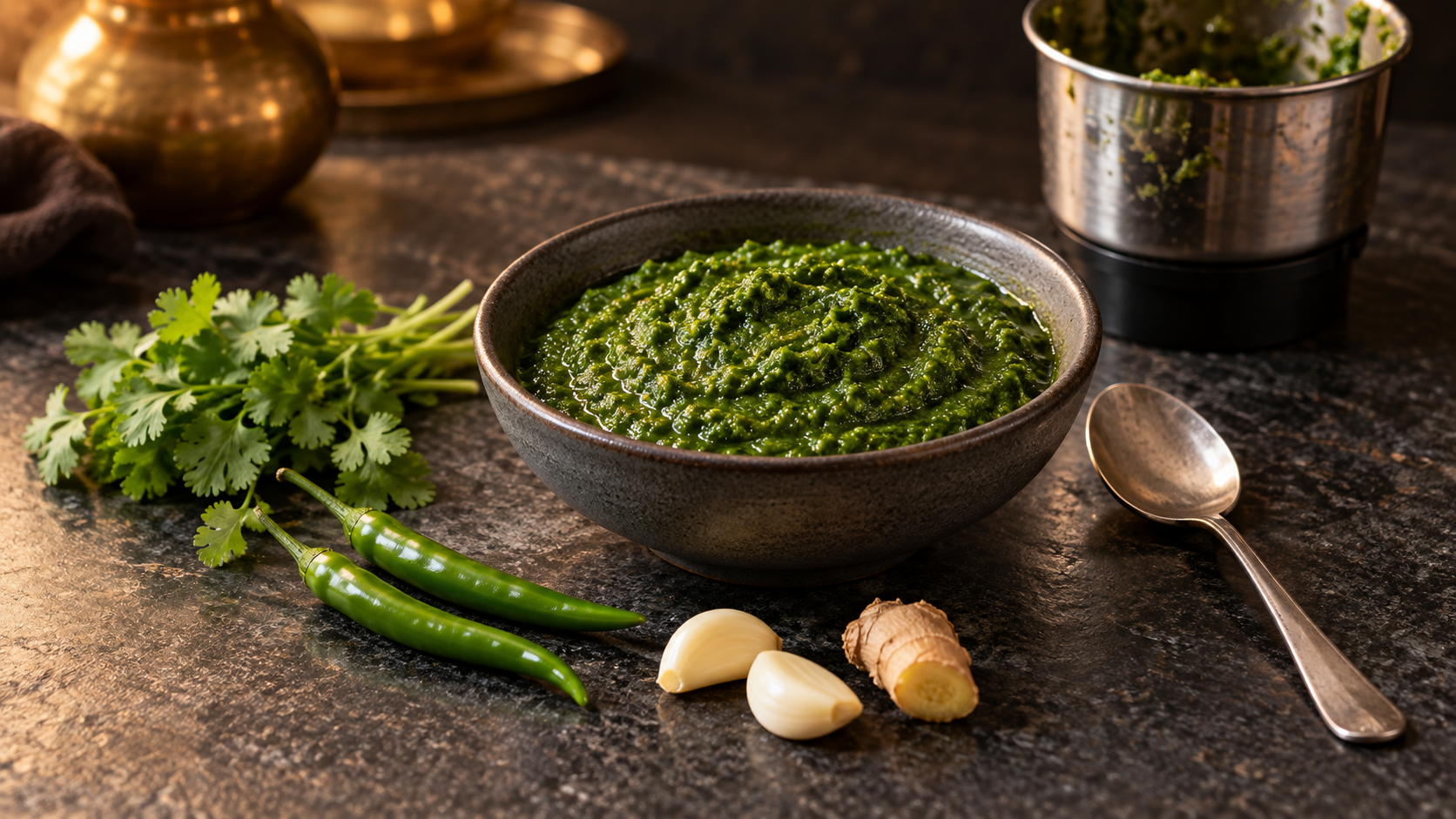
What It Is — Green With Purpose
A bunch of coriander can arrive at the table as a polite garnish. In cafreal masala, it has considerably more responsibility. Fresh herbs, chillies and aromatics are ground into a green paste that becomes the seasoning foundation for a Goan chicken preparation. The colour tells us something about the ingredients; it does not tell us the whole recipe. [C1, C2]
This chapter follows Xanti Pinto's documented preparation. Other cooks change the herbs, spices and grinding liquid. Cafreal has a recognisable character without requiring every household to surrender its grinder settings. [C1, C2]
Origin — Connections Across the Water
Researcher Maria Paula Menezes links cafreal with Mozambique in an interview about connections with Goa. That is an attributable historical interpretation, rather than permission to invent a precise arrival date or a single journey for today's green paste. [H1]
The preparation described here belongs to a documented Goan kitchen. Its wider connections can remain part of the story without turning one modern recipe into a reconstruction of an earlier African dish.
Where the Ingredients Grow — Leaves Have Their Own Geography
Fresh coriander matters here, not merely the dried fruits conventionally called coriander seeds. Tamil Nadu Agricultural University's guidance distinguishes harvesting the leafy herb from harvesting the seed crop. Those are different culinary forms, even when they come from the same plant. [A1, A2]
ICAR documents ginger cultivation in Sikkim, while the Spices Board describes chilli farming and processing around Guntur in Andhra Pradesh. These are examples of cultivation beyond Goa, not a claim about where Pinto bought her ingredients. The masala's regional identity and its crops' growing areas answer different questions. [A3, A4]
Names — Keep the Preparation in View
Cafreal Masala is the registered name of this chapter. Pinto calls the prepared poultry dish Chicken Cafreal; a cook's paste and the meal it seasons deserve that distinction. [C1, C3]
The sources examined do not establish separate Indian-language names for this precise masala. We retain its existing name rather than translating it into a new culinary identity.
How It Is Used — Into the Grinder
Pinto combines fresh coriander and green chillies with ginger, garlic and spices, grinding everything to a fine paste. Her recipe offers rum or a vinegar-and-water alternative as the grinding liquid. It specifies no preliminary roasting stage. [C1]
Ranveer Brar's version uses coriander stems as well as leaves and adjusts the seasoning after grinding. The differences belong to the cooks; combining both lists would produce our invention, not their recipe. [C2]
What It Does — A Coating That Becomes the Dish
The paste brings herb flavour, chilli heat and aromatic seasoning into close contact with the chicken. In Pinto's preparation, covered cooking is followed by reducing the coating as the chicken browns. The fresh green marinade and the cooked result are therefore different moments in the same preparation. [C3]
Regional Use — From Chicken to a Roll
Chicken cafreal is the central use documented here. Brar serves his version with poey or pav; Pinto also turns cafreal-seasoned chicken into bread rolls. The latter is her practical adaptation, not evidence of an ancient sandwich tradition. [C2, C4]
A masala becomes familiar because cooks find room for it in their lives. Sometimes that room is in a pan. Sometimes it is between two pieces of bread.
Sources and Further Reading
- C1 — Xanti Pinto, Goan Cafreal Masala; date not displayed
- C2 — Ranveer Brar, Chicken Cafreal; date not displayed
- C3 — Xanti Pinto, Chicken Cafreal; date not displayed
- C4 — Xanti Pinto, Chicken Cafreal Rolls; date not displayed
- H1 — Maria de Lourdes Bravo da Costa Rodrigues, Bridges connecting Mozambique and Goa, Navhind Times,25October2015; reposted ALICE/CES University of Coimbra,26October2015
- A1 — Spices Board, Coriander; undated
- A2 — Tamil Nadu Agricultural University, Coriander; undated
- A3 — ICAR, Livelihood security of tribal farmer through organic ginger cultivation in Sikkim; date not displayed; reports2013–18
- A4 — Spices Board, Spices Park at Guntur, Andhra Pradesh; updated29September2021
By Shankar Manapragada