
Chhundo — Gujarat’s Sweet-Sour Shreds
Pickles and Condiments · Culinary Chronicles
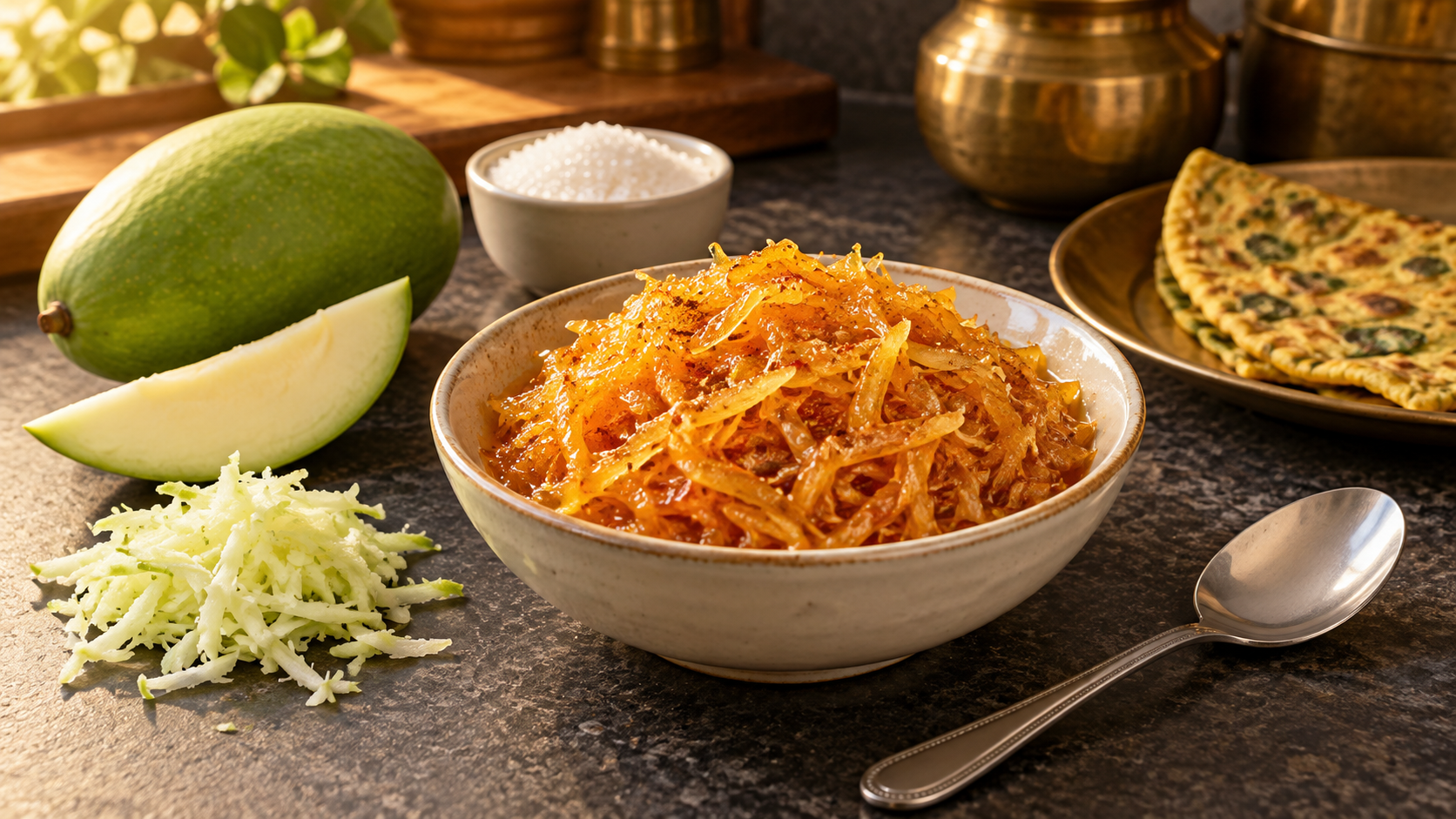
1. What it is
Chhundo is a Gujarati sweet-sour mango condiment, with grated unripe fruit held in a glossy, spiced syrup. The mango remains recognisable in shreds: this is not a smooth mango sauce. Sweetness meets sourness, with chilli and cumin giving the mixture a savoury edge.
A small helping belongs comfortably beside a meal or a piece of thepla. It may look rather jewel-like in the bowl, but it has come to lunch, not to sit behind glass.
2. Origin
Published practitioner accounts establish Chhundo's Gujarati association without identifying a first maker or an invention date. Dassana Amit describes a sunlight method separately from her quick stovetop preparation. That distinction matters: two ways of reaching a familiar accompaniment are not necessarily competing claims to its identity. [R2]
The kitchen adapts its work to the available method. We can appreciate that practical flexibility without inventing a royal patron, an ancient timestamp or a story about every Gujarati household doing things alike.
3. Where the principal ingredient grows
Mango comes from Mangifera indica. National Horticulture Board documentation includes Gujarat among India's mango-growing states, alongside Andhra Pradesh, Uttar Pradesh, Karnataka and others. This establishes cultivation geography, not a current production ranking or the origin of this particular condiment. [A1]
The selected preparation begins with unripe mango, peeled and grated. Sweet ripe fruit would change the balance. Grating also changes the job: the mango enters as strands, rather than the firm chunks of another pickle. [R1]
4. Names in Indian languages
The finished condiment and its principal ingredient should not share a careless label. Roman spellings vary; these terms identify different things. [R2, L1]
| Language | Name | Refers to |
|---|---|---|
| Gujarati | Chhundo / chundo | Prepared mango condiment |
| Gujarati | Kachi keri | Raw mango ingredient |
| Hindi culinary usage | Aam chunda | Preparation name |
The ingredient name alone does not tell us whether the mango is destined for a sweet condiment, a savoury pickle or another dish.
5. How it is used
Our main example follows Renu Dalal's stovetop preparation. Peeled, grated raw mango is mixed with turmeric and salt, rested briefly, then cooked with sugar until the syrup reaches string consistency. She transfers the mixture to a bowl in an ice bath; roasted cumin powder and red chilli powder join after cooling. [R1]
Dassana's version follows its own sequence, adding the spice powders after switching off the heat. Sun-prepared versions are another documented approach, not an additional stage required after our stovetop example. [R2]
6. What it does
Sugar gives the fruit a sweet, syrupy setting without removing its sour character. Chilli adds heat and roasted cumin its particular aroma. The strands and syrup work together: a spoonful should bring mango texture as well as seasoning. [R1, R2]
Cooking affects that texture. Dassana warns that taking her mixture too far makes it hard and chewy. More time is not automatically more care; sometimes the considerate thing is to stop. [R2]
7. Regional use and popular dishes
Renu pairs her version with poori, methi thepla and plain Gujarati thepla. Dassana also documents dhebra, roti and paratha. These are useful serving examples rather than instructions for every table. [R1, R2]
A morsel of bread gathers a few glossy shreds, and the next bite moves between sweet, sour and gently spiced. Chhundo's place in the meal is small. Its contribution need not be.