
Kadumanga Achar — Kerala’s Mango with a Bite
Pickles and Condiments · Culinary Chronicles
1. What it is
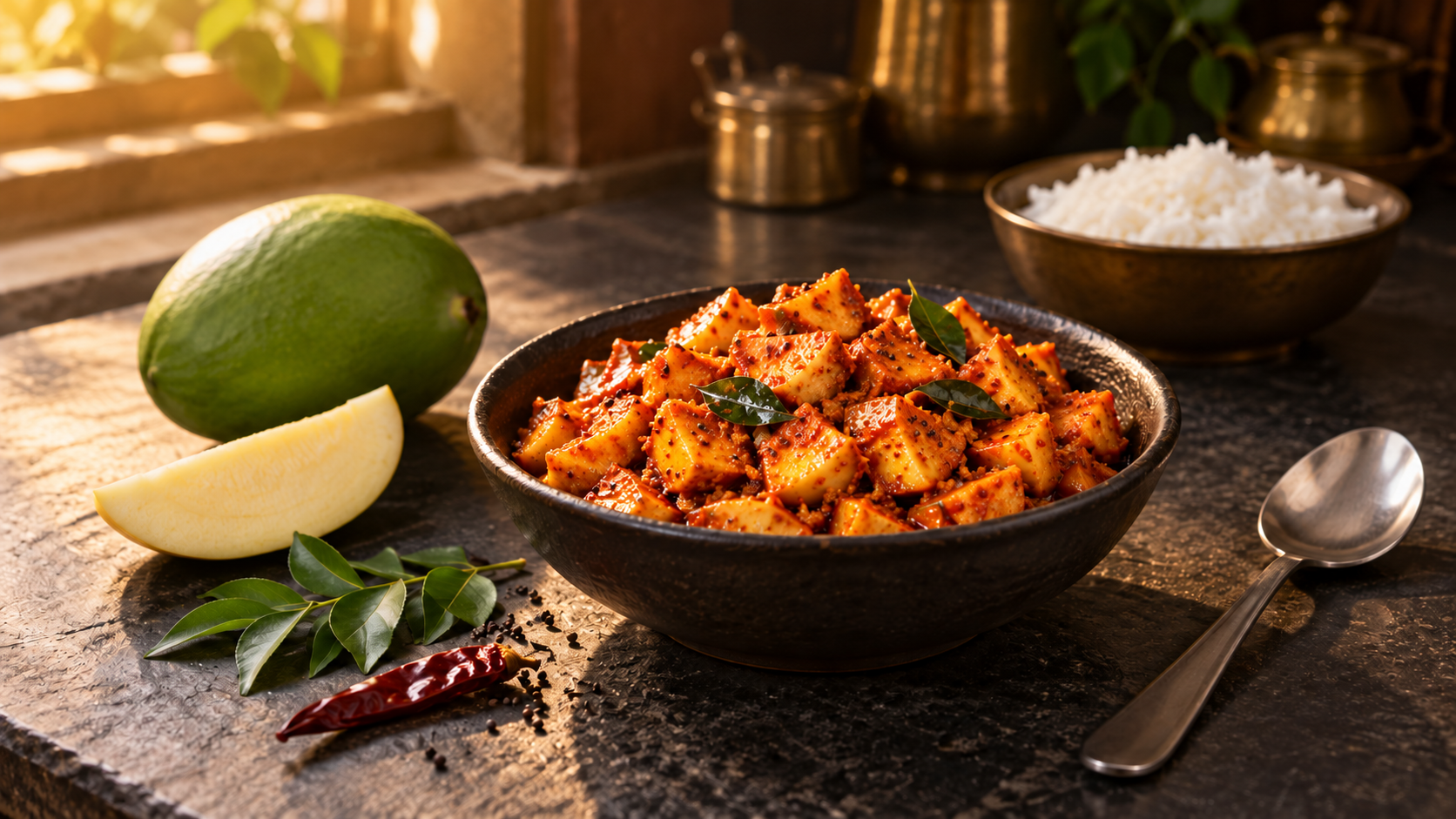
A mango need not wait to become sweet before it earns a place at lunch. Kadumanga achar, in the cut-mango usage followed here, gives firm green fruit a chilli-spiced coating and a small but emphatic role beside rice. Kerala Tourism distinguishes this preparation from whole tender-mango kannimanga pickles; household naming is not completely uniform. [K1]
Our main example is Akhila's mother's preparation, published on Pepper Delight. It keeps recognisable pieces rather than turning the fruit into a chutney. [R1]
2. Origin
The Kerala association is documented; an exact inventor or starting date is not established here. Akhila introduces her recipe while preparing a Vishu sadya and explicitly credits her mother. Sangeetha at Kothiyavunu records a version learnt from her grandmother. These are attributed family accounts, not memories borrowed for our own biography. [R1, R3]
They offer a useful way into the story: a regional preparation lives through particular cooks, who do not necessarily agree on every ingredient.
3. Where the principal ingredient grows
Mango comes from Mangifera indica. The National Horticulture Board records cultivation in Kerala, Karnataka, Andhra Pradesh, Tamil Nadu and numerous other states. Its crop sheet supports growing geography, not a current production ranking or a claim that mango originated in Kerala. [A1]
The fruit selected for this preparation is green and unripe. The dessert mango and the pickle mango may belong to the same species, but the cook is asking them to do rather different work.
4. Names in Indian languages
Preparation names identify the food being made; ingredient names identify what goes into it. These selected Roman spellings should not be treated as identical regional recipes. [K1, R2]
| Language/context | Name | Refers to |
|---|---|---|
| Malayalam | Kadumanga achar | Preparation, using the cut-mango sense here |
| Malayalam | Nurukku manga achar | Cut-mango pickle preparation |
| Malayalam | Manga | Mango ingredient |
| Hindi | Kachcha aam | Unripe mango ingredient |
A name on a jar still leaves room to ask how its contents were prepared.
5. How it is used
Akhila peels and deseeds green mango, cutting it into small pieces. Mustard seeds splutter in gingelly oil; curry leaves follow. Fenugreek powder and asafoetida enter over low heat, then chilli powder, with care against scorching. Mango and salt are briefly stirred through before the heat is switched off. [R1]
Dassana Amit's version instead coats mango with seasoning before adding hot tempering. Kerala Tourism documents another method in which a spice base boils with water and chopped mango enters after the flame is off. These are alternatives, not consecutive stages. [R2, K2]
6. What it does
The mango contributes sourness and a definite bite. Chilli brings heat; mustard, fenugreek and asafoetida add aromatic character. Cutting, peeling and heating affect the texture, so a lightly heated small piece need not resemble a larger one in another recipe. [R1, R2]
The aim is a lively accompaniment, not a competition to see whether lunch can be made to surrender.
7. Regional use and popular dishes
Sadya gives the pickle a festive setting, while rice meals give it everyday company. Documented pairings include curd rice, sambar rice and dal-rice; Sangeetha also suggests kanji. These are examples, not rules for every Kerala household. [R2, R3]
A modest portion can change the next mouthful without taking over the plate. The mango has kept its bite; the meal has gained another voice.
Sources and Further Reading
- R1 — Akhila, Kerala Style Mango Pickle, Pepper Delight,10April2017.
- R2 — Dassana Amit, Kadumanga Achar / Kerala Manga Achar.
- R3 — Sangeetha, Manga Achar / Kadumanga Achar, Kothiyavunu.
- K1 — Kerala Tourism, Mango Pickles overview,undated.
- K2 — Kerala Tourism, Mango Pickle / Manga Achar,undated.
- A1 — National Horticulture Board, Mango: Area Under Cultivation,undated.