
Raw Mango — The Green Tang
The Souring Agents · Culinary Chronicles
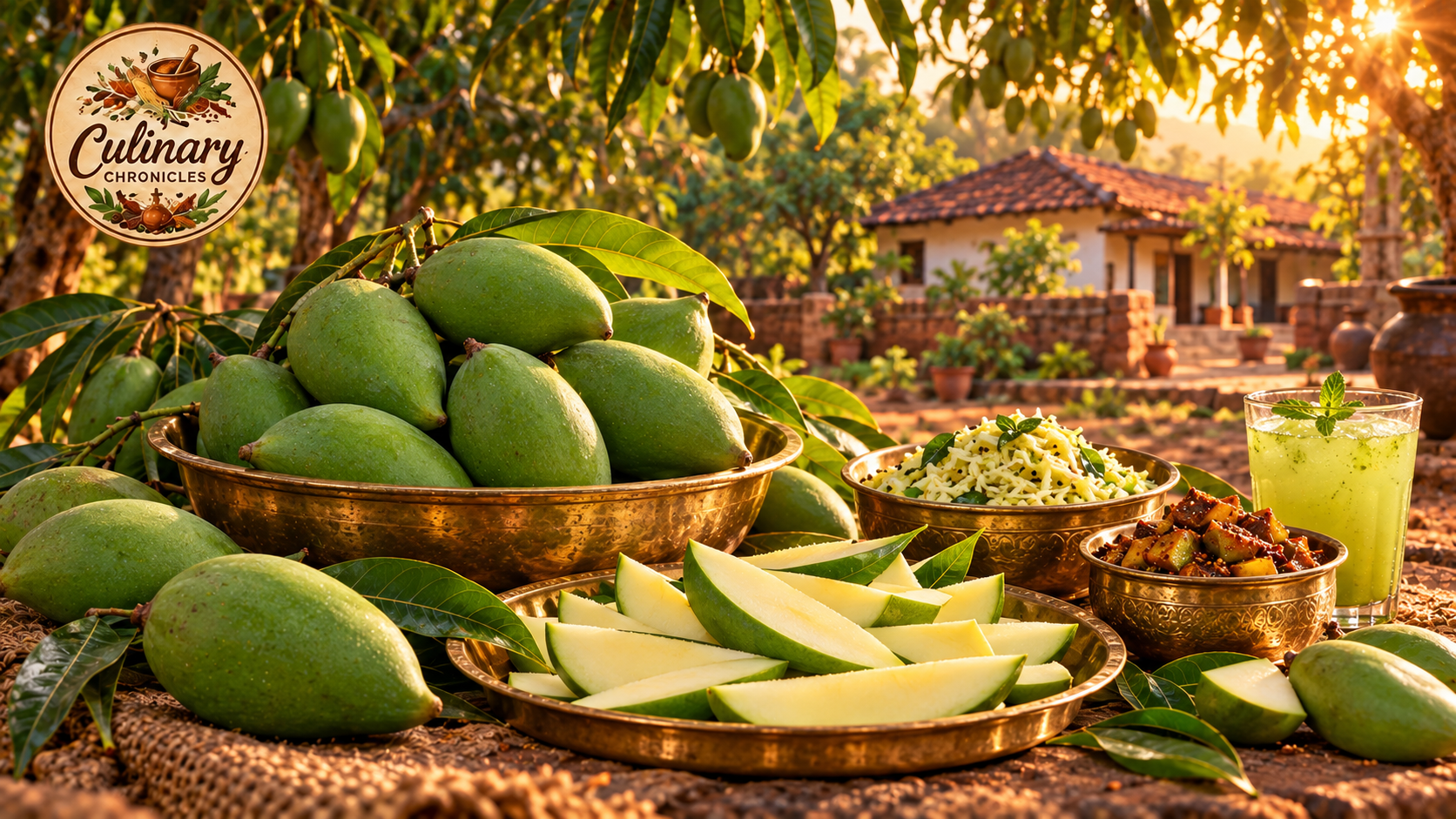
1. What it is
Raw mango is the unripe fruit of Mangifera indica, picked before it develops the softness and sweetness of a ripe mango. Its firm flesh can bring sourness, crunch and a fresh fruit flavour to a meal. Variety and maturity matter: one mango delivers a sharp jolt, another a gentler tang. Green skin alone is not a reliable test, because some ripe varieties remain green.
2. Origin
Kew records the mango's native range from Assam to southern Yunnan in China. Long cultivation has made it deeply established across the Indian subcontinent and beyond. Raw mango is a stage of this fruit's life, not a separate species. The ripe mango may get the poetry; its younger counterpart has been quietly running the pickle department.
3. Where it grows
Mango grows widely across India. Major producing states include Uttar Pradesh, Andhra Pradesh, Bihar, Karnataka, Gujarat, West Bengal and Telangana. Orchard conditions, varieties and harvest seasons differ by region. Culinary mangoes are selected for the job: firm, sour fruit for many pickles, or fruit that cooks into a pleasing pulp for drinks. A famous dessert mango is not automatically the best choice for every sour preparation.
4. Names in Indian languages
Selected regional names used for unripe mango; Roman spellings vary. Some words identify the fruit's immature stage rather than a separate variety.
| Language | Common name |
|---|---|
| Hindi | Kaccha aam |
| Marathi | Kairi |
| Tamil | Mangai |
| Telugu | Mamidikaya |
| Kannada | Mavinakayi |
These names describe fresh fruit. Amchur is dried unripe mango, commonly powdered, and has its own chapter. It does not supply the crunch or moisture of a fresh slice.
5. How it is used
Wash the mango, then peel, grate or cut it as the recipe requires. Grated flesh can season rice; chopped pieces cook into dal or curry; firm chunks go into pickles. For aam panna, mangoes may be boiled or roasted before the pulp is mixed with sweetener and spices. Some recipes retain the peel. Use the preparation specified for the dish rather than assuming every green mango should be treated alike.
6. What it does
Raw mango adds acidity, fruit flavour and texture. A grated preparation disperses its tang; a chunk can remain a distinct sour bite. Cooking softens the flesh and changes how it blends into a gravy. Sweetener balances the taste without removing the acidity. As mango ripens, its acid-sugar balance and texture change, so taste before deciding how much to add. Lime or amchur can supply sourness but cannot reproduce every effect of fresh fruit.
7. Regional use and popular dishes
Andhra kitchens use raw mango in mamidikaya pappu, mango pulihora and avakaya, the mustard-seasoned pickle. Karnataka's mavinakayi chitranna brings grated mango into tempered rice. In Maharashtra, kairi becomes panha and other seasonal preparations; aam panna is familiar across several northern and western traditions. Gujarati chhundo turns grated mango towards sweet-spiced pickle, while Kerala's manga achar makes another lively accompaniment. One harvest, several decisions: drink it, grate it, cook it or pickle it. The sourness stays recognisable; the meal around it makes it local.