
TURMERIC
Buried beneath green leaves, it emerges as gold — a rhizome that colours food, marks ritual, travels through medicine and gives Indian cooking one of its most familiar hues.
More than a spice. A cultural colour.
Turmeric is one of those ingredients whose colour is almost as recognisable as its flavour.
The bright yellow-orange spice comes from the rhizome — an underground stem — of Curcuma longa, a member of the ginger family.
In India, turmeric became much more than a seasoning. It entered food, traditional knowledge, ritual practice, cosmetics, textiles and everyday household culture.
.jpg)
Curcuma longa
A rhizomatous perennial of the Zingiberaceae family. Its underground rhizomes are the source of the familiar golden spice.
The spice is underground.
Turmeric is not a root in the strict botanical sense. The culinary spice comes from a rhizome — a modified underground stem that stores nutrients and produces new shoots.

Root-Like. Not a Root.
What we call turmeric root is botanically a rhizome — an underground stem from which the plant's leafy shoots emerge.
Where the golden colour lives.
The characteristic yellow-orange colour of turmeric comes principally from curcuminoids. These pigments are concentrated in the rhizome and remain visually powerful even after the rhizome has been dried and ground.
This is one reason turmeric became so important beyond seasoning: the same plant could colour food, textiles and other materials.
| Rhizome | Underground stem and principal culinary spice material. |
| Curcuminoids | Principal pigments responsible for turmeric's characteristic golden-yellow colour. |
| Fresh | Moist, firm rhizome with vivid yellow-orange interior. |
| Dried | Cured and dried rhizome suitable for storage and grinding. |
A golden harvest beneath green.
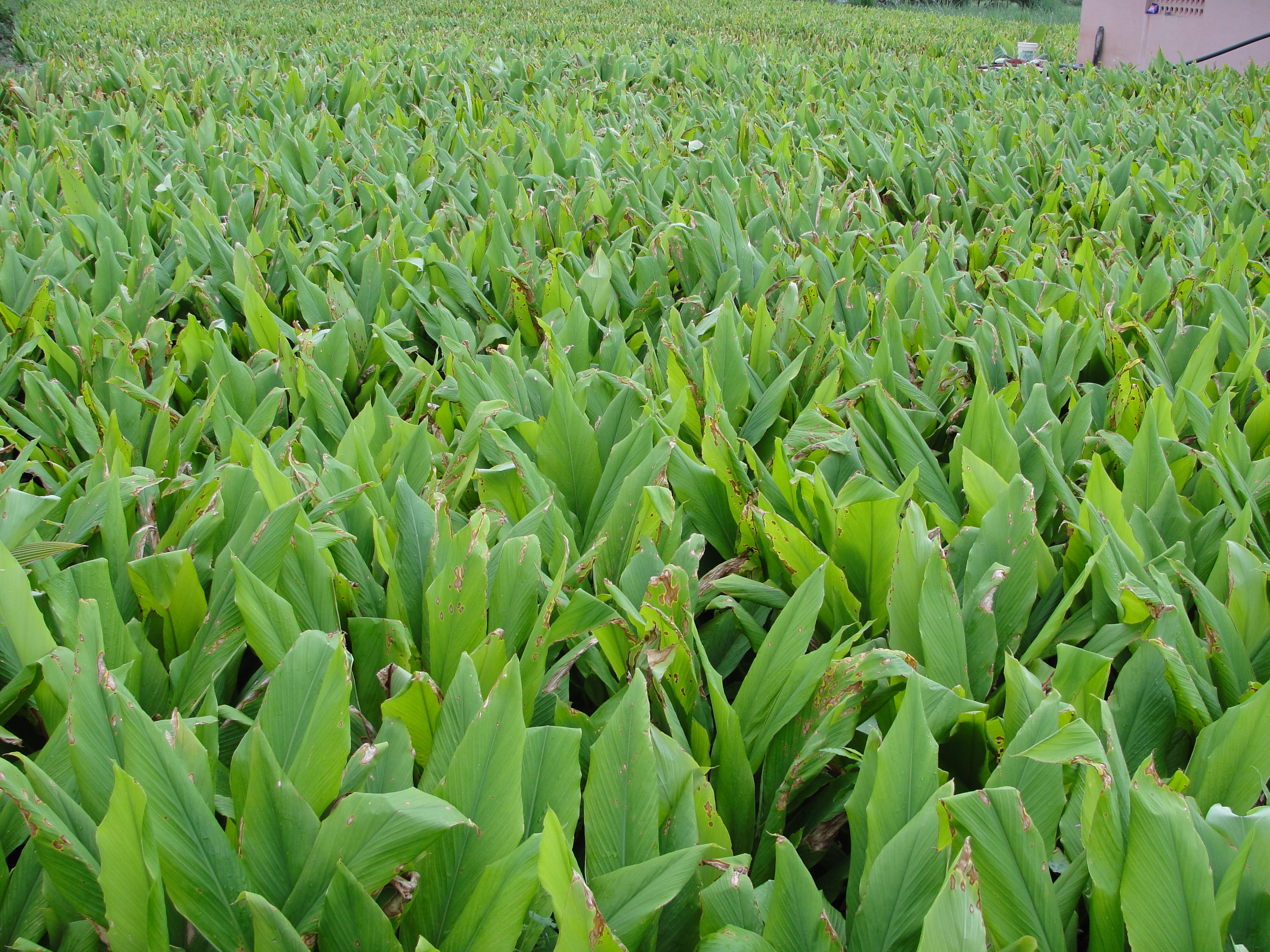
The plant above ground is leafy and green. The treasure is below it. Turmeric is commercially cultivated by planting rhizomes or pieces of rhizome, which develop into new plants.
Green Above
Broad green leaves rise from underground rhizomes, creating the distinctive appearance of a turmeric field.
Gold Below
After the crop matures, the rhizomes are dug from the soil and separated from the leafy tops.

From Wet to Durable
Washing, curing and drying transform the harvested rhizome into a stable spice suitable for storage and later grinding.
The making of the golden spice.
Turmeric does not simply travel from field to spice jar. The harvested rhizome undergoes a deliberate transformation.
Kew describes the traditional process as involving cooking or boiling the cleaned rhizomes, followed by drying. The dried rhizomes may then be polished and sold whole or ground into powder.
That process concentrates the ingredient into the familiar form that moves easily through kitchens and trade.
Heat, Drying & Time
Curing and drying reduce moisture and prepare the rhizome for storage, polishing and grinding.
A golden thread through history.
Turmeric has a long history in South Asia. Kew records its use in India for at least 2,500 years, while later historical evidence documents its movement into other parts of Asia and Africa.
Its history is not confined to food. Turmeric became associated with traditional medicine, dyeing, cosmetics and ritual practice.
Its strong colour made it particularly memorable: turmeric could season a dish while simultaneously giving that dish its visual identity.
| Ancient India | Turmeric develops a long culinary, cultural and traditional-use history. |
| 7th Century | Kew records turmeric in China by approximately AD 700. |
| Medieval Trade | Turmeric moves through wider Asian and Indian Ocean networks. |
| Modern Era | India becomes the world's leading producer, consumer and exporter. |
When a spice becomes a symbol.
Turmeric occupies an unusual place in Indian culture. It is simultaneously ingredient, colourant, traditional material and ritual substance.
Kew notes its longstanding association with auspiciousness in the Indian subcontinent. Turmeric has been used in ceremonial contexts, household traditions and traditional practices alongside its culinary role.
This is what makes turmeric particularly distinctive among the Spice Codex Masters: its story extends well beyond the kitchen.
;_rhizome_with_flowering_stem_and_Wellcome_V0042925.jpg)
Plant, Spice & Symbol
The historical record of turmeric connects the physical plant with the many cultural meanings that accumulated around its colour and use.
Earthy, warm and unmistakably golden.
Turmeric contributes more than colour. Its flavour is earthy, warm and slightly bitter, with a distinctive aroma that becomes familiar across regional spice blends and cooked preparations.
The Living Rhizome
Fresh turmeric has a moist, firm texture and vivid yellow-orange interior. It carries the plant closest to its original form.
The Cured Spice
Dried rhizomes are durable, concentrated and suitable for storage, trade and later grinding.

Gold in Motion
Ground turmeric disperses quickly through curries, dals, rice preparations, pickles, spice blends and countless other dishes.
The colour that travels across India.
Turmeric moves comfortably across regional cuisines. It appears in everyday vegetable preparations, dals, curries, pickles, rice dishes, spice blends and marinades.
Its power in the kitchen is often subtle. Turmeric may not dominate a dish, but its absence can be immediately visible.
A pinch can turn an entire preparation from pale to golden.
A Little Changes Everything
Turmeric is often used in relatively small quantities, yet its colour can transform the visual identity of an entire dish.

The Quiet Flower
Before the underground rhizome becomes a kitchen spice, the turmeric plant produces its own distinctive flowers.
Every golden spice begins in green.
The turmeric we recognise from the spice box is only one stage of a much larger botanical story.
Leaf, flower, rhizome, harvest, curing and grinding — every stage contributes to the ingredient that eventually reaches the kitchen.
Why Turmeric belongs among the Masters.
Turmeric represents one of the clearest examples of an ingredient whose culinary importance cannot be separated from its cultural identity.
It is a spice, a pigment, a traditional material and a visual language. Its golden colour has travelled through kitchens, ceremonies, markets and generations.
From an underground rhizome comes one of India's most recognisable colours.
The Codex Shelf
Curcuma longa L.
Turmeric — Curcuma longa L.
Turmeric Research & Germplasm
Organic Turmeric Rhizome
Curcuma longa Roots — Rhizome & Powder
Turmeric Powder
Drying Turmeric
Curcuma longa Flower