
Gongura Pachadi — The Leaf with a Voice
Pickles and Condiments · Culinary Chronicles
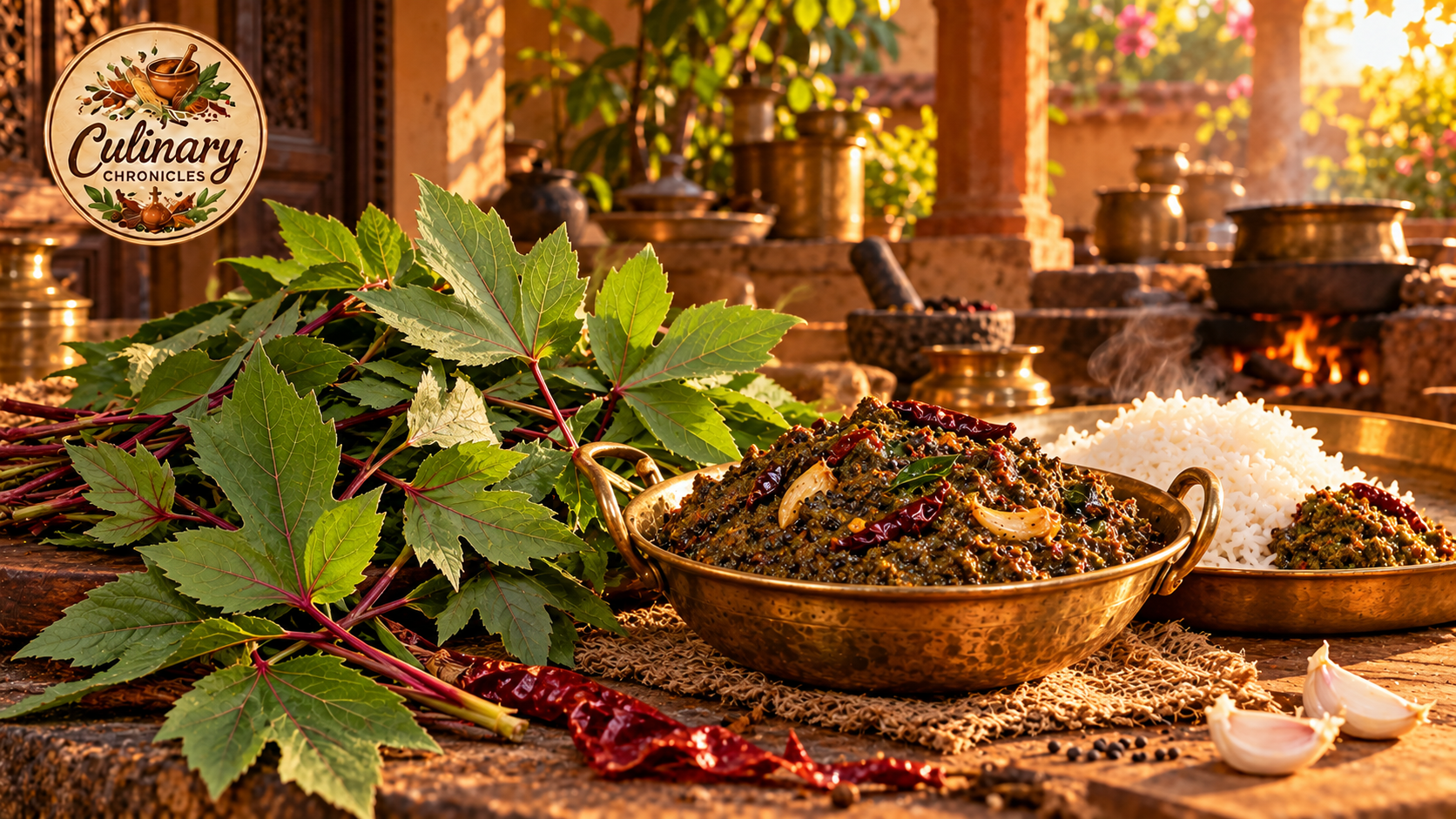
1. What it is
Gongura pachadi is a tangy leaf condiment closely associated with Andhra cooking. Culinary gongura is commonly identified as roselle, Hibiscus sabdariffa, whose leaves are cooked and combined with chillies and seasonings. Although English recipes often call it “sorrel”, it is not the same plant as Rumex sorrel or every other sour green. Freshly made chutneys and pickle-style preparations both appear under familiar gongura names; one label does not guarantee one recipe.
2. Origin
The condiment's Andhra association is well documented, including around Guntur, where the district administration recognises gongura pickle as a local culinary speciality. That connection does not establish a first inventor or date. Family recipes record continuity more readily than a single beginning. We can celebrate the regional relationship without adding an ancient origin story that the evidence has not supplied. Some foods inherit a table, rather than a birth certificate.
3. Where it grows
The principal ingredient is grown as a leafy crop in India. Research collections document vegetable roselle landraces from Andhra Pradesh and Odisha, including Srikakulam and Vizianagaram in Andhra Pradesh and Gajapati in Odisha. These records demonstrate cultivation, not a ranking of the largest producers. This chapter stays with the greens destined for a condiment. The plant in the field and the pachadi on the plate are related stories, not identical ones.
4. Names in Indian languages
These selected names identify the leaf ingredient; they do not translate the finished Andhra preparation into an equivalent dish everywhere. Roman spellings and local usage vary.
| Language | Ingredient name |
|---|---|
| Telugu | Gongura / Yerra gongura |
| Tamil | Pulichai keerai |
| Kannada | Seemi pundi |
| Marathi | Lal ambadi |
| Hindi | Laal ambari |
Gongura pachadi is the Telugu preparation name. Broad names such as ambadi can overlap with related plants, so context matters when buying leaves.
5. How it is used
Pick the leaves from the stems, discard damaged material, wash thoroughly and drain. Documented methods dry the washed leaves before cooking, especially for pickle-style batches. Cook until wilted, then grind or pound with prepared chillies and spices; a coarse texture keeps some leaf character.
Tempering may bring mustard seeds, garlic or other seasonings into hot oil before joining the leaves. Recipes differ: garlic is common in some versions and omitted in others. Follow the chosen preparation rather than combining every family's instructions into one crowded pan. Fresh chutney and preserved pickle methods have different moisture, oil and handling requirements; their storage behaviour cannot be assumed identical.
6. What it does
The leaves provide sourness, while chilli adds heat and salt sharpens the balance. Oil and tempering spread spice aromas through the condiment. Grinding changes the texture from a leafy mass to a relish that can mingle with rice. Sourness and seasoning vary, so taste before deciding whether anything needs adjusting. Gongura already has a voice; it does not always require a megaphone.
7. Regional use and popular dishes
A documented Vijayawada family preparation serves gongura pachadi with hot rice, ghee or sesame oil, and raw onion or shallots. The rice carries the relish; the fat and crunchy accompaniment change each mouthful.
Gongura pappu and gongura meat preparations show the same leaf in other Andhra and Telangana dishes, but they are not alternate names for this condiment. Here, the pleasure is the small spoonful beside a meal: sharp, seasoned and entirely capable of directing the conversation.