
Avakai — The Mango with Mettle
Pickles and Condiments · Culinary Chronicles
1. What it is
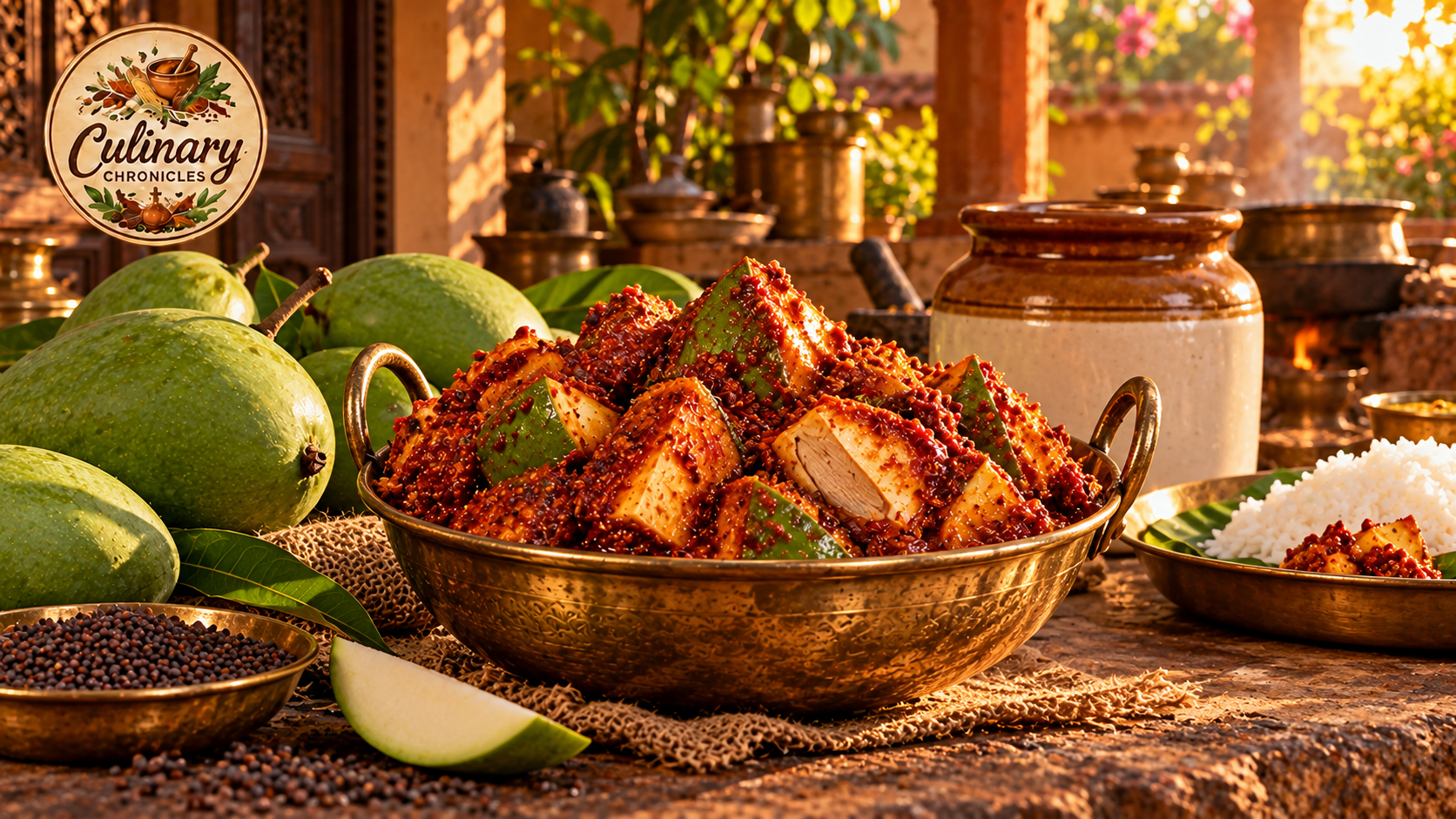
Avakai, also written avakaya, is a mustard-seasoned raw-mango pickle closely associated with Andhra food. Firm, sour green mango pieces meet mustard powder, red chilli, salt and oil. Its Telugu name is explained through ava, mustard, and kai or kaya, raw fruit. That mustard character matters: Avakai is not a convenient label for every mango pickle. Instant chopped-mango preparations and other regional pickles have their own methods and personalities.
2. Origin
Andhra household accounts document Avakai as part of summer pickle-making, with recipes passed between generations and jars shared beyond home. These accounts establish a strong regional association, not a first inventor or exact historical date. One family may remember a grandmother's method; another may defend a different spice mixture with conviction. The tradition has a place at the table, without an agreed birth certificate.
3. Where it grows
The principal fruit comes from Mangifera indica, the mango tree. India's growing areas include Andhra Pradesh, Telangana, Uttar Pradesh, Karnataka, Bihar, Gujarat and West Bengal. These are mango-growing regions, not a claim that every orchard supplies Avakai makers.
Pickling calls for suitable firm, sour unripe fruit; a famous dessert variety or attractive green skin alone does not guarantee the right result. Household makers select for their preparation, bringing the orchard's decisions into the pickle jar.
4. Names in Indian languages
These selected preparation and ingredient names are not translations of Avakai into identical regional dishes. Roman spellings vary.
| Language | Name | Refers to |
|---|---|---|
| Telugu | Avakai / Avakaya | Preparation |
| Telugu | Mamidikaya | Raw mango |
| Telugu | Avalu | Mustard |
| Hindi | Rai | Mustard |
| Tamil | Kadugu | Mustard |
| Kannada | Sasave | Mustard |
5. How it is used
Documented methods wash and thoroughly dry the mangoes and prepare clean, dry utensils and jars. Traditional cutting retains part of the hard stone shell on each suitable piece; the seed inside is removed. The attached shell is not something to chew along with the flesh.
Mustard powder, chilli and salt are combined with oil and used to coat the pieces. Sesame oil appears in many documented recipes. Garlic and fenugreek occur in some household versions; additions and oil handling differ. The pieces and seasoning develop together before serving.
This is a description of culinary practice, not a tested preservation recipe. Oil alone does not establish safe storage, and one family's timing cannot certify another batch.
6. What it does
Mango brings sourness and a firm bite; mustard adds its distinctive pungency. Chilli supplies heat and colour, salt intensifies the mixture, and oil coats the pieces and carries the seasoning. Their proportions shape the result, rather than one ingredient doing all the work.
A spoonful can enliven plain rice, but Avakai need not win by overwhelming it. The mango has mettle; the cook can still exercise diplomacy. Taste and texture also change as the preparation develops, so a freshly mixed batch need not resemble one served later.
7. Regional use and popular dishes
An Andhra family account serves new-season Avakai with hot rice, ghee and mudda pappu, cooked tur dal. The mild rice and dal give its sour, pungent seasoning room to speak. Other documented household pairings include dal rice and curd rice, where the creamy accompaniment changes the balance.
The jar travels; the meal remains personal: which mango piece, how much seasoning, another spoonful of dal. Avakai is a small accompaniment with a say in lunch.