
Lemon Pickle — Sunshine with an Edge
Pickles and Condiments · Culinary Chronicles
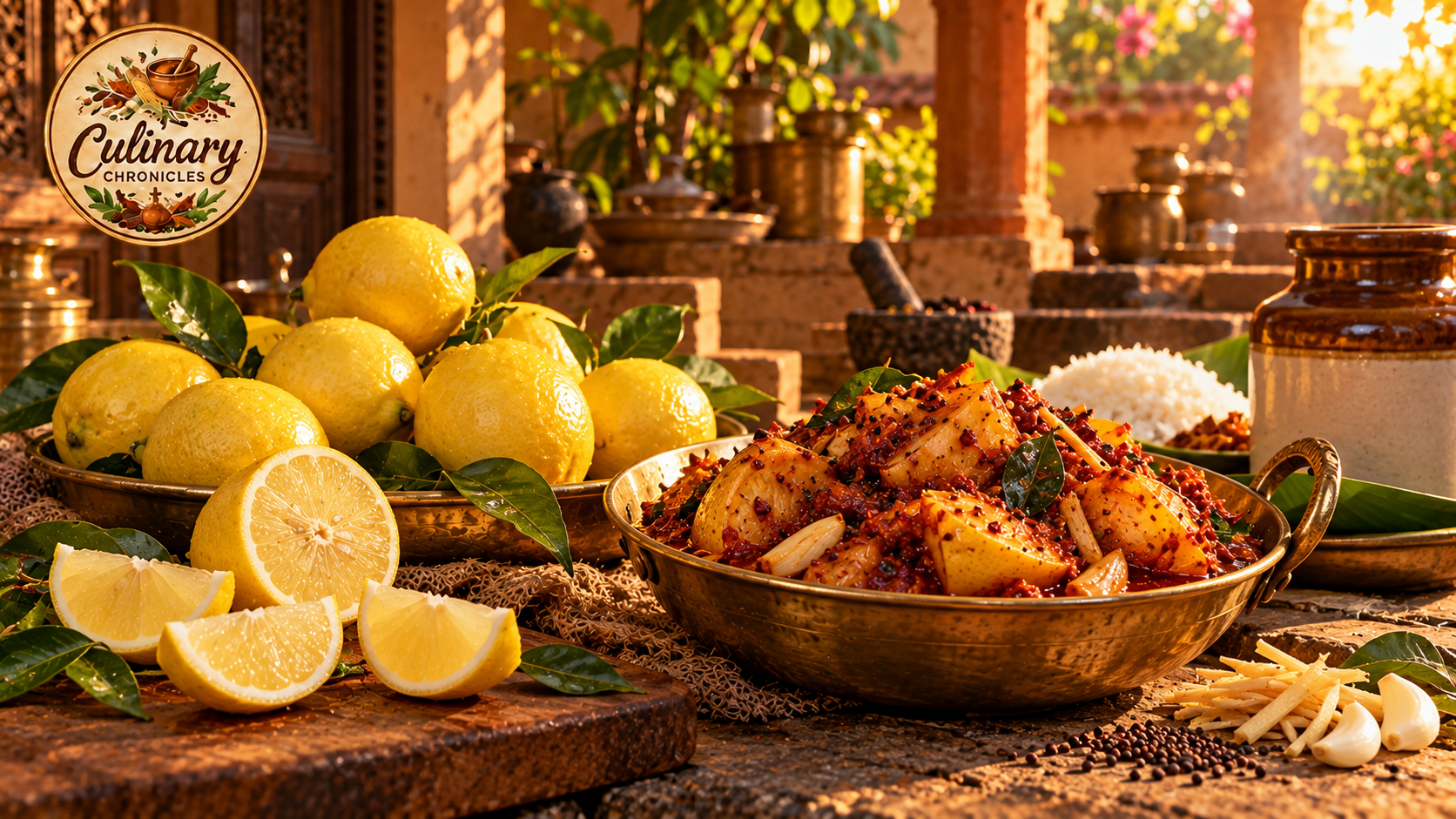
1. What it is
Lemon pickle turns sour citrus, including its peel, into a seasoned accompaniment. Our main example is Kerala-style naranga achar: a hot preparation with sesame oil, mustard, fenugreek, ginger, garlic, curry leaves and chilli. Lemon pickle varies considerably across regions and households; this is one documented version, not India's universal recipe. The jar is a meeting place for sourness, seasoning and opinion.
2. Origin
Naranga achar has a documented place in Kerala food, including sadya meals. That regional association does not establish a first maker or historical starting date. Other families soften their citrus by steaming or use different seasonings. Here, a published pan-fried-lemon version provides the consistent thread; the variations remain variations rather than extra instructions smuggled into the same pot.
3. Where it grows
India’s combined lime-and-lemon growing areas include Andhra Pradesh, Gujarat, Tamil Nadu, Karnataka and Maharashtra. Agricultural accounts often group them together, so a combined growing-area list cannot establish which species supplies a particular pickle. The chosen recipe calls its fruit lemons and permits limes; its exact cultivar is not specified.
Botanically, lemons and acid limes are distinct citrus fruits. Indian words such as nimbu may cover either, and yellow skin alone does not prove that a fruit is a lemon: some limes turn yellow as they mature. Knowing the fruit matters more than winning an argument with its colour.
4. Names in Indian languages
These are MAIN INGREDIENT names recorded for lime/lemon together, not translated names for this pickle. Roman spellings vary; the words do not guarantee botanical identity.
| Language | Main ingredient name |
|---|---|
| Hindi | Nimbu |
| Tamil | Elumichai pazham |
| Telugu | Nimma pandu |
| Kannada | Nimbe |
Naranga achar is the documented Malayalam preparation name used for our Kerala example.
5. How it is used
In this version, washed, dried thin-skinned lemons are briefly pan-fried whole in sesame oil, then cooled and cut. Seeds are removed; peel and flesh remain. Salt and turmeric season the pieces. A separate tempering combines mustard and fenugreek with ginger, garlic, green chilli and curry leaves; red chilli and asafoetida follow before the citrus is folded in.
This describes a culinary method, not a tested preservation recipe. It supplies no storage guarantee or universal proportions. Other lemon pickles need their own instructions, rather than borrowing a reassuring layer of oil from this one.
6. What it does
The citrus brings acidity, juice and peel texture; peel can also contribute bitterness and fragrance. Chilli provides heat, while the tempering adds aromatic contrast. How the fruit is softened and cut affects the bite, and the variety influences the result.
Sweet versions shift the balance with sugar or jaggery, without making the sourness disappear. A little pickle can enliven rice or a mild accompaniment. Sunshine, in this case, arrives with an edge rather than a halo.
7. Regional use and popular dishes
Our Kerala example belongs beside rice meals; another documented naranga achar pairs with curd rice and appears in sadya. The small portion complements a meal rather than replacing its other flavours.
A North Indian/Punjabi recipe takes an oil-free route with salt, ajwain and chilli. A Gujarati khattu mithu limbu nu athanu uses sugar and different seasoning, with thepla and gathiya among its author's pairings. These contrasting versions show how one citrus ingredient can carry several regional conversations. No single jar gets the last word.