
Coconut Chutney — The Cool Companion
Pickles and Condiments · Culinary Chronicles
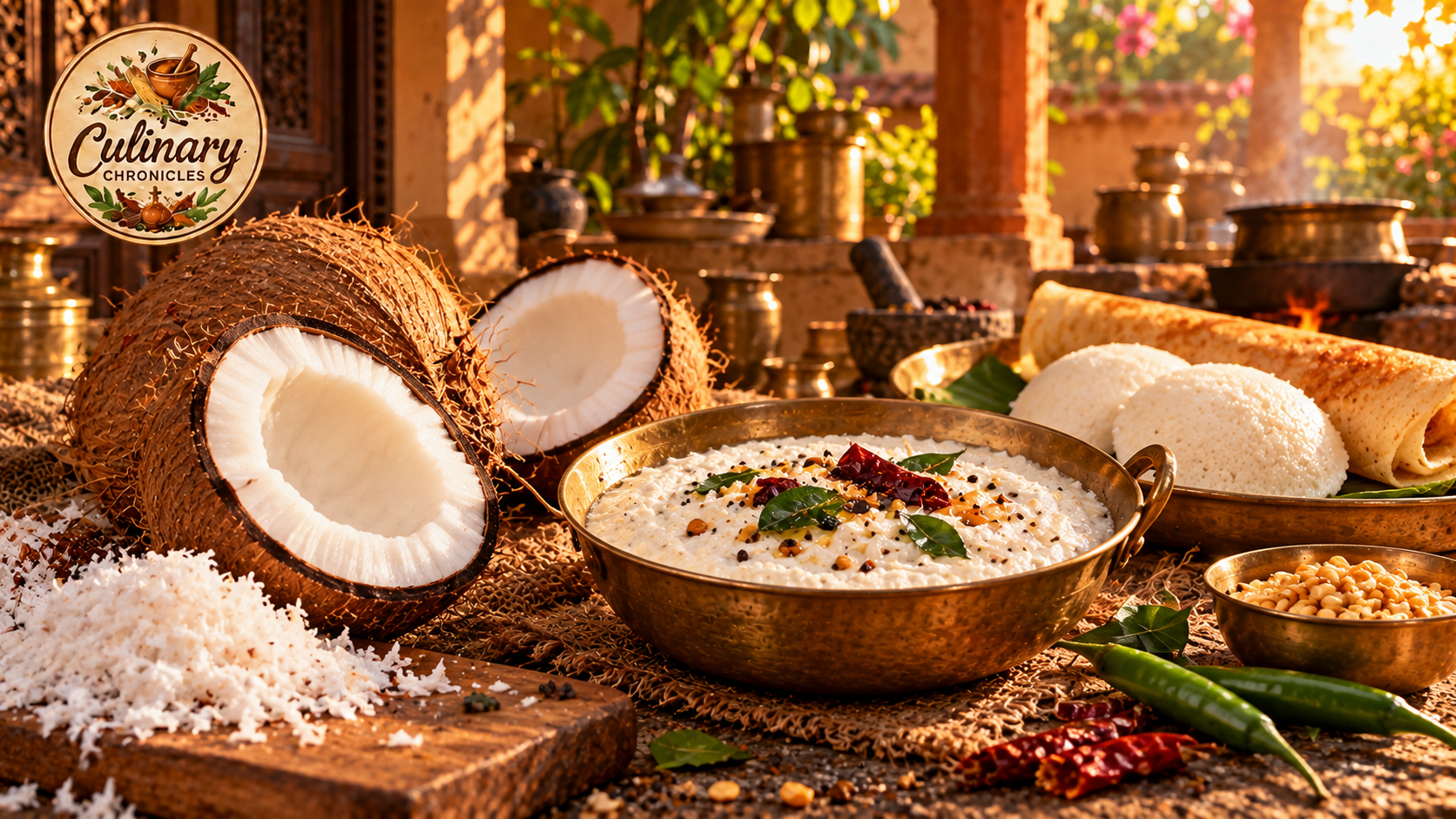
1. What it is
Coconut chutney is a family of ground-coconut accompaniments, not one fixed recipe. Our main example follows a documented Tamil Nadu-style preparation with fresh mature coconut flesh and tempering. Across regions and households, ingredients, texture and serving habits differ. The pale bowl beside breakfast may look modest; it has usually negotiated its own terms before reaching the table.
2. Origin
The condiment belongs to South Indian food traditions, with numerous documented household versions. This chapter uses one Tamil Nadu-style example rather than claiming a single historical birthplace or invention date. Coconut's botanical story does not establish when someone first ground a chutney. A family method can be familiar and well loved without requiring an ancient timestamp. The breakfast table is evidence of use, not a certificate of first invention.
3. Where it grows
The coconut palm is Cocos nucifera. Important Indian growing states include Kerala, Tamil Nadu, Karnataka and Andhra Pradesh. These are ingredient-growing areas, not a claim that their kitchens prepare coconut identically.
The fresh mature nut supplies firm, thick white flesh suitable for grating. Tender coconut has a different texture; coconut milk is extracted from the flesh, rather than being the water inside the nut. Dried coconut is another preparation again. These forms cannot be exchanged without changing what the grinder produces.
4. Names in Indian languages
These are selected MAIN INGREDIENT names for coconut, not translations of one standard chutney. Roman spellings and local usage vary.
| Language | Main ingredient name |
|---|---|
| Hindi | Nariyal |
| Tamil | Thengai |
| Malayalam | Thenga |
| Marathi | Naral |
| Telugu | Kobbari |
| Kannada | Tenginakayi |
The Telugu preparation name kobbari pachadi also appears in documented recipes, but its texture and serving role depend on the version.
5. How it is used
For our main example, grate the fresh flesh and grind it with ready-to-eat roasted gram, green chilli, ginger and salt. Add water gradually to make a smooth accompaniment. The roasted gram is not raw chana dal.
Finish with an oil tempering of mustard seeds, urad dal, dried red chilli, curry leaves and asafoetida; cumin is an optional addition in the documented recipe. Garlic or souring ingredients belong to variations, not compulsory additions to this base. Consistency is a choice: enough body to cling, enough fluidity to dip. The dosa should not need a wrestling partner.
6. What it does
Fresh coconut contributes a mild sweetness, richness and finely ground texture. Roasted gram brings nutty flavour and body; liquid adjustment changes thickness. Tempering adds aromatic contrast and small crisp elements to the softer base.
Chilli still supplies heat. Coconut can make a dish feel rounder, but it does not chemically neutralise the chilli. The result depends on the whole mixture, including quantity and seasoning. “Cool companion” describes its place beside the meal, not a promise that every spoonful will be mild.
7. Regional use and popular dishes
The Tamil Nadu-style example accompanies idli, dosa, uttapam, medu vada or ven pongal. Each offers a different surface for dipping, scooping or mixing.
A documented Kerala red version uses dried red chillies and shallots, changing both colour and flavour. An Andhra kobbari pachadi takes a coarser route with toasted ingredients and tamarind, served with hot rice and ghee. These are contrasting preparations, not extra steps for our pale breakfast chutney. Same principal ingredient, several regional conversations—and room for more than one bowl.