
Mint–Coriander Chutney — The Green Spark
Pickles and Condiments · Culinary Chronicles
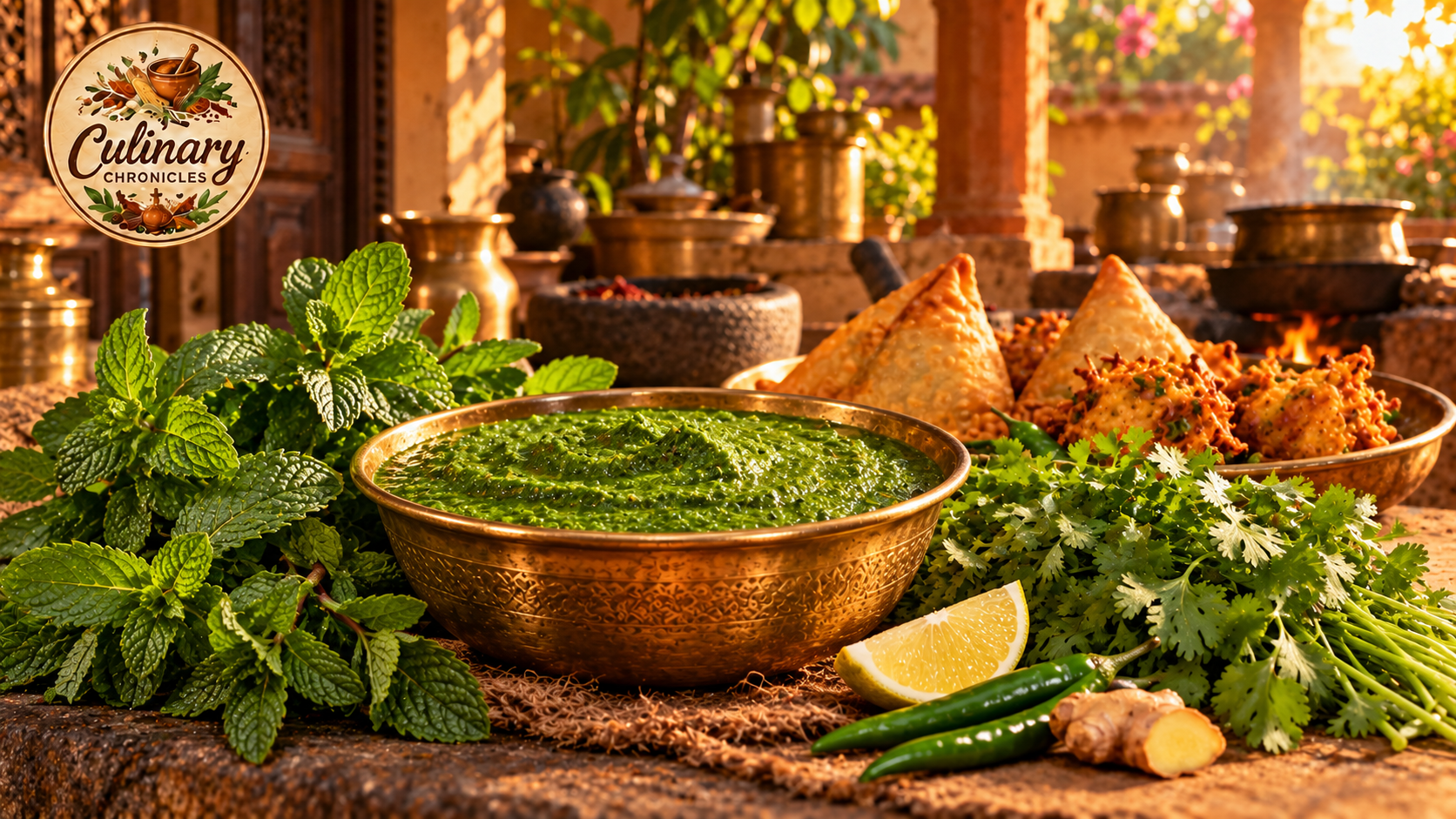
1. What it is
Mint–coriander chutney is a fresh herb accompaniment used for dipping, spreading and seasoning snacks. Our example follows a documented raw chutney for Indian snacks and chaat, with no yogurt. Green chutneys vary across regions, households and serving purposes; colour alone does not identify a recipe. Coriander leaves come from Coriandrum sativum and differ from the dried spice called coriander seed. Mint belongs to Mentha, but the recipe does not establish one species. Pudina is a useful kitchen name, not a botanical passport.
2. Origin
This preparation has a documented place beside Indian snacks and Mumbai chaat, rather than a verified single birthplace or invention date. A published family recipe anchors our example. Familiarity does not justify an ancient history the sources cannot establish. Recipes travel with households and adapt to what is being served. The green bowl can belong beside a samosa or inside a sandwich without needing a separate origin legend for each appearance.
3. Where it grows
Both principal herbs are cultivated in India. Tamil Nadu Agricultural University records coriander growing pockets including Thoothukudi, Virudhunagar, Ramanathapuram and Coimbatore, and distinguishes harvesting leaves from growing the seed crop.
India's northern commercial mint belt includes Uttar Pradesh, Punjab, Haryana and Bihar, but much of that cultivation concerns aromatic oil, particularly Mentha arvensis. Those records do not identify the mint species or farm supplying every chutney bunch. Crop geography and the herbs selected by a cook are connected, but not interchangeable information.
4. Names in Indian languages
These are MAIN INGREDIENT names, not translations of one standard chutney. Coriander entries identify leaves; Roman spellings and local usage vary.
| Language | Mint | Coriander leaves |
|---|---|---|
| Hindi | Pudina | Dhania / Dhaniya |
| Tamil | Pudhina | Kothamalli ilai |
| Marathi | Pudina | Kothimbir |
| Gujarati | Phudino | Kothmir |
5. How it is used
Sort the herbs and discard damaged material. Pluck mint leaves from their stems; retain suitable tender coriander stems with the leaves. Wash thoroughly, drain and roughly chop. In our selected version, grind them with green chilli, ginger, salt, ground cumin and lemon juice, using only enough water for the desired texture.
Keep it thicker for spreading or loosen it for dipping. Garlic and other souring ingredients occur in different recipes, but are not extra instructions for this base. The blender needs cooperation, not a swimming pool.
6. What it does
Mint brings fragrant lift; coriander adds its own herbal character. Chilli contributes heat, ginger another aromatic note and lemon juice acidity. Their balance depends on the ingredients and quantities, rather than a rule that every green chutney must taste alike.
Grinding and liquid adjustment change how the mixture clings to food. Colour can change with the herbs and handling; one trick does not guarantee lasting brightness. A yogurt-based accompaniment is a different preparation, with added dairy tang and a changed texture, not merely this chutney wearing a paler jacket.
7. Regional use and popular dishes
Documented pairings include samosa, pakora and aloo tikki. Mumbai sev puri and ragda patties offer another setting, while sandwiches use a thicker spread between bread and filling.
A separate restaurant-style mint preparation mixes ground herbs into seasoned yogurt for tandoori snacks such as paneer tikka. Keep that version distinct from our fresh base. The purpose helps determine the chutney: a crisp snack wants a dip; a sandwich wants something that stays put. The green spark earns its place by fitting the food.