
Lemongrass — The Fragrant Lift
Aromatics · Culinary Chronicles
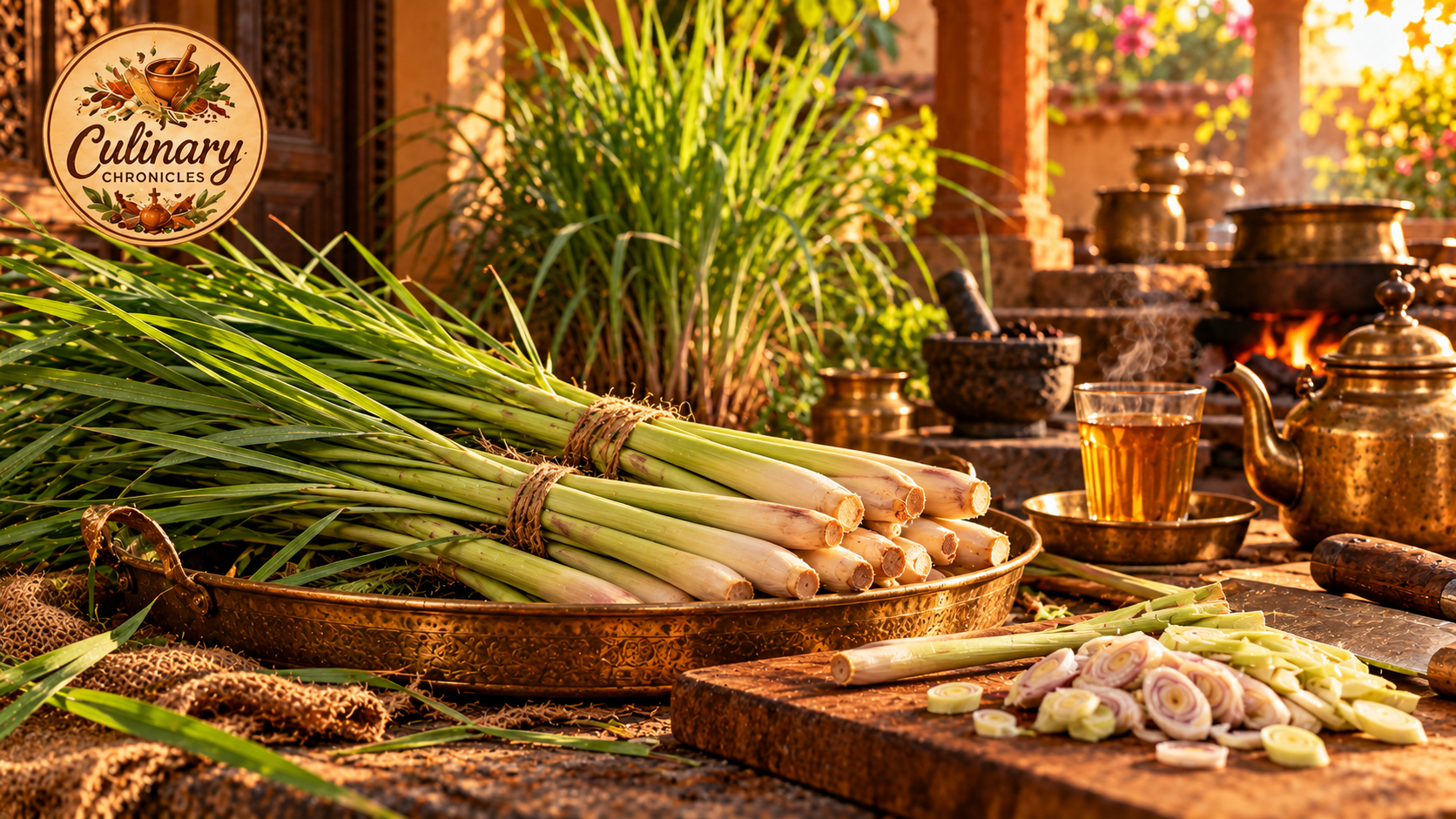
1. What it is
Culinary lemongrass commonly means Cymbopogon citratus, a tufted grass with long narrow blades and layered, pale stalk bases. Its citrus fragrance arrives without lemon juice's sharp sourness. Cymbopogon flexuosus, also called lemongrass, is widely cultivated for aromatic oil. Citronella grasses, including Cymbopogon nardus and Cymbopogon winterianus, are different species again. Local names can overlap, so a familiar name alone does not settle which plant is on the counter.
2. Origin
Lemongrass has a less tidy origin story than its scent suggests. Kew currently lists southern India and Sri Lanka as the native range of Cymbopogon citratus; an older Indian horticultural account describes a generally assumed Malesian origin. These references differ, and a native-range entry does not provide an exact domestication date. We can acknowledge tropical Asian connections without pretending the grass has supplied its travel diary.
3. Where it grows
Lemongrasses grow across warm regions, including India. Older Indian cultivation accounts describe oil-producing lemongrass in Kerala, Karnataka, Uttar Pradesh and Assam; much of that agricultural story concerns Cymbopogon flexuosus. Cymbopogon citratus is recorded in Karnataka, Kerala, Maharashtra and Tamil Nadu, although those records do not establish production rankings. Garden clumps and commercial aromatic-grass fields therefore need not represent the same species or intended use. A planting label is more useful than a guess based on the fragrance.
4. Names in Indian languages
Selected recorded names; spellings vary. Local usage may extend across aromatic grasses, so these are references rather than guarantees of species identity.
| Language | Recorded name |
|---|---|
| Hindi | Gandhatrin |
| Kannada | Majjige hullu |
| Marathi | Gavati chaha |
| Malayalam | Chayapullu |
| Gujarati | Lili cha |
5. How it is used
Wash the plant material, trim the base and remove tough outer layers. For preparations where the stalk is eaten, use the tender inner base and slice very finely or pound it into a paste. Even then, texture depends on the stalk's age and preparation.
Bruise larger pieces to help release their fragrance into a broth or tea. Fibrous leaves and tougher stalk sections suit infusion, followed by removal or straining. They can lend their voice without joining every mouthful. A fragrant cup should not require a second round of chewing.
6. What it does
Lemongrass brings a bright citrus aroma, associated in part with citral in its aromatic oils. It can lift a milky tea or add fragrance to a cooked base, but it does not replace lime or lemon when acidity is required.
Cutting, bruising, quantity and heating influence what reaches the cup or plate. Simmering draws flavour into a liquid; the result varies with the material and method. More grass is not automatically more grace, particularly when tough fibres remain in the dish.
7. Regional use and popular dishes
A documented Gujarati family masala chai boils lemongrass with black tea before adding milk and other flavourings, then strains the brew. A Parsi cutting-chai recipe uses chopped lemongrass leaves with mint, milk and water. These are household examples, not a single formula followed by every Gujarati or Parsi kitchen.
Beyond India, Thai tom yum uses lemongrass to perfume its broth, with larger pieces usually left uneaten. The regional setting changes; the useful distinction remains: fragrance in the pot, fibres out of the spoon.