
Fresh Turmeric — The Golden Undertone
Aromatics · Culinary Chronicles
1. What it is
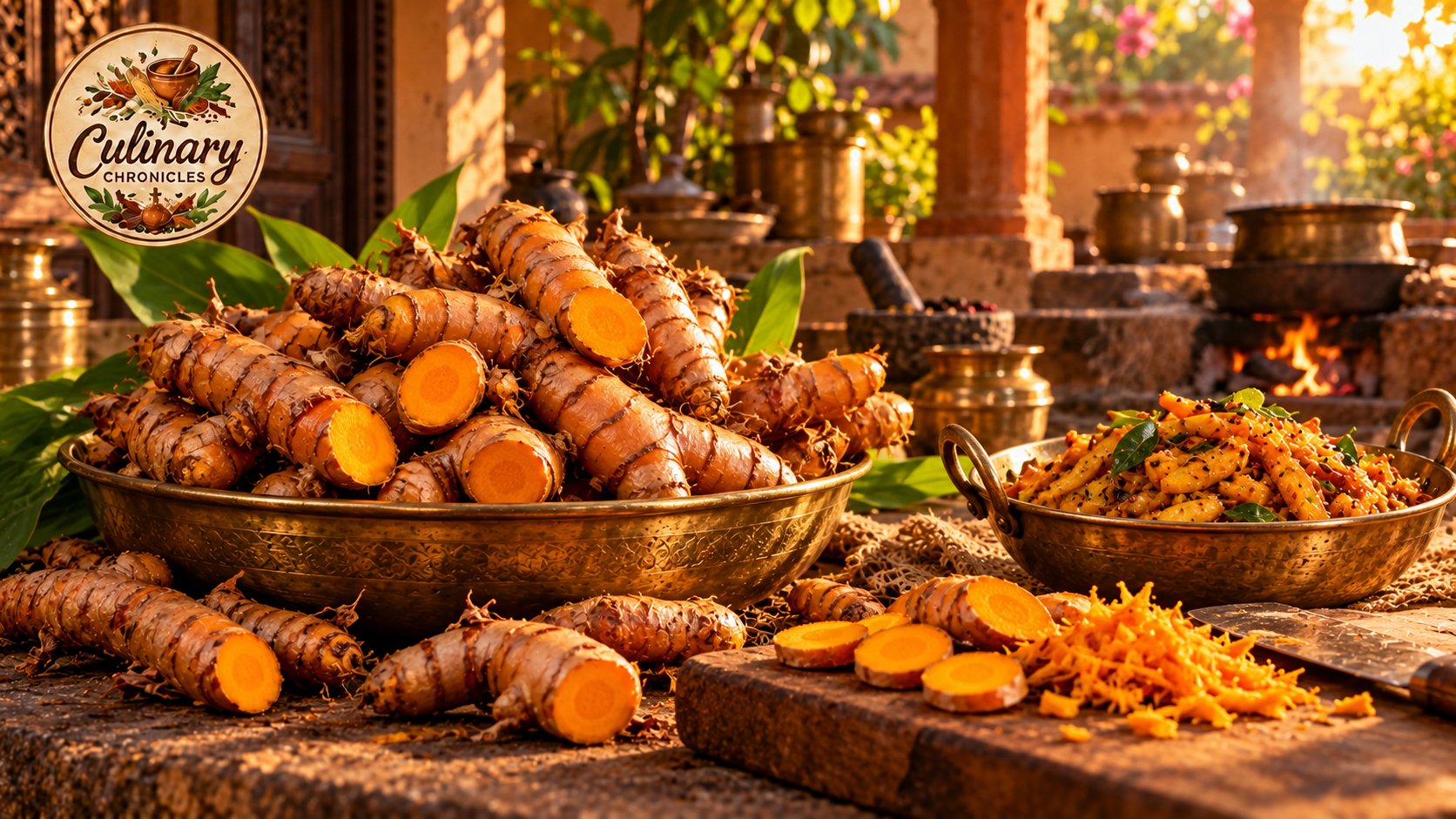
Fresh turmeric is the rhizome of Curcuma longa: an underground stem, with branching fingers beneath textured skin. Cut it open and the orange-yellow interior makes its presence clear. Its earthy aroma and sometimes bitter edge give it a different role from ginger, even though both belong to the ginger family. Here we follow the fresh ingredient. Turmeric powder comes from processed, dried rhizomes; mango ginger, Curcuma amada, is a separate species.
2. Origin
Turmeric's long history of cultivation makes its beginnings difficult to pin down. Kew currently describes it as a cultivated plant originating in southwestern India, while its species profile acknowledges uncertainty about its exact origin within South or Southeast Asia. These accounts do not establish a precise domestication date or single starting place. The kitchen knows what to do with turmeric even when history declines to supply a neat address.
3. Where it grows
Indian growing areas include Telangana, Andhra Pradesh, Tamil Nadu, Maharashtra, Odisha, West Bengal and Assam, among others. Warm conditions and well-drained soil support the crop; pieces of rhizome are used for planting. Cultivars differ in colour, aroma and other qualities, so the market's brightest finger is not a complete flavour forecast. Harvested turmeric may go to fresh markets or onward for processing into the familiar dried spice.
4. Names in Indian languages
These names refer broadly to turmeric, not exclusively to its fresh form. Specify fresh rhizomes when buying; Roman spellings vary.
| Language | Common name |
|---|---|
| Hindi | Haldi |
| Tamil | Manjal |
| Telugu | Pasupu |
| Kannada | Arishina |
| Malayalam | Manjal |
| Marathi | Halad |
| Gujarati | Haldi |
| Bengali | Halud |
5. How it is used
Wash away soil, then scrape or peel as the preparation requires. Slice for a pickle or distinct pieces, grate for a cooked vegetable preparation, or crush to distribute it through a paste. The cut affects texture and how evenly the ingredient spreads. Begin with a modest quantity and taste: fresh turmeric and powder are not interchangeable by a universal spoonful rule. Hands, boards and bowls can take on yellow stains. Turmeric has a generous approach to signing its work.
6. What it does
Turmeric brings colour as well as flavour. Curcuminoid pigments contribute its yellow-orange character, while aromatic oils help shape its scent. Fresh pieces bring moisture and texture that powder cannot provide in the same way. Earthy, peppery and bitter impressions vary with the material and the dish.
Cooking softens the pieces and changes their aromatic character. Fat, seasoning and accompanying ingredients shape the final balance, but simmering does not promise to remove every bitter note. Colour alone cannot tell you how much turmeric a dish needs.
7. Regional use and popular dishes
Rajasthan's winter kachi haldi ki sabzi gives fresh turmeric a starring role. One documented household version grates it, cooks it slowly in ghee, then adds a seasoned yogurt mixture and peas. Recipes and accompaniments vary.
A Gujarati household example preserves chopped fresh turmeric with lemon juice and salt, serving it in small amounts beside a meal. This uncooked pickle keeps a different texture and flavour from the cooked sabzi; mango-ginger pickle is another preparation, not the same ingredient under a new name.
Fresh turmeric can be the vegetable or the sharp little accompaniment. The golden undertone occasionally takes the lead.