
Garlic — The Bold Whisper
Aromatics · Culinary Chronicles
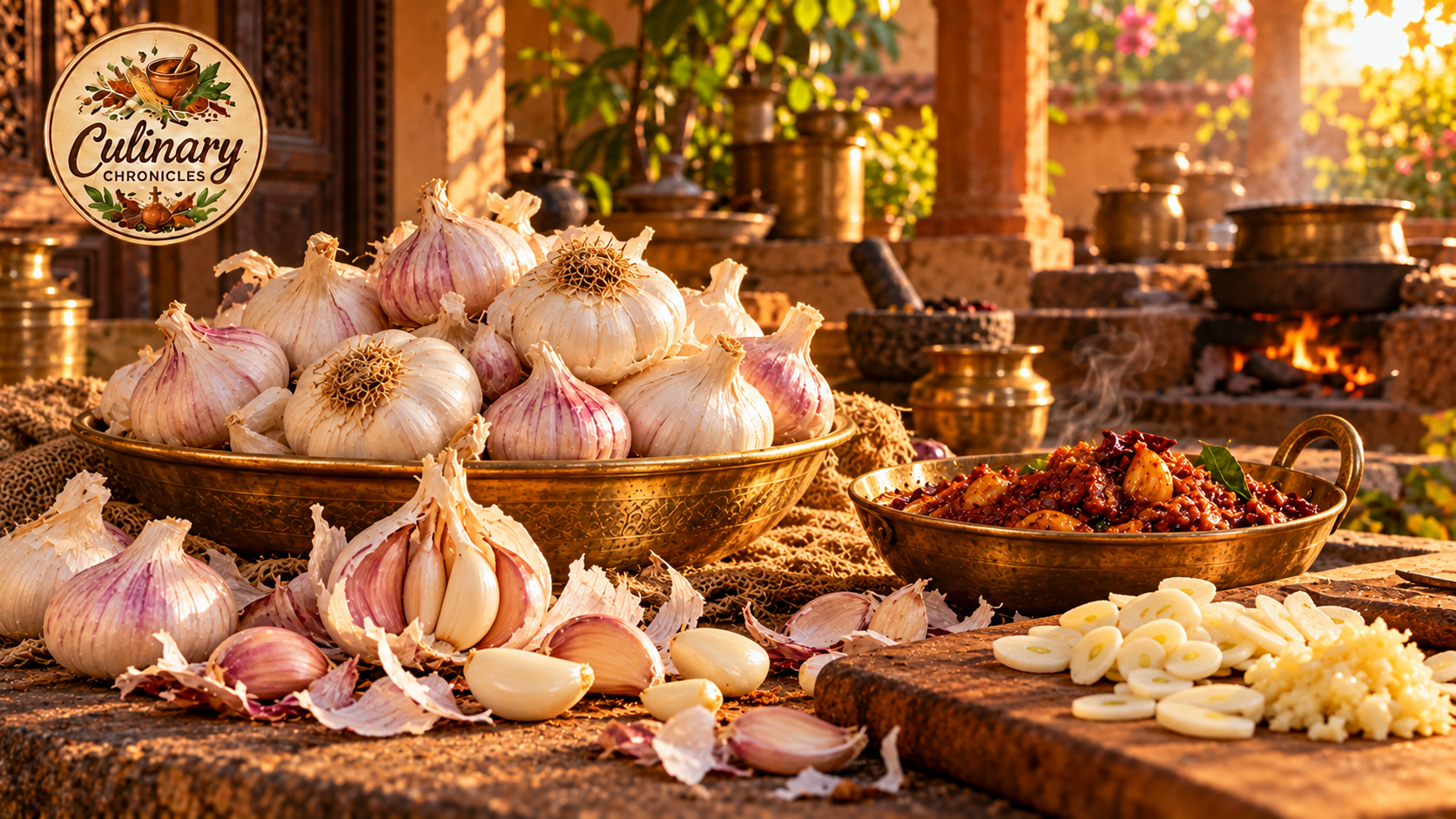
1. What it is
Garlic, Allium sativum, is a bulb made of individual cloves tucked beneath whitish or pinkish papery skins. Each clove carries a firm, pale interior and a distinctly aromatic personality. Varieties differ in clove size and strength; a large bulb does not automatically make a louder dinner. This chapter follows fresh bulbs and cloves. Green garlic is the young plant, while pickled garlic and dried powders bring different textures and flavours.
2. Origin
Garlic is associated with Central Asian origins. Kew lists its native range from Central Asia to northeastern Iran, but its exact early domestication history remains uncertain. Long cultivation and selection complicate the trail. A precise birthplace, date or route into India would make a tidier story than the evidence allows. The bulb has travelled widely; its paperwork is less cooperative.
3. Where it grows
Garlic grows in many parts of the world. In India, Madhya Pradesh, Rajasthan and Gujarat are important producing states. Growers generally plant cloves rather than sowing ordinary seed, and well-drained soil matters to the developing bulbs. Varieties and growing conditions influence the harvest. The familiar kitchen head is therefore a bundle of agricultural decisions as well as a bundle of cloves.
4. Names in Indian languages
Selected names for garlic; Roman spellings and local usage vary.
| Language | Common name |
|---|---|
| Hindi | Lahsun |
| Tamil | Vellaipoondu |
| Telugu | Vellulli |
| Kannada | Bellulli |
| Malayalam | Vellulli |
| Marathi | Lasun |
| Gujarati | Lasan |
| Bengali | Rashun |
5. How it is used
Separate the cloves and remove their papery skins. A light smash helps loosen the skin when an intact clove is unnecessary. Slice for distinct pieces, chop to spread garlic through a dish, or crush and pound it into a paste. Whole cloves can soften during slow cooking and give a gentler impression than raw crushed garlic. Fine pieces need attention in hot oil: aim for the colour your recipe requires, then move on. Golden garlic and blackened garlic have different opinions about dinner.
6. What it does
Cutting or crushing damages cells and brings together compounds and enzymes that start garlic's sulphur-based flavour chemistry. More extensive crushing generally gives a sharper raw effect. Resting allows those reactions to continue; cooking changes the compounds again. Neither a fixed resting time nor one cooking method guarantees the same result in every dish.
Gentle cooking can soften the raw bite, while light browning can add nutty notes. Burnt garlic can taste bitter. Quantity, cut size and timing help decide whether garlic supports a gravy or announces itself in the first spoonful.
7. Regional use and popular dishes
In Maharashtra, dry lasun chutney brings garlic, chilli and coconut into the orbit of vada pav; ingredients and preparation vary by household. Rajasthan's lehsun chutney offers a red-chilli partnership beside meals such as bajra roti or dal baati.
Tamil poondu rasam brings garlic into a tangy broth with tamarind and spices, often served with rice. Lasooni dal gives it another stage, in the lentils, the tempering or both.
Garlic also stays outside some kitchens: traditional Jain dietary practice and some Vaishnava traditions avoid it, with observance varying. Flavour has many foundations. This particular foundation simply tends to make itself heard.