
Ginger — The Warm Awakening
Aromatics · Culinary Chronicles
1. What it is
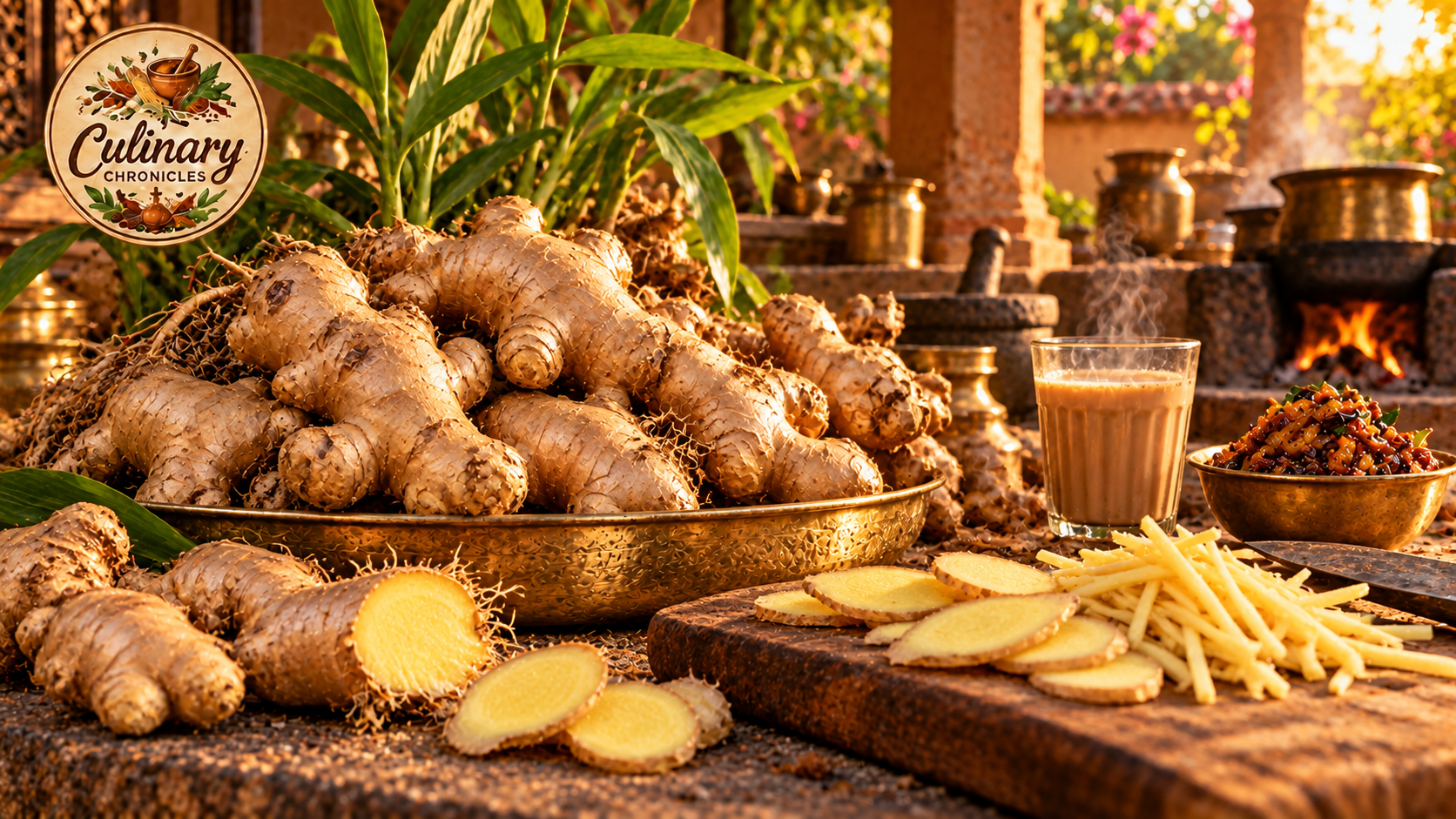
Fresh ginger is the branched rhizome of Zingiber officinale: an underground stem, rather than a botanical root. Beneath its tan skin lies pale-yellow flesh with a fragrant, pungent character. Tender young ginger and older, more fibrous pieces can behave differently. It belongs to the same broad plant family as turmeric, but arrives with its own personality. A little ginger can wake up a dish without asking everyone to leave the room.
2. Origin
Ginger is a long-cultivated Asian crop whose exact domestication centre and early journey remain uncertain. Botanical and spice references describe its origins differently, so one confident birthplace would be misleading. Cultivation and exchange helped establish it across many food traditions. Its story is older than the neat labels we now attach to it.
3. Where it grows
Indian growing areas include Karnataka, Odisha, Assam, Meghalaya, Arunachal Pradesh and Gujarat, among others. Warm conditions, moisture and well-drained soil support cultivation; rhizome pieces are used for planting. The crop's character also depends on variety, maturity and intended market. Ginger selected for fresh cooking need not have the same qualities prized for drying. Behind that knobbly kitchen companion is a grower's decision about when to harvest.
4. Names in Indian languages
Selected names for fresh ginger; Roman spellings and local usage vary.
| Language | Common name |
|---|---|
| Hindi | Adrak |
| Tamil | Inji |
| Telugu | Allamu |
| Kannada | Shunti |
| Malayalam | Inchi / Inji |
| Marathi | Ale |
| Gujarati | Adu |
| Bengali | Ada |
Dried ginger comes from the same species but has different preparation and flavour characteristics; names such as sonth or sonti commonly identify the dried form. Galangal is a related but distinct ingredient, not simply ginger wearing a smoother jacket.
5. How it is used
Wash the rhizome and scrape or peel where the skin would affect the dish. Slice across the fibres to shorten them, then cut into matchsticks or mince as needed. Crushing and grating spread ginger through a liquid or sauce; larger slices keep a more distinct presence. Fibrous pieces may need finer preparation or straining. A paste in a gravy, a sliver in a garnish and a crushed piece in tea each deliver ginger differently.
6. What it does
Fresh ginger supplies pungency and fragrant lift. Gingerols contribute to its heat; aromatic compounds contribute to its scent. Preparation, quantity and cooking method change the result. Heat alters ginger's flavour chemistry, but cooking does not reliably erase its pungency. Fine ginger can blend through a cooked base, while visible slivers make themselves known in individual bites. Fresh and dried ginger are therefore not interchangeable spoon for spoon.
7. Regional use and popular dishes
Adrak chai infuses crushed or grated ginger into tea, often with milk: a familiar conversation starter in many Indian homes.
Andhra allam pachadi combines ginger with tamarind, jaggery and seasoning, with versions served beside idli, dosa or rice. Kerala's puli inji brings ginger into a sweet-sour-spicy relish associated with sadya.
Ginger also joins garlic in many cooking bases, though neither partnership nor proportion is universal. Sometimes it supports the meal; sometimes it gets its own chutney. Either way, the warm awakening is difficult to miss.