
Onion — The First Sizzle
Aromatics · Culinary Chronicles
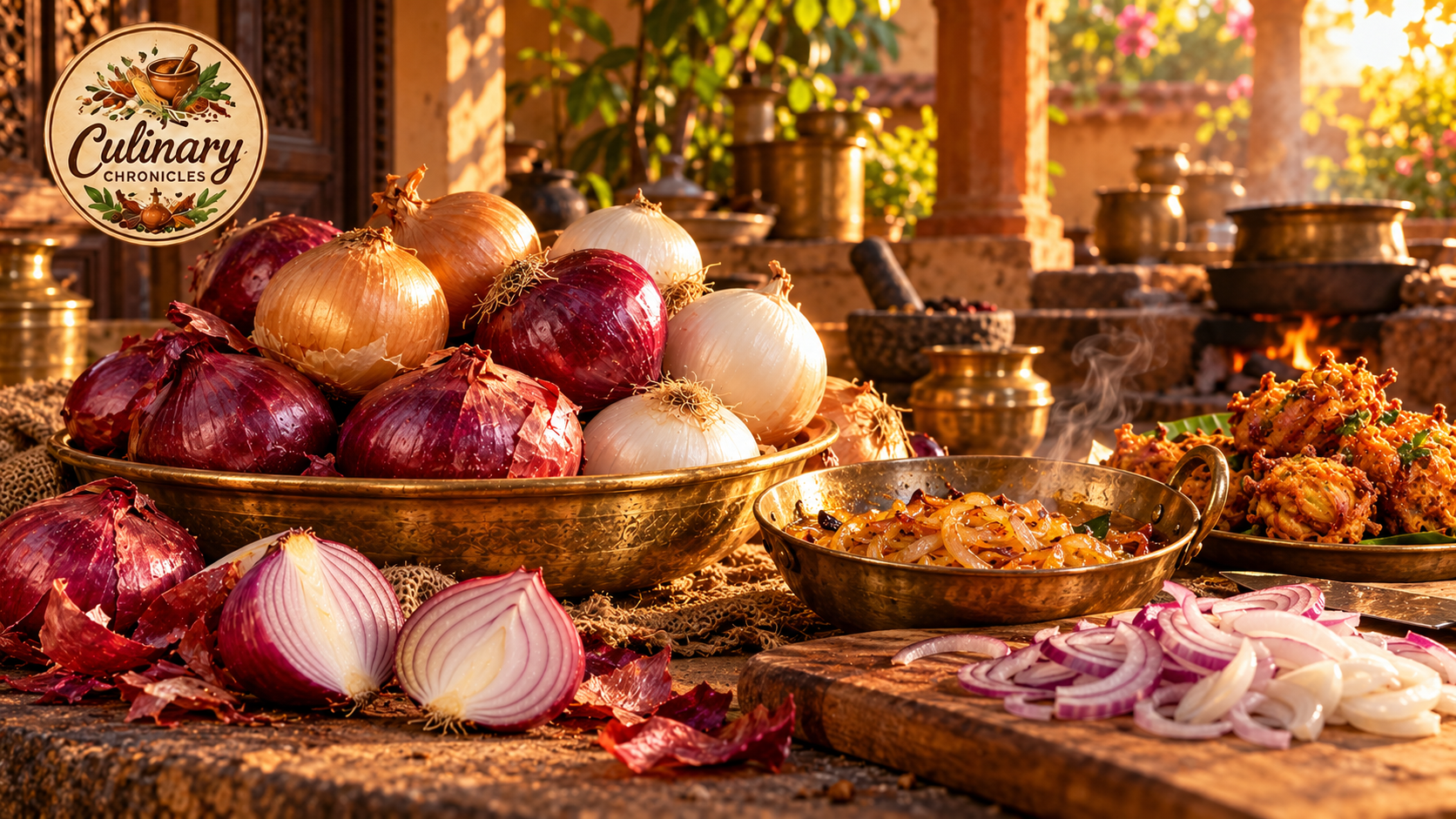
1. What it is
The bulb onion, Allium cepa, stores its reserves in fleshy layers beneath a papery skin. Red, white and yellow onions offer different varieties, strengths and cooking qualities; colour is a clue, not a complete flavour forecast. Here we mean bulb onions. Shallots and spring onions will have their own chapters. Onion is often the first arrival in the pan—and occasionally the reason the cook looks emotionally involved.
2. Origin
Kew describes onion as a cultivated plant originating in Central Asia. Its early domestication is less neatly documented than its modern kitchen presence: the exact starting place, date and route into India remain uncertain. Long cultivation and selection have spread it widely. We can acknowledge the journey without supplying an imaginary passport stamp.
3. Where it grows
India's important onion-growing states include Maharashtra, Madhya Pradesh, Karnataka, Gujarat, Rajasthan and others. Different planting seasons, varieties and storage practices help supply markets across the year. Nashik's association with onions is especially familiar, but the ingredient's agricultural story extends far beyond one district. The everyday bulb represents growers, harvesting labour and careful handling before it reaches a chopping board.
4. Names in Indian languages
Selected names for bulb onion; Roman spellings and local usage vary. Some languages use related terms for small onions, so specify the type when buying.
| Language | Common name |
|---|---|
| Hindi | Pyaz |
| Tamil | Vengayam |
| Telugu | Ullipaya |
| Kannada | Eerulli |
| Malayalam | Savala / Ulli |
| Marathi | Kanda |
| Gujarati | Kando |
| Bengali | Peyaj |
5. How it is used
Peel away the dry outer skin and trim as needed. Slice for fritters or fried garnish, chop for a cooked base, or cut into petals when the onion should remain visible. Cut size affects texture and cooking time. Sweating onions means cooking gently until softened, usually without browning. Browning needs further cooking as moisture reduces. Stir and adjust the heat so the colour develops evenly. Golden-brown onions can be fragrant and savoury; scorched black edges are not an advanced qualification.
6. What it does
Cutting damages onion cells and sets off reactions that release pungent sulphur compounds. Raw onion can therefore bring bite and crunch. Cooking changes those compounds, softens the layers and makes sweetness more apparent. Browning adds deeper flavours through several reactions; not every softened onion is “caramelised”. Finely cooked onions can contribute body to a gravy, while fried slices add texture and aroma. The same bulb can play supporting actor, foundation or crunchy headline, depending on the cut and the pan.
7. Regional use and popular dishes
Maharashtra's kanda poha folds onion into a breakfast staple, while kanda bhaji turns sliced onion into a teatime fritter. North Indian pyaz pakora offers another regional expression of that idea. Do-pyaza preparations give onion a conspicuous role, with timing and cuts varying by recipe. Fried onion strands also appear in many biryani traditions as a fragrant layer or garnish. Onion is widespread, not compulsory. Jain dietary practice and some devotional or household food traditions avoid it; observance varies. Indian kitchens have many ways to build flavour, and not every delicious story begins with the same first sizzle.