
CULINARY CHRONICLES · MASALA UNIVERSE · 15

Shorshe Bata
Bengal's Mustard, Ground to Character
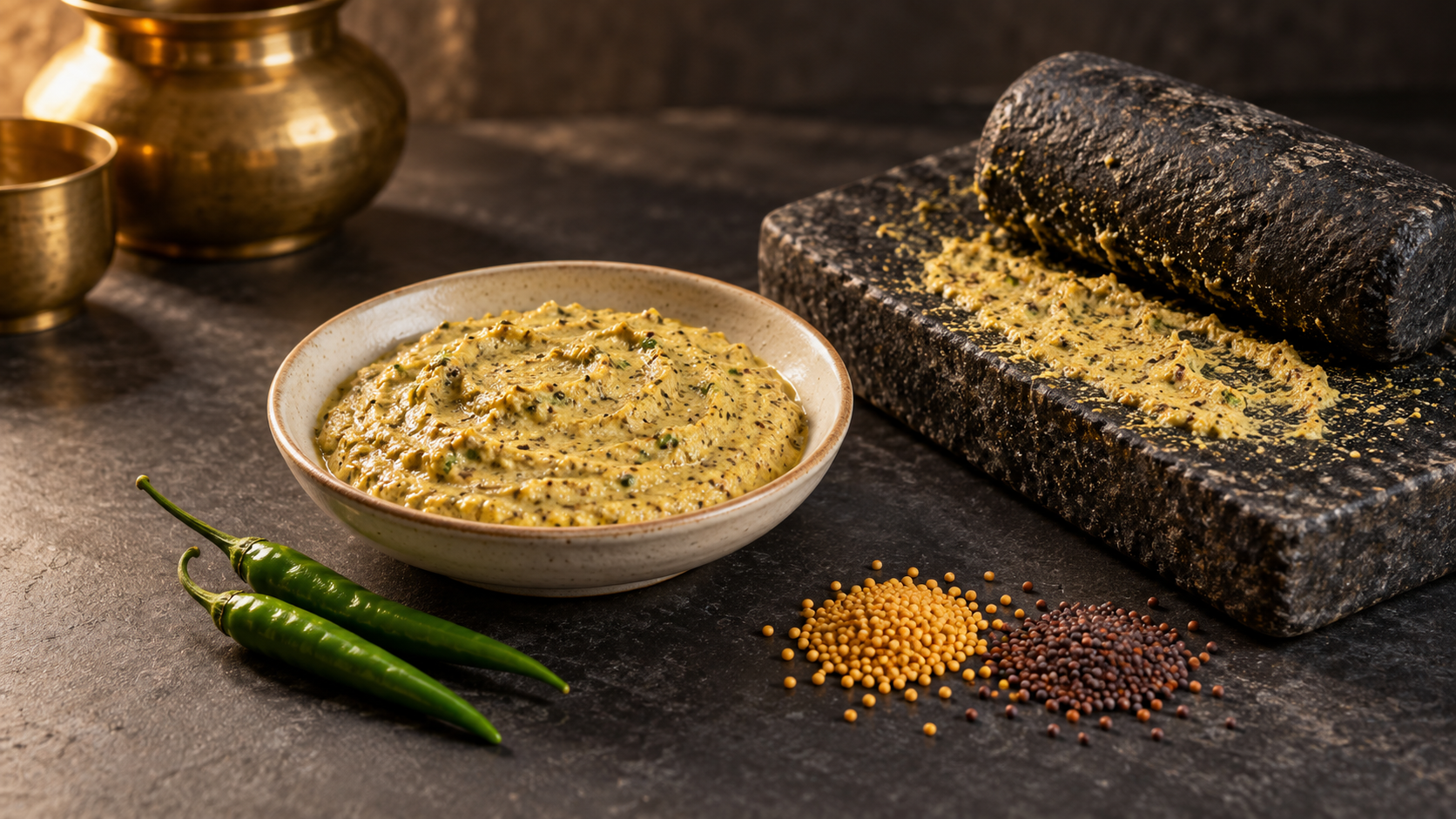
What It Is — Small Seeds, Considerable Presence
Shorshe bata is mustard ground into a paste. The description is brief; the flavour has rather more to say. In Bengali cooking, this prepared ingredient can become part of a sauce or coating, rather than remaining a sprinkle of whole seeds. The distinction matters: a paste has a job of its own. [S1, S4]
There is no single compulsory formula. This chapter follows Bong Eats' basic mustard paste for bhetki paturi, while keeping the additions in other preparations clearly separate. [S1]
Origin — A Kitchen Association, Not a Birth Certificate
The named recipes examined here establish a strong Bengali culinary association. They do not establish the first household to grind mustard, an invention date or one exclusive birthplace. The useful story begins with what cooks do: turning an everyday seed into a defining part of a meal. [S1, S2, S3]
Regional belonging need not depend on proving that every ingredient began life within the same boundary.
Where the Ingredients Grow — Beyond the Kitchen Window
ICAR describes rapeseed-mustard cultivation across Rajasthan, Uttar Pradesh, Madhya Pradesh, Haryana, Gujarat and West Bengal. That broad agricultural category covers several crops; it is not a botanical identification of the seeds in someone's spice tin. [A1]
Likewise, the yellow and brown mustard used in a recipe are useful culinary descriptions, not permission to identify their species by colour alone. Bong Eats describes mixing these seed types in its kitchen. A Bengali preparation can draw upon a much wider agricultural landscape. [S5]
Names — The Method Is in the Words
A Bengali practitioner writing as My Annoying Opinions glosses shorshe as mustard and bata as ground into paste. Here, the name tells us both ingredient and action. [S4]
We retain Shorshe Bata as the collection's canonical title. There is no need to manufacture equivalent names in other Indian languages to make the ingredient feel more widely travelled.
How It Is Used — Water, Grinding and Patience
For the selected paturi preparation, Bong Eats soaks equal proportions of brown and yellow mustard, then grinds with green chilli, salt, turmeric and little water. A flat grinding stone, the sheel nora, or an electric grinder can do the work. This method does not roast the seeds. [S1]
The aim is a paste rather than a batter. Adding water is easy; asking it politely to leave again is less convenient.
What It Does — A Distinctive Mustard Voice
Mustard supplies pungency and a recognisable flavour to the finished preparation. Seed choice and accompanying ingredients affect the result; Bong Eats describes yellow mustard as milder in its pantry account. [S5]
Debjani Chatterjee Alam's fish preparation includes straining the paste before it enters the gravy. Such handling choices deserve attention without turning a cook's method into a universal rule about bitterness. [S6]
Regional Use — Fish, Parcels and Vegetables
Bhetki paturi takes the paste into banana-leaf parcels. Bong Eats' ilish bhapa uses another mustard-based mixture with coconut and yoghurt for steamed hilsa. Its shorshe dharosh combines mustard and poppy seed in an okra preparation. [S1, S2, S3]
These are different dishes, not three reasons to add every ingredient to one bowl. Understanding the paste means knowing what the cook will ask it to become.
Sources and Further Reading
- S1 — Bong Eats — Bhetki paturi (2020)
- S2 — Bong Eats — Ilish Bhapa (2018)
- S3 — Bong Eats — Shorshe Dharosh (2019)
- S4 — My Annoying Opinions — Shorshe-bata Maach (2015)
- S5 — Bong Eats — Bengali Pantry Essentials
- S6 — Debjani Chatterjee Alam — Shorshe Bata Diye Macher Jhal
- A1 — Pankaj Sharma, Hari Om Sharma and P. K. Rai — Strategies and technologies for enhancing rapeseed-mustard production and farmer income (2018)
By Shankar Manapragada