
CULINARY CHRONICLES · MASALA UNIVERSE · 14

Xacuti Masala
Goa, Ground in Toasted Coconut
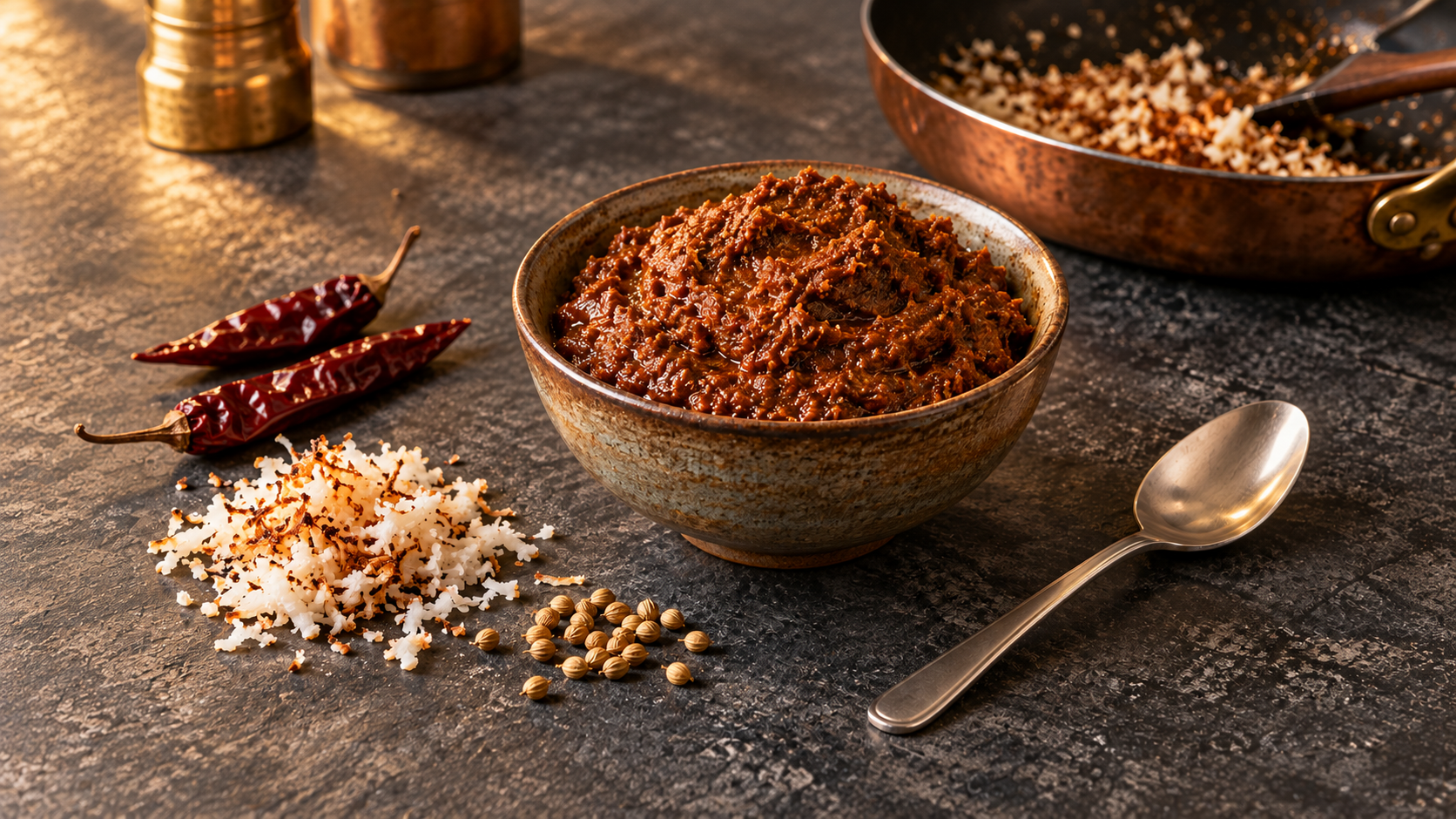
What it is — Before the Gravy
A spoonful of xacuti masala is not merely a crowd of spices waiting for something to happen. In the preparation followed here, coconut and aromatics have already met the frying pan before becoming a moist, ground paste. There is work in that brown colour. There should not, however, be evidence of a small kitchen fire.
This chapter follows one documented Goan family method, not a compulsory ingredient list for every household. Dry xacuti powders also exist; the powder in a jar and the coconut paste ready for cooking are related stages, not identical things. [X1, X3]
Origin — Goan Belonging, Without an Inventor
Goa Tourism describes xacuti across Goan communities, with differing preparations. That regional association is secure enough to enjoy without attaching an invented birthday to the dish. The evidence examined here does not establish one inventor, village of origin or colonial introduction story. A familiar food need not produce a birth certificate before lunch. [X4]
Where the Ingredients Grow — A Wider Pantry
Goan coconut cultivation is documented by ICAR's coastal research institute. Coriander seed, meanwhile, comes from a crop grown prominently in Rajasthan and Madhya Pradesh; the Spices Board records Byadagi chilli cultivation in Karnataka. These are cultivation examples, not a traceability claim about any cook's shopping basket. [A1, A2, A3]
The blend's Goan identity therefore does not mean every plant originated in Goa. Coriander's botanical history reaches towards the Mediterranean and Middle East; chillies have American origins. Regional cooking makes ingredients belong through use, not by requiring them all to share a birthplace. [A2, A3]
Names — Listen Locally
Xacuti is the canonical name in this collection. Goa Tourism records shagoti in Pernem; Raksha Kamat also records shakuti among the names used for the dish. These are attributable regional names, not invitations to manufacture a Hindi, Tamil or Telugu translation. Let the local name retain its own character. [X2, X4]
How It Is Used — One Family's Method
Clyde's mutton xacuti records his mother's fry-first method. Coconut, dried chillies, coriander and other spices are fried in sequence, cooled and ground with restrained water. The paste then becomes part of the meat preparation. He also describes his own grind-first, fry-after approach: variation begins inside the family, before anyone reaches a state border. [X1]
What It Does — Texture Carries Flavour
The ground coconut contributes substance; the cooking method develops toasted notes, while chillies and aromatics shape the flavour. This is a culinary description, not a promise that more roasting always produces a better result. Colour and texture need attention, not competitive darkening. A wet paste should look worked and cohesive rather than like a heap of dry powder. [X1, X2]
Regional Use — More Than One Pot
Mutton is the central example here. Kamat documents chicken xacuti served with rice or Goan pao and offers mushroom as an alternative. Her preparation includes tamarind, illustrating another difference rather than an ingredient to insert retrospectively into Clyde's formula. [X1, X2]
That is the pleasure of understanding a masala through people: the name gives us somewhere to begin, while the cook shows us what happens next.
Sources and Further Reading
By Shankar Manapragada