
Tamarind — The Sour Thread
The Souring Agents · Culinary Chronicles
1. What it is
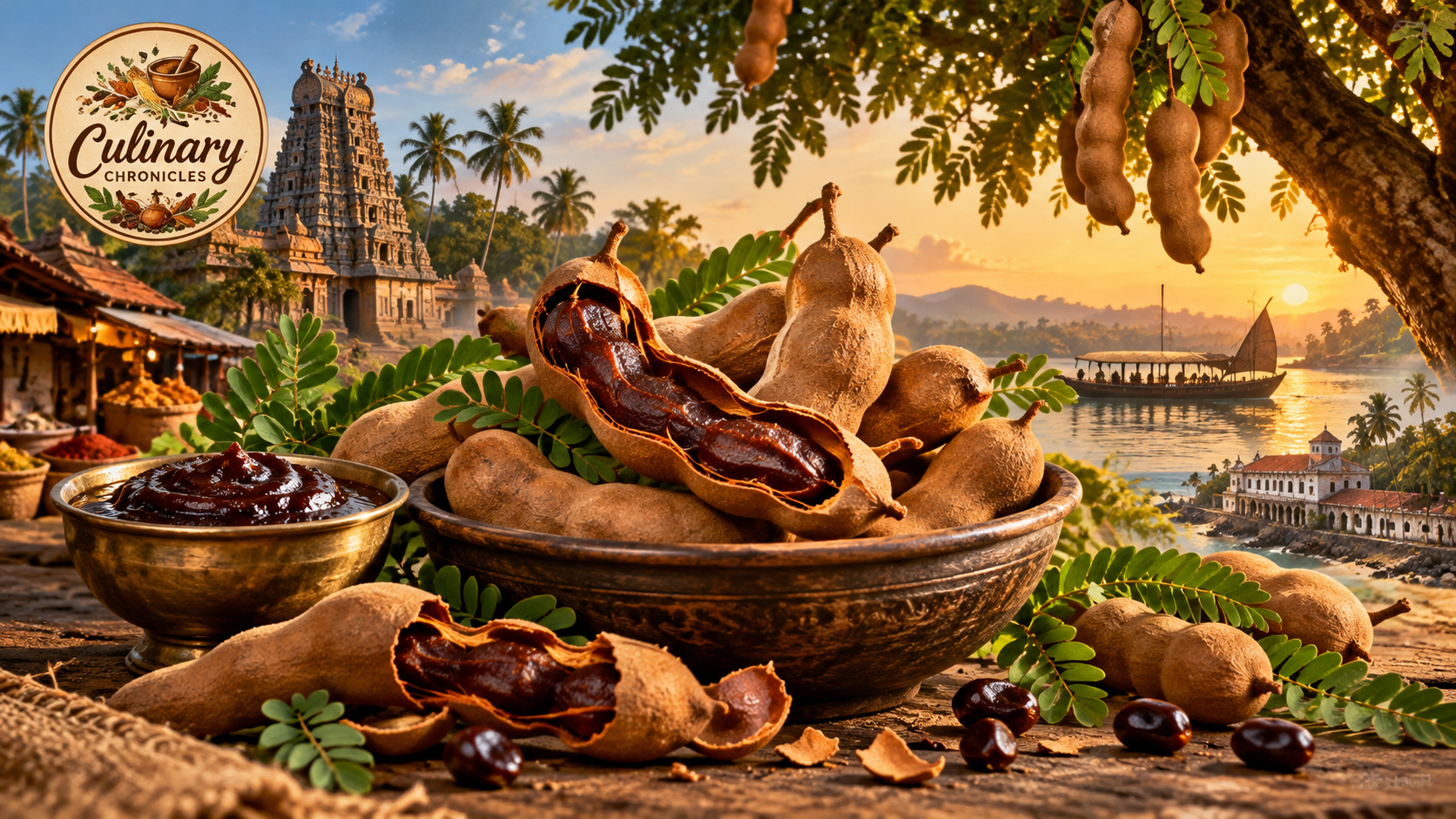
Tamarind is the sticky fruit pulp inside the brown pods of Tamarindus indica. Around the hard seeds lies a souring ingredient with a fruity, sometimes sweet undertone. It arrives without much ceremony: a brittle pod, a dark block or a jar of paste. Give it water and a little attention, and an entire pot acquires character.
2. Origin
Tamarind is generally associated with African origins, although its original distribution remains uncertain. Kew currently lists Comoros and Madagascar as its native range and India as introduced. Long cultivation has blurred the trail; an exact arrival date or single introduction route into India is not established here. Its name comes from Arabic tamr hindi, “Indian date”: a clue to its association with India, rather than a travel itinerary.
3. Where it grows
The tree grows across the tropics, including Africa, South and Southeast Asia and tropical America. India's Spices Board identifies Madhya Pradesh, Andhra Pradesh, Tamil Nadu and Karnataka as chief growing areas. Tamil Nadu Agricultural University records concentrated growing pockets in Dindigul, Theni, Madurai and Trichy. Tamarind suits seasonally dry tropical landscapes; a spreading tree also puts sourness within reach of a shady resting place.
4. Names in Indian languages
Selected names for tamarind; spellings vary in Roman transliteration. Fruit names are used where distinguished from tree names.
| Language | Name |
|---|---|
| Hindi | Imli |
| Tamil | Puli |
| Telugu | Chintapandu |
| Kannada | Hunase hannu |
| Malayalam | Puli |
| Marathi | Chinch |
| Gujarati | Amli |
| Bengali | Tentul |
5. How it is used
Shell whole pods and remove the fibres. Soak the pulp in warm water, squeeze it to release the flesh, then strain out seeds and remaining fibres. Dilute the extract for a broth, or simmer it into a stronger base for gravy, rice seasoning or chutney. Prepared pastes and concentrates vary in strength, so add gradually and taste. The block and the jar do not necessarily speak at the same volume.
6. What it does
Tartaric acid contributes to tamarind's tang, while natural sugars help shape its sweet-sour character. Dilution softens its impact; reduction concentrates the mixture. Jaggery shifts the flavour towards sweetness without removing the acid. In cooking, tamarind helps balance salt, sweetness, spice and richness. It also brings fruit flavour, so replacing it with lime changes more than the sourness.
7. Regional use and popular dishes
In Telugu cooking, tamarind seasons rice as pulihora and gives pulusu its sour foundation. Pachi pulusu offers another approach: tamarind extract with onion, chillies and herbs, finished with hot tempering without boiling the assembled broth.
Karnataka's puliyogare combines tamarind rice with its own spice seasoning; it belongs to meals as well as some temple offerings. In Tamil kitchens, puli kuzhambu builds a gravy around tamarind's acidity, while many rasam and sambar preparations use it alongside other ingredients.
In northern Indian chaat, sweet imli chutney accompanies fried, salty and spicy snacks. Same fruit, different decisions: each kitchen chooses how loudly the sourness should speak.