
Kokum — The Konkan's Quiet Tang
The Souring Agents · Culinary Chronicles
1. What it is
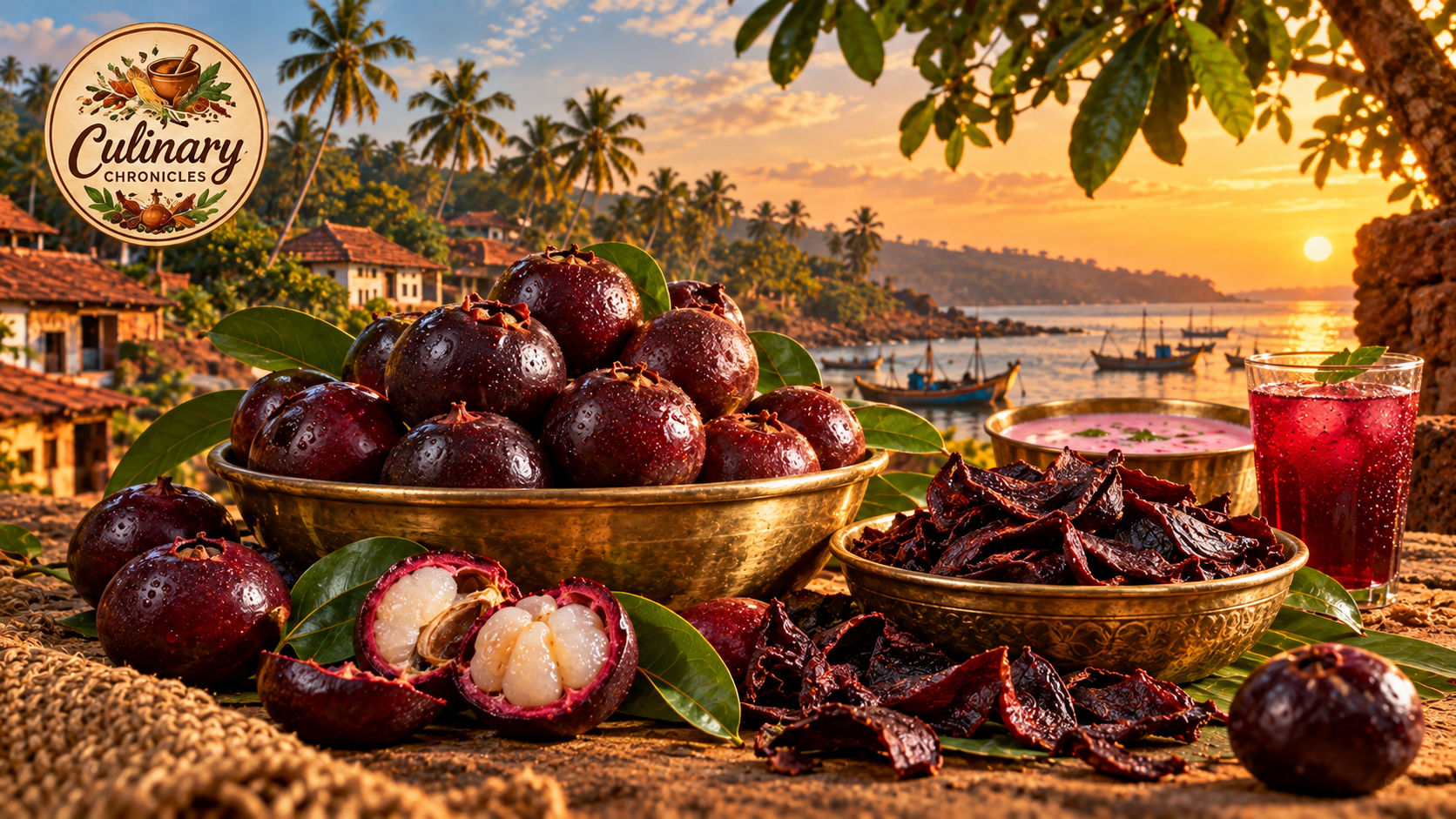
Kokum is the fruit of Garcinia indica, an evergreen tree whose ripe fruits turn red to deep purple. The kitchen usually meets it as dried rind: dark, wrinkled pieces with a distinctly fruity sourness. The rind is the souring ingredient; kokum butter comes from the seeds and serves a different purpose. Kokum is not kudampuli, which comes from Garcinia gummi-gutta. Related trees, different ingredients—one family does not mean one flavour.
2. Origin
Kokum is native to western and southwestern India. Its story belongs closely to the Western Ghats and adjoining coastal food traditions. Unlike an ingredient whose arrival must be traced across oceans, this is a local fruit woven into local meals. The forest, the homestead and the kitchen are all part of its journey.
3. Where it grows
Important growing areas include the Konkan belt of Maharashtra, Goa, coastal Karnataka and northern Kerala. Trees occur in forest margins and around farms and homes, as well as in cultivation. In Goa, harvesting commonly falls between April and June. Drying the rind lets a seasonal harvest continue seasoning meals long after the fresh fruit has disappeared.
4. Names in Indian languages
These are selected recorded names, not an exhaustive translation list. Roman spellings vary; some terms refer especially to the dried culinary rind.
| Language | Recorded name |
|---|---|
| Marathi | Kokum / Amsol |
| Konkani | Birand / Kokum |
| Kannada | Murugalu |
| Malayalam | Punarpuli |
| Hindi | Kokam |
| Bengali | Kokam |
A name alone can be misleading when several Garcinia species are sold as souring agents. Check the ingredient's identity rather than assuming similar names mean the same fruit.
5. How it is used
Rinse dried rind and soak it in warm water to release its sourness and colour. Strain the extract for drinks or coconut-milk preparations; rind pieces may also simmer directly in a curry. Agal, a concentrated kokum liquid, offers another convenient form. Start with a little and taste: drying, storage and concentration affect strength. Sweetened syrups suit sharbat, so check the label before inviting one into a fish curry.
6. What it does
Kokum brings fruity acidity and, depending on the preparation, a red-purple tint. Organic acids, including hydroxycitric acid, contribute to its tang; anthocyanin pigments contribute colour. It balances rich coconut milk, oily fish and sweet elements. Sugar shifts the balance without removing the acid. Kokum supplies its own fruit character, so replacing it with tamarind changes more than the sourness.
7. Regional use and popular dishes
Along the Konkan coast, solkadhi combines kokum extract with coconut milk and seasoning, though household versions vary. Kokum sharbat takes the same fruit towards a sweet-tart drink. Goan and Malvani fish and prawn curries may use kokum, alongside other regional souring choices. It also seasons selected dals, usals and vegetable preparations. Goan solantulem maas pairs kokum with pork. One fruit, several conversations: a pink accompaniment to rice, a ruby drink, or a quiet sour note in dinner.