
Kudampuli — Kerala's Smoky Tang
The Souring Agents · Culinary Chronicles
1. What it is
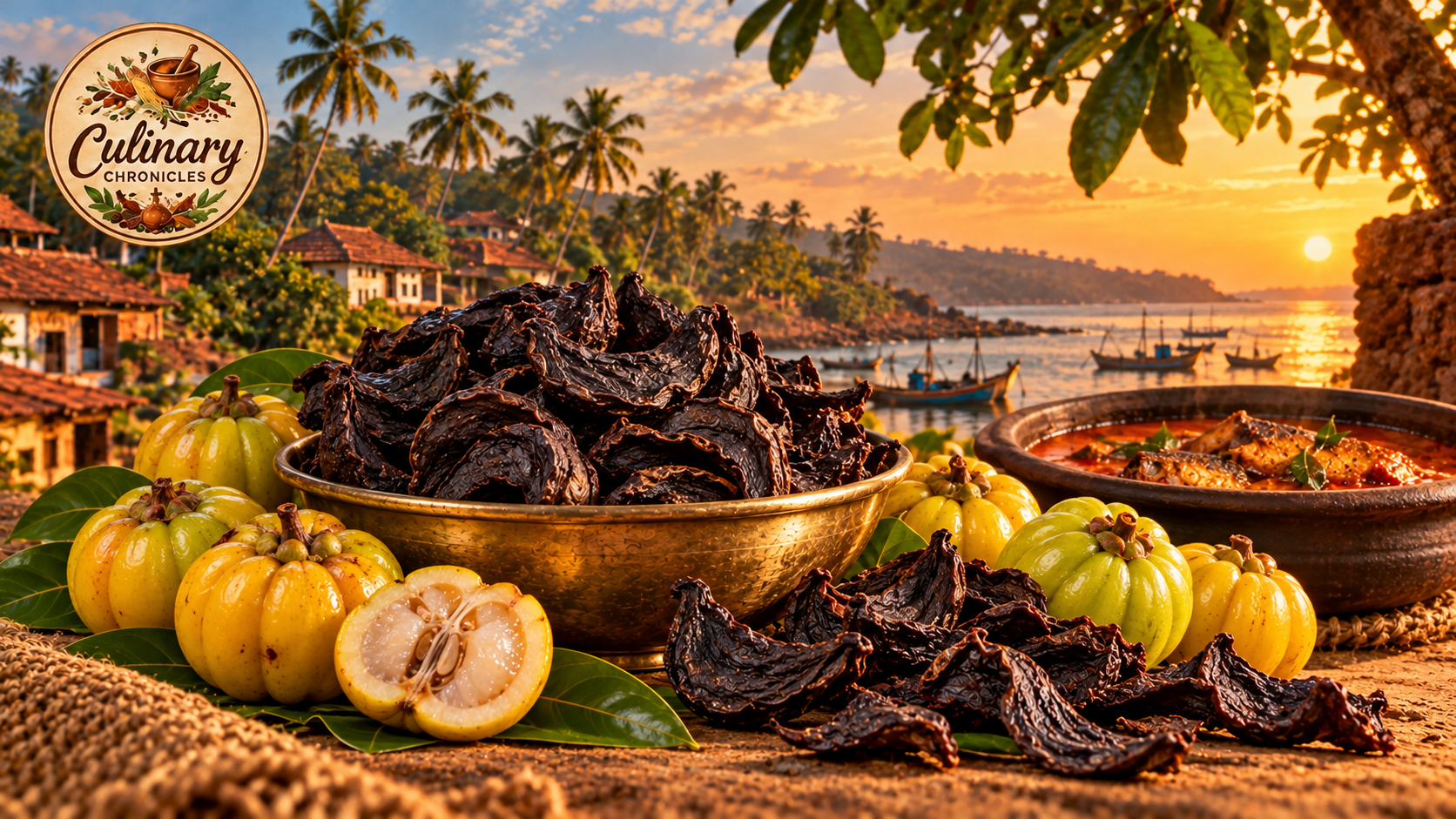
Kudampuli is the dried rind of Garcinia gummi-gutta, also encountered under the older name Garcinia cambogia. Fresh fruits are rounded and deeply grooved, often turning yellow as they ripen. In the kitchen, the rind appears as dark, wrinkled pieces. It is distinct from kokum, Garcinia indica, and from ordinary tamarind. Three souring ingredients, three different personalities: the shared word “tamarind” on a packet does not make them the same fruit.
2. Origin
Kew records the species as native to western India. Its Indian story is closely tied to the Western Ghats, where botanical records place it in evergreen and semi-evergreen forests, often near streams. “Malabar tamarind” reflects a familiar regional association; it is not a botanical relationship with the tamarind tree.
3. Where it grows
Kerala and Karnataka are important growing areas, with records also extending through other Western Ghats states. Kerala Agricultural University describes cultivation suited to riverbanks and valleys. Trees also occur in homesteads. Fruit harvested in season becomes a longer-lasting pantry ingredient after the rind is separated and dried: a small piece of the landscape waiting beside the stove.
4. Names in Indian languages
These are documented regional names, not a claim that each is an everyday name throughout the language area. Roman spellings vary.
| Language | Recorded name |
|---|---|
| Malayalam | Kudampuli / Kodampuli / Meenpuli |
| Tamil | Kodakkapuli |
| Hindi | Bilatti-amli |
| Sanskrit | Vrukshamlah |
Names for Garcinia fruits can overlap. Buy by the identified ingredient and intended use rather than relying on a loose translation of “sour fruit”.
5. How it is used
The rind is separated from the pulp and seeds, then sun-dried or smoke-dried; household curing methods vary. Smoking gives the familiar dark pieces their characteristic aroma, but not every product is equally smoky. Rinse a few pieces and soak them in water to soften. Add the rind, and the soaking water where the recipe calls for it, to the cooking gravy. Start sparingly and taste as it simmers. A small piece can make a large contribution; this is seasoning, not a competition to empty the packet.
6. What it does
Kudampuli supplies pronounced fruity acidity; smoke-cured rind adds another layer of aroma. Its sourness helps balance chilli, coconut and rich fish preparations. The flavour develops as the rind releases its acids into the gravy. Strength varies with curing and quantity, so adjust to the dish. Replacing it with lime or kokum changes the flavour, even if the curry remains sour.
7. Regional use and popular dishes
Kerala fish curries are its best-known setting. Kudampuliyitta meen curry is documented in Kuttanad; red Kottayam-style fish curry is another familiar example. Recipes differ in chilli, coconut, fish and the amount of souring rind. Chef Regi Mathew's kudampuli fish curry pairs it with ginger, garlic, shallots and spices, and is served with boiled tapioca or Kerala red rice. That pairing explains its place in the meal: tangy gravy meets a mild staple. Kerala's fish curries have several souring traditions; kudampuli belongs to particular versions, not every pot.