
Tomato Pachadi — A Tangy Turn at the Table
Pickles and Condiments · Culinary Chronicles
1. What it is
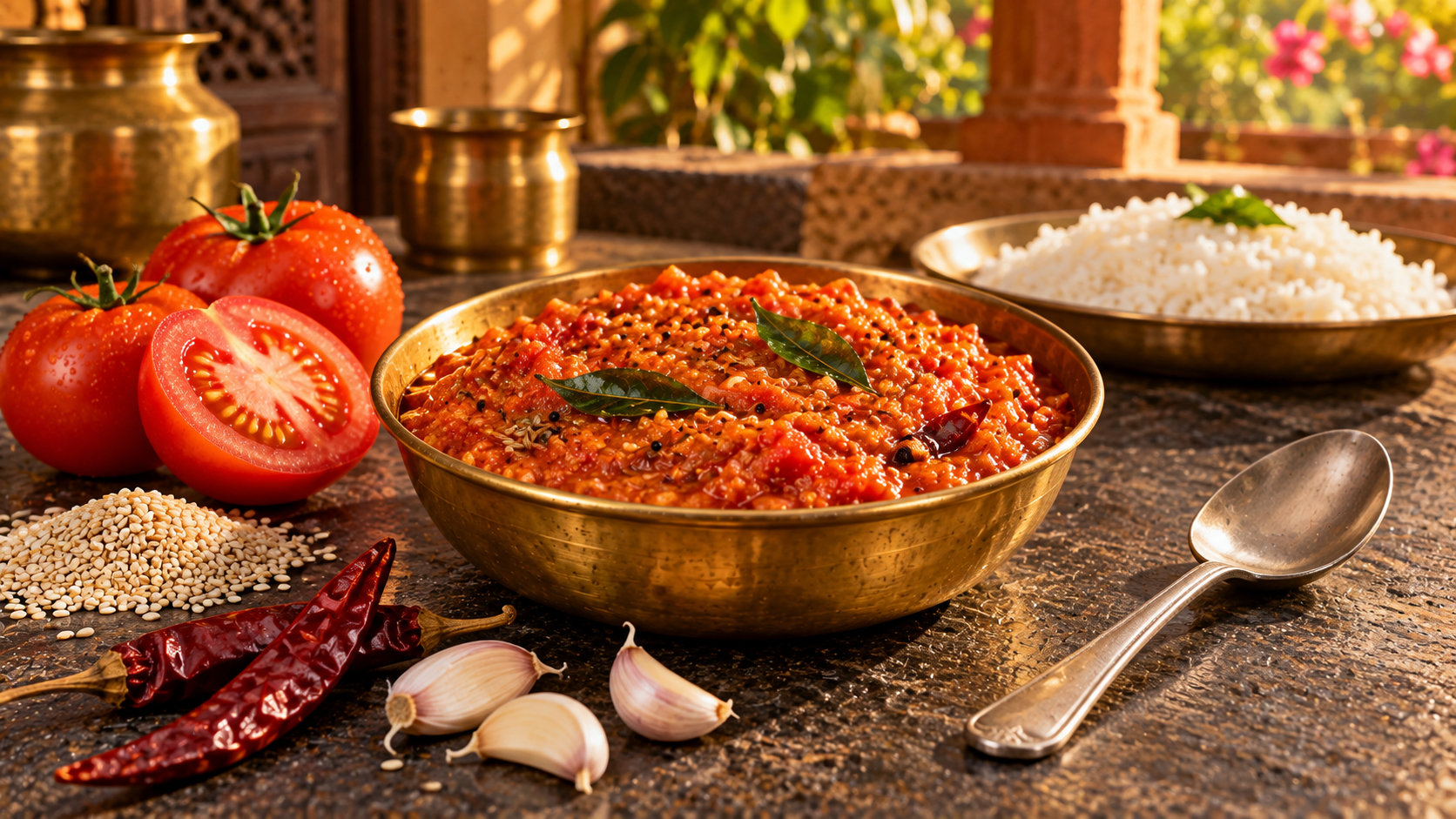
Tomato pachadi gives ripe tomatoes a more outspoken job than quietly disappearing into a gravy. This cooked Andhra-style chutney combines their tang with chilli and toasted seasoning. Our main example is Swasthi Shreekanth's mother's sesame-based preparation. Other households use lentils or change the souring ingredients; no single bowl gets to speak for everyone. [R1, R2]
This chapter concerns a cooked chutney for the meal, not a promise of a long-keeping tomato pickle.
2. Origin
Published Andhra recipes establish the regional association, rather than an inventor or an exact beginning. Swasthi attributes her sesame version to her mother; Sailu documents another tomato-and-sesame preparation. These are useful records of cooking practice, with differences worth keeping. [R1, R2]
A family recipe offers something more human than an invented ancient date: a particular way of making lunch taste right. The tomato's agricultural history and the history of this condiment need not share a starting line.
3. Where the principal ingredient grows
The National Horticulture Board's March 2019 report lists Andhra Pradesh, Karnataka and Tamil Nadu among India's tomato-producing states, alongside several others. That dated record establishes cultivation across regions; it is not a current ranking or a map of the tomatoes supplying one cook. [A1]
The selected chutney uses ripe tomatoes. Their contribution differs from that of a separate green-tomato preparation. A red fruit in the market is the beginning of a choice, not a recipe already completed.
4. Names in Indian languages
Preparation names and ingredient names answer different questions. These selected Roman spellings are not interchangeable translations of one universally identical chutney. [R1, R2, L1]
| Language/context | Name | Refers to |
|---|---|---|
| Telugu culinary usage | Tomato pachadi | Preparation |
| Telugu culinary usage | Tomato nuvvula pachadi | Tomato-and-sesame preparation |
| Tamil | Thakkali | Main ingredient: tomato |
Calling the fruit thakkali does not specify the seasoning, texture or method of the finished accompaniment.
5. How it is used
In the selected illustrated method, sesame and dried chillies are toasted, followed briefly by cumin. Separately, garlic and chopped tomatoes cook with salt and turmeric until pulpy. Both mixtures cool before grinding: seasonings first, then tomatoes. A hot-oil tempering finishes the chutney. [R1]
Sailu's version combines sesame with urad dal and tamarind. Dassana Amit documents a different smooth preparation with urad dal, fenugreek and tamarind. Keep those methods separate rather than inviting every ingredient into our main bowl. [R2, R3]
6. What it does
Cooked tomato supplies tang and a soft base; toasted sesame contributes nutty flavour and body. Grinding determines whether the result feels smoother or retains some texture. Chilli brings heat, while tempering adds aromatic contrast. [R1, R2]
Thickness should suit the meal. A chutney that mingles with rice and one that clings to a dosa may need different handling. Neither requires the spoon to stand to attention.
7. Regional use and popular dishes
Documented pairings include rice with ghee, idli, dosa and pesarattu. Jeyashri Suresh also serves her tomato-sesame version with curd rice. These are serving examples, not rules for every Andhra table. [R1, R4]
The pleasure lies in the encounter: soft rice or a crisp edge of dosa meeting a small, well-seasoned spoonful. The tomato has changed jobs, and lunch has acquired a little more conversation.
Sources and Further Reading
- R1 — Swasthi Shreekanth, Tomato Pachadi Recipe (Andhra Style), updated3May2023.
- R2 — Sailu, Tomato Nuvvula Pachadi ~ Tomato Sesame Chutney; publication date not established.
- R3 — Dassana Amit, Tomato Pachadi Recipe; header updated3July2025; body contains older republication notes.
- R4 — Jeyashri Suresh, Tomato Sesame Chutney, Andhra style; date not established.
- A1 — National Horticulture Board, Tomato report March2019.
- L1 — Tamil Nadu Agricultural University, Organic Farming: Tomato Climate, undated.