
Episode 03 / Appam
When the Pancake Got an Engineering Upgrade
The Curious Thought
Perhaps somebody looked at dosa and decided:
“Too flat.”
Then looked at urad dal and said:
“You keep softening everything. I'm going to try this with rice.”
How on Earth Did This Happen?
I have rice.
I have coconut.
I have fermentation.
But I want something prouder than a flat pancake.
The dosa lies there obediently on the tawa.
No ambition.
No elevation.
Surely we can improve the engineering.
First problem:
If the centre is going to remain soft, it needs structural support.
One could change the ingredients.
But why compromise when one can redesign the equipment?
Forget the flat tawa.
Make it curved.
Half tawa, half kadai.
Pour the batter into the centre.
Swirl the vessel.
Now something beautiful happens.
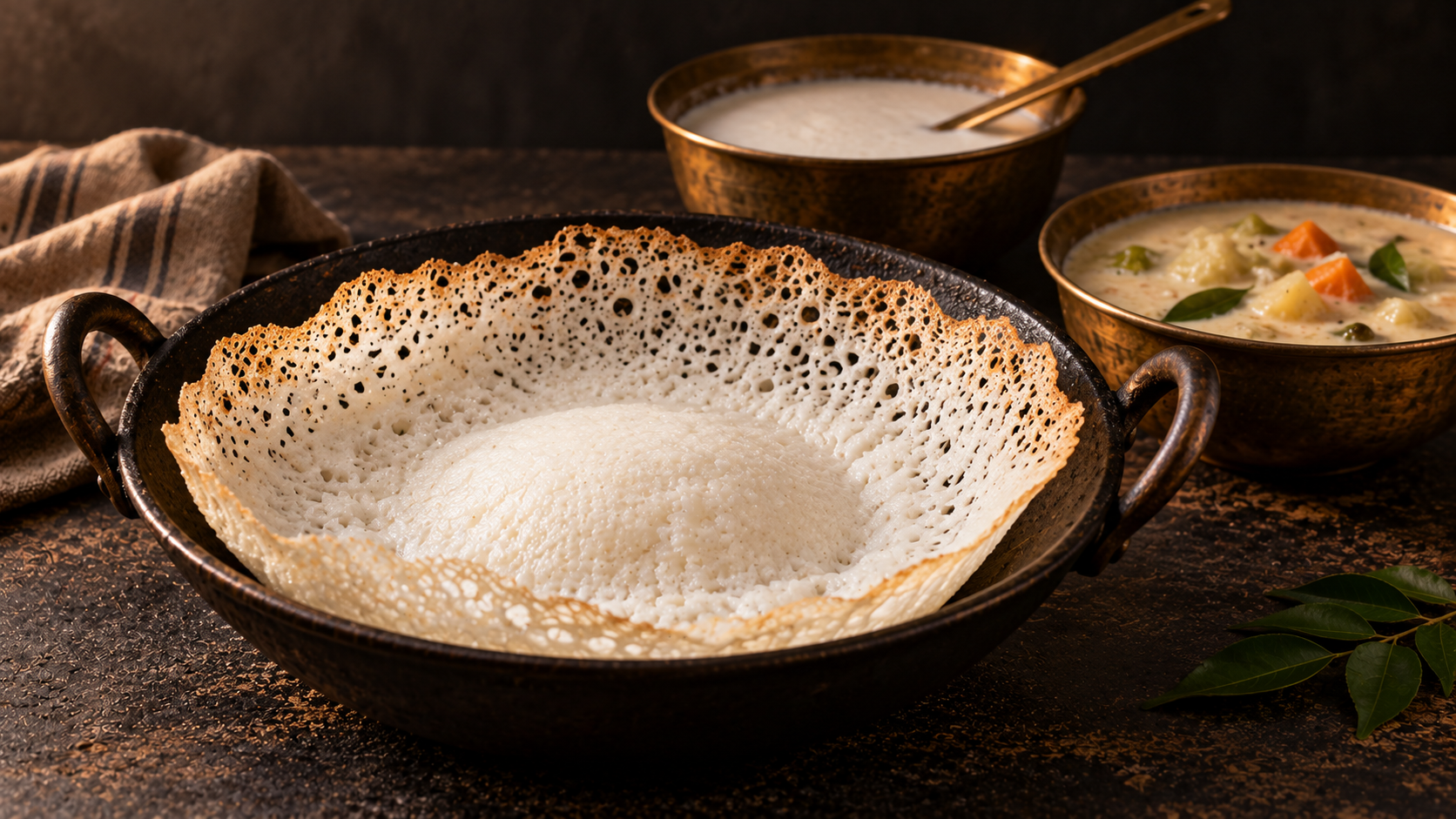
The batter remains thick and pillowy in the centre while climbing thinly up the curved sides.
Soft in the middle.
Crisp and lacy around the edges.
Two dishes for the effort of one.
Then perhaps one day:
“Oh dear. I appear to have dropped some toddy into the batter.”
Taste.
Pause.
“Actually... leave that in.”
Suddenly fermentation has become more enthusiastic.
And what shall this creation accompany?
Chutney?
Certainly.
Sambar?
Why not.
Vegetable stew?
Excellent.
Chicken stew?
Even better.
Duck roast?
Now we're talking.
Fish curry?
Naturally.
Mutton?
Absolutely.
Appam does not choose sides.
It merely provides the platform.
What History Says
Appam is deeply associated with Kerala and the wider southern coastal food traditions where rice, coconut and fermentation have long been central ingredients.
In Kerala, particularly within Syrian Christian culinary traditions, paalappam became closely associated with breakfasts, celebrations and meat or vegetable stews.
Traditional fermentation could involve toddy—naturally fermented palm sap—which contributes both aeration and a mild tang. Modern recipes often replace toddy with yeast or other fermentation methods.
The distinctive shape comes from the appachatti, a curved pan that naturally creates a thicker centre and delicate lace-like edges.
The precise origin of appam cannot be attributed confidently to one inventor or community, and related fermented rice pancakes exist elsewhere in South and Southeast Asia.
What is clear is that Kerala's combination of rice, coconut, fermentation and specialized cookware produced a preparation with a distinctive identity of its own.
The Last Bite
Appam refused to choose between soft and crisp.
So it redesigned the pan and kept both.
One batter. Two textures. A thousand possible companions.