
Episode 04 / Kacchi Gosht Biryani
The Ultimate Trust-the-Process Recipe
The Curious Thought
Who looked at raw mutton and half-cooked rice and thought:
“Put them in the same pot, seal it so nobody can interfere, surround it with heat and trust the process.”
How on Earth Did This Happen?
This is culinary project management without a contingency plan.
Take raw mutton.
Marinate it.
Now put it at the bottom of a heavy handi.
Fine.
Then take rice that is only partly cooked.
Put that on top.
Already questionable.
Now add herbs, fried onions, spices, perhaps saffron, ghee and aromatics.
Then comes the moment when any sensible cook might want access to the ingredients.
Instead:
Seal the pot.
With dough.
Completely.
No opening.
No stirring.
No checking.
No rescuing the meat halfway through.
Then apply heat from below.
And traditionally, embers from above.
In other words, strangulate the entire project from both directions.
They called it dum.
And then...
wait.
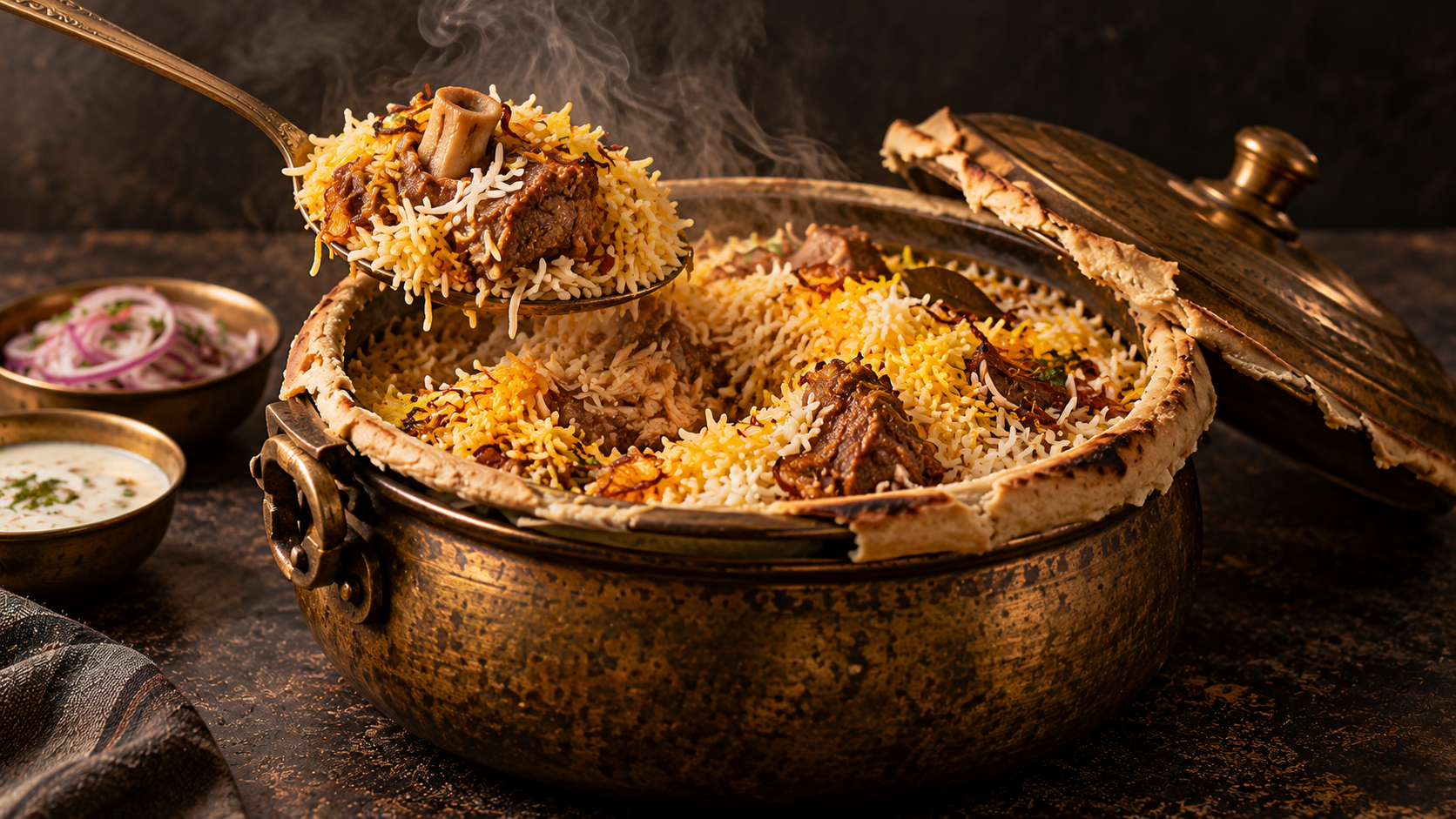
After what can only be described as culinary faith, break the seal.
The rice is cooked.
Not mushy.
The meat is tender.
Not raw.
The grains remain separate.
The juices have risen.
The aromas have travelled.
Two ingredients that began at completely different stages of doneness somehow arrive at the finishing line together.
How?
This isn't cooking.
This is choreography performed inside a sealed pot.
What History Says
Biryani has a complex history shaped by Persianate court traditions, Central and West Asian rice cookery and regional Indian culinary practices.
The precise origins of kacchi biryani are debated, although Hyderabad became particularly famous for the technique.
Unlike pakki biryani, where meat and rice are substantially cooked separately before layering, kacchi biryani begins with raw marinated meat beneath partially cooked rice.
Its success depends on controlled heat, moisture and timing.
Salt and acidic ingredients in the marinade begin altering the meat before cooking. During dum cooking, moisture released by the meat, yogurt and aromatics produces steam inside the sealed vessel. The rice finishes cooking from this vapour while the meat tenderizes below.
The heavy pot, sealed lid and carefully regulated heat create a contained cooking environment.
What appears reckless is actually highly controlled technique.
The Last Bite
Kacchi biryani asks two ingredients starting at completely different points to arrive together perfectly.
Preparation. Timing. Trust. And absolutely no opening the project midway.