
Episode 05 / Vada Pav
Imported Ingredients, Mumbai Swagger
The Curious Thought
You want to call it Aloo Bonda?
That's your prerogative.
We shall call it Batata Vada.
And then put it inside pav.
How on Earth Did This Happen?
The gentlemen who brought the potato to India's western coast called it batata.
Fine.
We kept the name.
Then came bread.
Pão.
Also useful.
What the Portuguese did not realize was that, centuries later, Bombay would take these two imported ideas and perform a hostile culinary takeover.
Take the potato.
Boil it.
Mash it.
Add mustard seeds, curry leaves, green chilli, turmeric, garlic—give it some local confidence.
Make a ball.
Dip it in besan batter.
Fry it.
At this stage you already have a perfectly respectable snack.
But Mumbai is busy.
Nobody has time to sit politely with plates and cutlery.
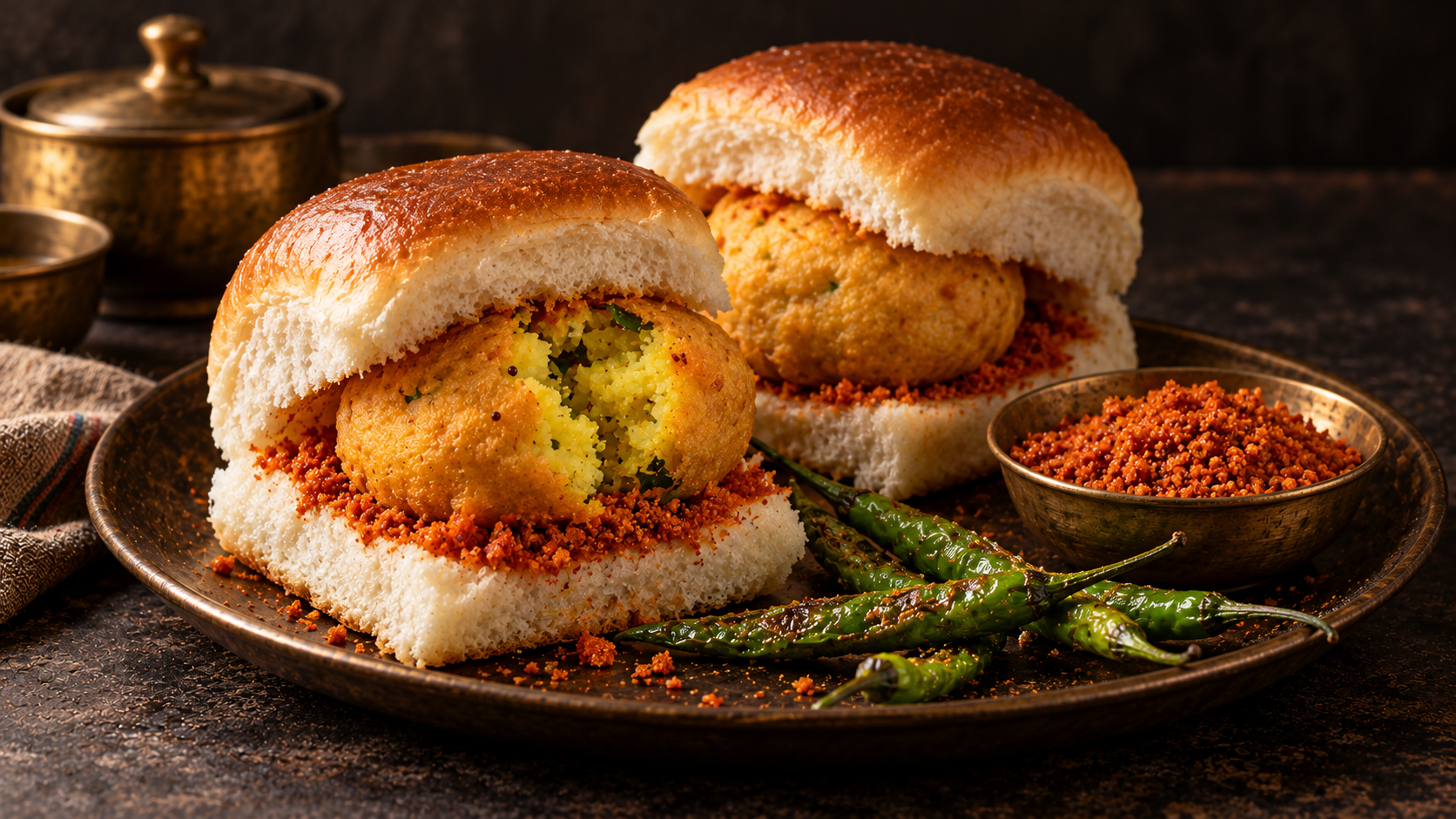
Cut the pav.
Put the vada inside.
Then, just to ensure nobody casually takes the idea back and claims it as their own, add something completely unexpected:
dry chutney.
Powder.
Called chutney.
Excellent confusion strategy.
Add a fried green chilli alongside for anyone who feels the experience has not yet caused sufficient damage.
And there you have it.
Vada Pav.
Mumbaikar's jaan.
Cheap.
Portable.
Fast.
Filling.
Messy enough to be interesting.
Like cricket, we may have borrowed some of the pieces.
Then made the game completely our own.
What History Says
The potato reached India through European maritime trade, with the Portuguese playing an important role in introducing and cultivating it along India's western coast.
The word batata, used in Marathi and several other Indian languages, has Portuguese associations.
Similarly, the western Indian word pav is generally linked to Portuguese pão, meaning bread, although the exact linguistic journey has accumulated its own folklore.
Vada Pav itself is much more recent.
Its rise is strongly associated with Mumbai during the 1960s and 1970s, particularly around railway stations and textile-mill districts where workers needed inexpensive, filling, portable food.
Ashok Vaidya, a vendor near Dadar railway station, is frequently credited with popularizing the combination, though assigning absolute single-person invention to street foods is difficult.
The dry garlic chutney, fried chilli and distinctly Maharashtrian potato vada turned the sandwich into something unmistakably Mumbai.
The Last Bite
The Portuguese brought some ingredients and vocabulary.
Mumbai wrote the recipe.
Imported tuber. Imported bread. Entirely local swagger.