
Episode 06 / Sabudana Khichdi
Who Looked at Tapioca and Saw Pearls?
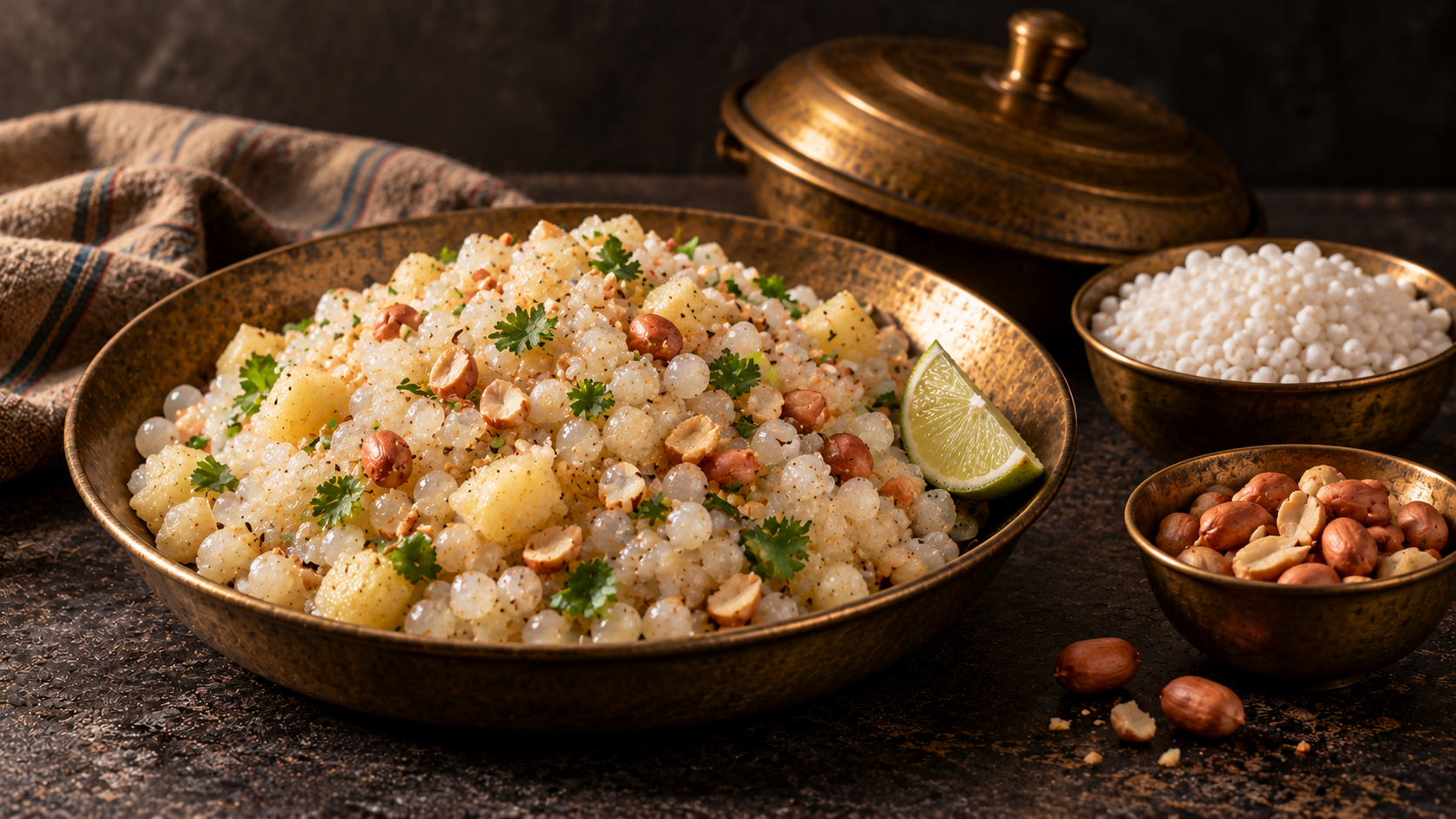
The Curious Thought
Who looked at an ungainly tropical root and thought:
“I shall turn this into tiny white pearls, soak them overnight and make them religious.”
Presidential medal material.
How on Earth Did This Happen?
The person who thought of Sabudana Khichdi deserves an Oscar.
Not a cooking award.
An Oscar.
For sheer drama.
Imagine staring at tapioca.
A tuber.
Starchy.
Unremarkable.
And thinking:
“Obviously, I must first convert this into small, perfectly round, dry, pearly-white balls.”
Already ambitious.
Then somebody decides these pearls should be soaked for hours.
Preferably overnight.
Why?
Trust the process.
Once hydrated, temper cumin.
Add green chilli.
Perhaps potatoes.
Then roasted peanuts.
But not just peanuts.
Crush them.
Because apparently texture management has now become important.
Add lime.
Coriander.
Salt—or rock salt if we're fasting.
And then comes the greatest leap.
“This will be upwas food.”
Of course.
Take a South American root.
Industrialize its starch into pearls.
Introduce it to peanuts and chillies.
And somehow give it a religious identity.
Genius.
Not ordinary genius.
Indi-genius.
Sabudana Khichdi must occasionally look around during Navratri and wonder:
“How exactly did I become spiritual?”
What History Says
Sabudana used in India is generally made from tapioca starch extracted from cassava.
Cassava originated in South America and reached parts of Asia through European maritime exchange, with Portuguese trade playing an important role in its wider movement.
The starch is processed into small pearls that can be dried, stored and later rehydrated.
Its association with Hindu fasting developed much later than the crop's arrival in India.
In many fasting traditions, conventional cereal grains such as rice and wheat are avoided. Sabudana, being a processed starch rather than a cereal grain, became acceptable in many regional fasting practices.
Indian kitchens then transformed the essentially neutral starch by combining it with cumin, green chillies, potatoes, roasted peanuts, lime and herbs.
This produced the Maharashtra-associated preparation now widely recognized as Sabudana Khichdi.
The Last Bite
From South American root to Indian fasting favourite.
That's not merely adaptation.
That's culinary naturalisation.
Genius.
Indi-genius.