
Episode 07 / Chai
When India Ignored the Tea Instructions
The Curious Thought
“Ol' chap. Steep the leaves gently. Add a wee bit of milk. Pour into bone china. Straighten your pinkie.”
India listened carefully.
Then did absolutely none of that.
How on Earth Did This Happen?
The instructions seemed simple enough.
Hot water.
Tea leaves.
Steep gently.
A wee bit of milk.
Perhaps sugar.
Pour into delicate bone china.
Sit upright.
Pinkie optional, but apparently useful when administering an empire.
India looked at the cup and said:
“Sorry?”
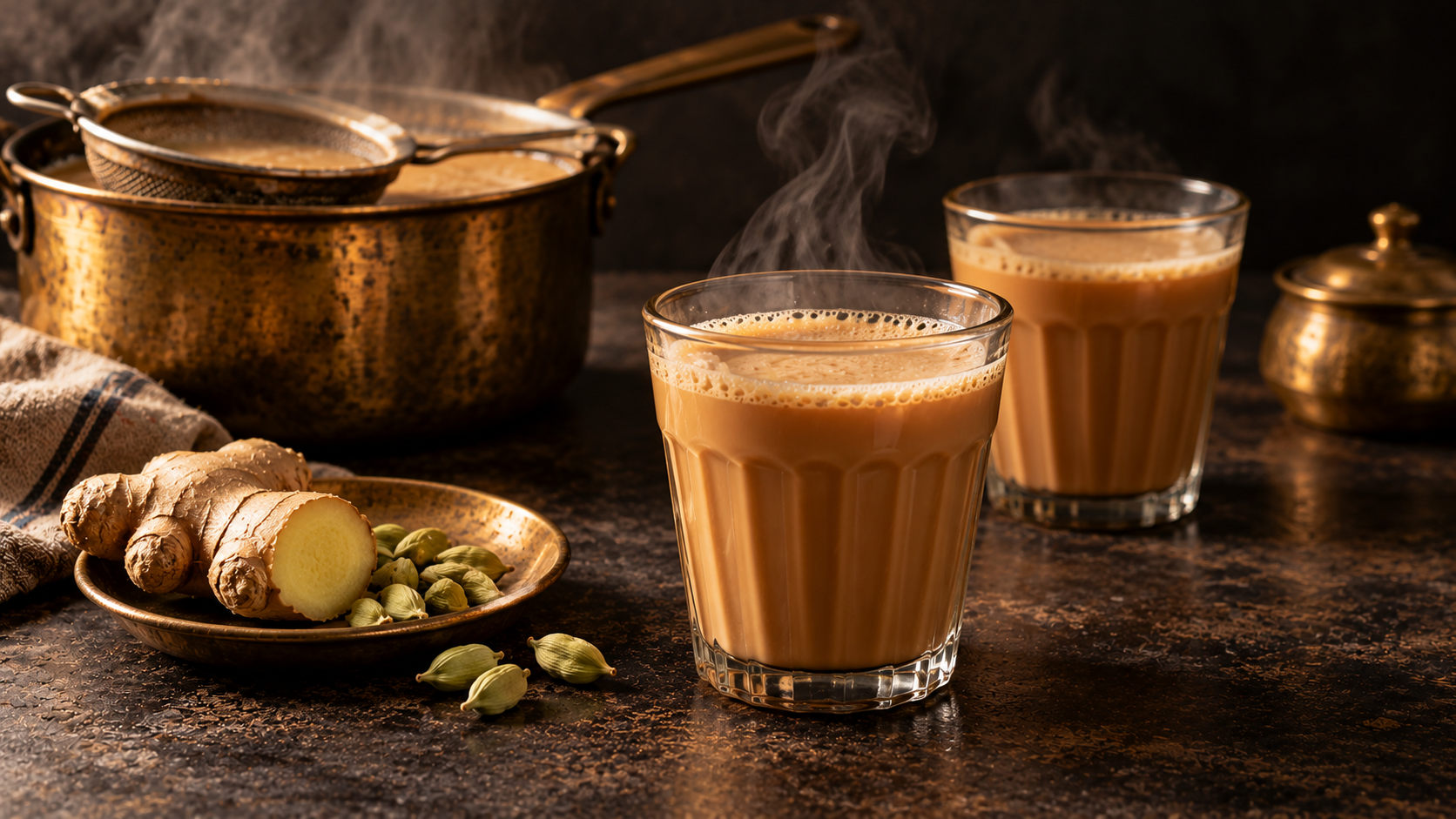
Grate ginger.
Pound cardamom.
Throw both into water.
Boil.
Now add the tea leaves.
And do not merely steep them.
Boil the pants off them.
Add milk.
Sugar.
Now boil the entire wardrobe off the concoction.
More ginger?
Why not.
Another boil?
Absolutely.
Now strain it into a tiny glass possessing the thermal characteristics of molten lava.
Hold it carefully between fingertips.
Blow.
Sip.
Wah, chai!
Morning?
Chai.
Meeting?
Chai.
Train journey?
Chai.
Guest arrives?
Chai.
Guest refuses chai?
Suspicious.
Business discussion?
Chai.
Argument?
Chai.
Reconciliation after argument?
Obviously chai.
India does not merely drink tea.
India runs on chai.
What History Says
Tea plants are indigenous to parts of northeastern India, particularly Assam, where local communities knew and used tea long before commercial plantation systems developed.
During the 19th century, the British East India Company and later colonial enterprises expanded tea cultivation in Assam and other regions as Britain sought alternatives to dependence on Chinese tea.
Initially, much Indian-grown tea was intended for export.
Large-scale domestic tea consumption developed later, aided by promotional campaigns and tea stalls at factories, railway stations, markets and workplaces.
Indian consumers then adapted tea to local preferences.
Milk became more prominent.
Sugar became generous.
Ginger, cardamom and other spices entered countless household and regional recipes.
Thus evolved not one standardized “Indian chai,” but a broad family—from adrak chai and masala chai to cutting chai, Irani chai and numerous local styles.
The Last Bite
Britain helped turn tea into a colonial commodity.
India turned it into infrastructure.
Empire brought the leaves. India supplied the personality.