
Episode 09 / Parotta
When Restraint Left the Kitchen
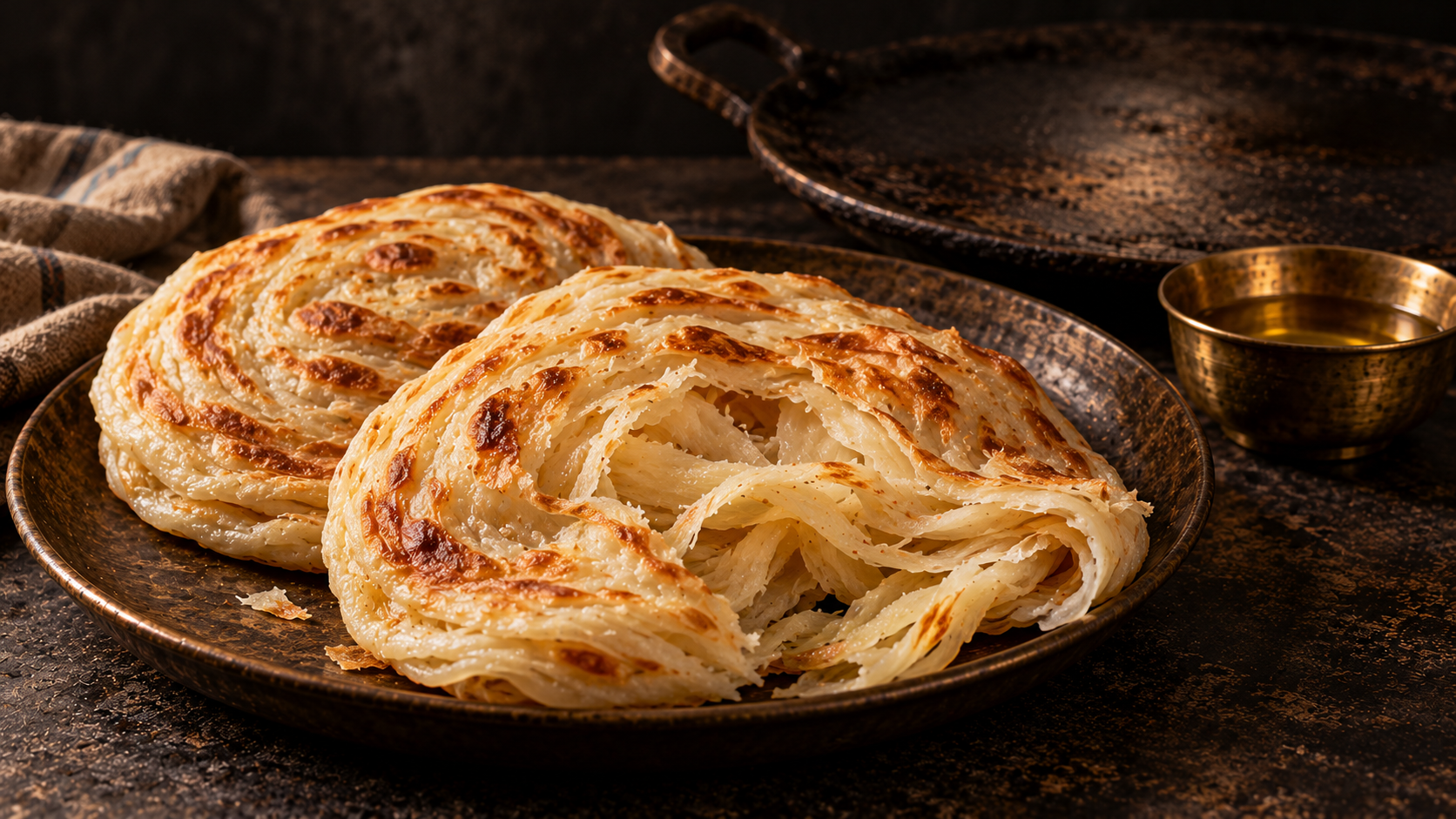
The Curious Thought
Doctors say NO.
Cardiologists say DON'T.
Diabetologists say WHAT THE—?
And somewhere in Kerala or Tamil Nadu, somebody calmly reaches for more oil.
How on Earth Did This Happen?
Start with maida.
Pure, unapologetic maida.
Knead it until the gluten has been bullied into submission and the dough stretches like a yo-yo.
Now rest it.
Under oil.
Of course.
Make balls.
Oil them again.
Naturally.
Now begins the performance.
Stretch the dough with your fingers.
Flip it.
Slap it.
Bang it on the table.
Pull it until it becomes almost transparent.
At this point even the most ambitious pizza maker might stop and ask:
“What exactly are you doing?”
Answer?
Adding oil.
Again.
Drizzle.
Fold the translucent sheet like a Japanese fan.
Roll it.
Let it rest.
Flatten it again.
Add more oil.
Put it onto a screaming-hot griddle.
And yes:
more oil.
Cook until the outside is golden while the inside develops layer after layer.
Then comes the finale.
Take the beautiful bread you have painstakingly constructed—
and smash it between your hands.
Why?
Because apparently perfection needs loosening up.
Serve it with salna.
Vegetable kurma.
Chicken curry.
Mutton.
Beef.
Stew.
Malabar Parotta.
Barotta.
Parota.
Kerala Parotta.
Call it what you will.
Your senses rejoice. Your gut files a complaint.
What History Says
The precise origin of the layered South Indian parotta is difficult to establish conclusively.
It belongs to a much wider family of layered flatbreads found across South Asia and Southeast Asia, with culinary relatives including lachha paratha, Sri Lankan godamba roti and Malaysian or Singaporean roti canai.
In Kerala and Tamil Nadu, the maida-based, extensively stretched and laminated version evolved into a distinctive restaurant and street-food tradition.
Its characteristic layers are created mechanically: dough is stretched very thin, coated with fat, folded or pleated, coiled, rested and then flattened before cooking.
The familiar post-cooking “clap” or crushing action is functional as well as theatrical—it loosens and separates the laminated layers.
Over time, parotta became particularly associated with roadside eateries and restaurants where it could accompany intensely flavoured salnas, kurmas and meat curries.
The Last Bite
Some foods are created through restraint.
Parotta appears to have been created by repeatedly asking:
“Can we add more oil?”
And answering:
“Yes.”
A triumph of gluten, geometry and glorious bad intentions.